
Southwestern Ranch
Health
Nutrition
Nutri-Score
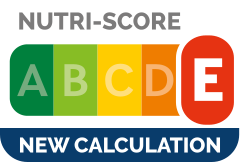 Lower nutritional quality
Nutri-Score data warning
Nutrient levels
Fat in high quantity (77.8%)
Saturated fat in high quantity (11.1%)
Sugars in moderate quantity (11.1%)
Salt in low quantity (0.00723%)
Nutrition facts
| Nutrition facts | As sold for 100 g / 100 ml |
|---|---|
| Energy | 3490 kcal (833 kcal) |
| Fat | 77.8 g |
| Saturated fat | 11.1 g |
| Trans fat | 0 g |
| Cholesterol | 0.11 mg |
| Carbohydrates | 33.3 g |
| Sugars | 11.1 g |
| Dietary fiber | 0 g |
| Proteins | 0 g |
| Salt | 0.00723 mg |
| Sodium | 0.00289 mg |
| Vitamin A | 0.000000000333 µg |
| Vitamin C | 0 mg |
| Calcium | 0.000223 mg |
| Iron | 0 mg |
| Fruits, vegetables and legumes | ? |
Nutrition facts (Detailed data)
| Nutrition facts | As sold for 100 g / 100 ml | As sold Per serving (legacy) |
|---|---|---|
| Energy | 3490 kcal (833 kcal) | 1046 kcal (249 kcal) |
| Fat | 77.8 g | 23.33 g |
| Saturated fat | 11.1 g | 3.33 g |
| Trans fat | 0 g | 0 g |
| Cholesterol | 0.11 mg | 0.033 mg |
| Carbohydrates | 33.3 g | 10 g |
| Sugars | 11.1 g | 3.33 g |
| Dietary fiber | 0 g | 0 g |
| Proteins | 0 g | 0 g |
| Salt | 0.00723 mg | 0.0021675 mg |
| Sodium | 0.00289 mg | 0.000867 mg |
| Vitamin A | 0.000000000333 µg | 0.0000000000999 µg |
| Vitamin C | 0 mg | 0 mg |
| Calcium | 0.000223 mg | 0.000067 mg |
| Iron | 0 mg | 0 mg |
| Fruits, vegetables and legumes | ? | ? |
Serving size
Ingredients
Ingredients list
Ingredient information
Added sugars
Allergens
Ingredients analysis
No ingredients containing palm oil.
Unrecognized: en:contains-2-and-less-of, en:cultured-nonfat-milk, en:cultured-whey, en:cultured-skim-milk-sour-cream-powder
Contains non-vegan ingredients.
Unrecognized: en:contains-2-and-less-of, en:cultured-nonfat-milk, en:cultured-whey, en:cultured-skim-milk-sour-cream-powder
Vegetarian status unknown
Unrecognized: en:contains-2-and-less-of, en:cultured-nonfat-milk, en:cultured-whey, en:cultured-skim-milk-sour-cream-powder
Food Processing
NOVA group
 Ultra-processed food and drink products
Elements that indicate the product is in NOVA group 4
How NOVA works
Additives
E1400 - DextrinCarrierEmulsifierStabiliserThickener
Dextrins are a group of low-molecular-weight carbohydrates produced by the hydrolysis of starch or glycogen. Dextrins are mixtures of polymers of D-glucose units linked by α-(1→4) or α-(1→6) glycosidic bonds. Dextrins can be produced from starch using enzymes like amylases, as during digestion in the human body and during malting and mashing, or by applying dry heat under acidic conditions (pyrolysis or roasting). The latter process is used industrially, and also occurs on the surface of bread during the baking process, contributing to flavor, color and crispness. Dextrins produced by heat are also known as pyrodextrins. The starch hydrolyses during roasting under acidic conditions, and short-chained starch parts partially rebranch with α-(1,6) bonds to the degraded starch molecule. See also Maillard Reaction. Dextrins are white, yellow, or brown powders that are partially or fully water-soluble, yielding optically active solutions of low viscosity. Most of them can be detected with iodine solution, giving a red coloration; one distinguishes erythrodextrin (dextrin that colours red) and achrodextrin (giving no colour). White and yellow dextrins from starch roasted with little or no acid are called British gum.
E150c - Ammonia caramel EFSA overexposure risk: moderateColour
No additive description is available yet.
E202 - Potassium sorbate EFSA overexposure risk: highPreservative
Potassium sorbate (E202) is a synthetic food preservative commonly used to extend the shelf life of various food products.
It works by inhibiting the growth of molds, yeast, and some bacteria, preventing spoilage. When added to foods, it helps maintain their freshness and quality.
Some studies have shown that when combined with nitrites, potassium sorbate have genotoxic activity in vitro. However, potassium sorbate is generally recognized as safe (GRAS) by regulatory authorities.
E211 - Sodium benzoate EFSA overexposure risk: highPreservative
SODIUM BENZOATE is a substance which has the chemical formula NaC7H5O2
E320 - Butylated hydroxyanisole (bha)Antioxidant
Butylated hydroxyanisole (BHA) is an antioxidant consisting of a mixture of two isomeric organic compounds, 2-tert-butyl-4-hydroxyanisole and 3-tert-butyl-4-hydroxyanisole. It is prepared from 4-methoxyphenol and isobutylene. It is a waxy solid used as a food additive with the E number E320. The primary use for BHA is as an antioxidant and preservative in food, food packaging, animal feed, cosmetics, rubber, and petroleum products. BHA also is commonly used in medicines, such as isotretinoin, lovastatin, and simvastatin, among others.
E327 - calcium lactateThickener
Calcium lactate is a white crystalline salt with formula C6H10CaO6, consisting of two lactate anions H3C(CHOH)CO−2 for each calcium cation Ca2+. It forms several hydrates, the most common being the pentahydrate C6H10CaO6·5H2O. Calcium lactate is used in medicine, mainly to treat calcium deficiencies; and as a food additive with E number of E327. Some cheese crystals consist of calcium lactate.
E338 - Phosphoric acid EFSA overexposure risk: highAntioxidantSequestrant
Phosphoric acid (also known as orthophosphoric acid or phosphoric(V) acid) is a weak acid with the chemical formula H3PO4. Orthophosphoric acid refers to phosphoric acid, which is the IUPAC name for this compound. The prefix ortho- is used to distinguish the acid from related phosphoric acids, called polyphosphoric acids. Orthophosphoric acid is a non-toxic acid, which, when pure, is a solid at room temperature and pressure. The conjugate base of phosphoric acid is the dihydrogen phosphate ion, H2PO−4, which in turn has a conjugate base of hydrogen phosphate, HPO2−4, which has a conjugate base of phosphate, PO3−4. Phosphates are essential for life.The most common source of phosphoric acid is an 85% aqueous solution; such solutions are colourless, odourless, and non-volatile. The 85% solution is a syrupy liquid, but still pourable. Although phosphoric acid does not meet the strict definition of a strong acid, the 85% solution is acidic enough to be corrosive. Because of the high percentage of phosphoric acid in this reagent, at least some of the orthophosphoric acid is condensed into polyphosphoric acids; for the sake of labeling and simplicity, the 85% represents H3PO4 as if it were all in the ortho form. Dilute aqueous solutions of phosphoric acid exist in the ortho form.
E385 - Calcium disodium ethylenediaminetetraacetateAntioxidantPreservativeSequestrant
No additive description is available yet.
E415 - Xanthan gumEmulsifierStabiliserThickener
Xanthan gum (E415) is a natural polysaccharide derived from fermented sugars, often used in the food industry as a thickening and stabilizing agent.
This versatile food additive enhances texture and prevents ingredient separation in a wide range of products, including salad dressings, sauces, and gluten-free baked goods.
It is considered safe for consumption even at high intake amounts.
Environment
Green-Score, origins bonus, and transportation impact are shown for Worldwide .
Green Score
Overall grade
 Unknown environmental impact
About Green-Score
Current scope
Green-Score availability
Bonuses and maluses
Declared origins
Packaging impact
Packaging
Packaging impact
Data precision
Transportation
Declared origins
Forest footprint
Forest footprint
Ingredients linked to forest pressure
| Ingredient | Type | Percent in product | Forest footprint |
|---|---|---|---|
| EGG Yolk | Oeufs Importés | 6.06 % | 0.00 |
Data Source
Product data comes from Open Food Facts. Food Benchmark also adds translations, category comparisons and explanatory calculations.
The database is licensed under ODbL 1.0, individual contents under DbCL 1.0, and product photos under CC BY-SA 3.0.
Product added on March 9, 2017 at 12:31:36 PM UTC by usda-ndb-import .
Product page also edited by openfoodfacts-contributors, org-database-usda, teolemon, usda-ndb-import.
Source List
- usda-ndb
- database-usda