
Roundy's, creme cake, orange blossom
Health
Nutrition
Nutri-Score
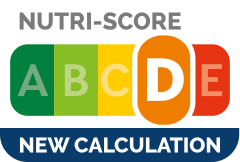 Lower nutritional quality
Nutri-Score data warning
Nutrient levels
Fat in moderate quantity (8.45%)
Saturated fat in moderate quantity (2.11%)
Sugars in high quantity (31%)
Salt in moderate quantity (1.09%)
Nutrition facts
| Nutrition facts | As sold for 100 g / 100 ml | Compared to: Cakes |
|---|---|---|
| Energy | 1238 kcal (296 kcal) | 1,676.953 kJ (400 kcal) |
| Fat | 8.45 g | 19.139 g (-56%) |
| Saturated fat | 2.11 g | 7.077 g (-70%) |
| Trans fat | 0 g | 0.036 g (-100%) |
| Cholesterol | 0.049 mg | 53.829 mg (-100%) |
| Carbohydrates | 50.7 g | 50.107 g (+1%) |
| Sugars | 30.99 g | 27.769 g (+12%) |
| Dietary fiber | 0 g | ? |
| Proteins | 4.23 g | 5.453 g (-22%) |
| Salt | 1.0925 mg | 0.582 g (-100%) |
| Sodium | 0.437 mg | 0.233 g (-100%) |
| Vitamin A | 0 IU | 62.718 µg |
| Vitamin C | 0.0017 mg | ? |
| Calcium | 0.056 mg | 44.975 mg (-100%) |
| Iron | 0.00101 mg | 1.509 mg (-100%) |
| Fruits, vegetables and legumes | ? | ? |
Nutrition facts (Detailed data)
| Nutrition facts | As sold for 100 g / 100 ml | As sold Per serving (legacy) |
|---|---|---|
| Energy | 1238 kcal (296 kcal) | 879 kcal (210 kcal) |
| Fat | 8.45 g | 6 g |
| Saturated fat | 2.11 g | 1.5 g |
| Trans fat | 0 g | 0 g |
| Cholesterol | 0.049 mg | 0.0348 mg |
| Carbohydrates | 50.7 g | 36 g |
| Sugars | 30.99 g | 22 g |
| Dietary fiber | 0 g | 0 g |
| Proteins | 4.23 g | 3 g |
| Salt | 1.0925 mg | 0.776 mg |
| Sodium | 0.437 mg | 0.31 mg |
| Vitamin A | 0 IU | 0 IU |
| Vitamin C | 0.0017 mg | 0.00121 mg |
| Calcium | 0.056 mg | 0.0398 mg |
| Iron | 0.00101 mg | 0.000717 mg |
| Fruits, vegetables and legumes | ? | ? |
Serving size
Ingredients
Ingredients list
Ingredient information
Added sugars
Allergens
Ingredients analysis
Palm oil content unknown
Contains non-vegan ingredients.
Unrecognized: en:cake-mix, en:iron, en:propylene-glycol-mono-and-diesters-of-fatty-acids, en:vital-wheat-gluten, en:glaze, en:mono-and-diglycerides-with-bht-and-citric-acid-as-preservatives, en:e339ii, en:streusel, en:reduced-iron, en:mono-and-digylcerides, en:yellow-lake-5, en:yellow-lake-6, en:e514i, en:orange-icing
Vegetarian status unknown
Unrecognized: en:cake-mix, en:iron, en:propylene-glycol-mono-and-diesters-of-fatty-acids, en:vital-wheat-gluten, en:glaze, en:mono-and-diglycerides-with-bht-and-citric-acid-as-preservatives, en:e339ii, en:streusel, en:reduced-iron, en:mono-and-digylcerides, en:yellow-lake-5, en:yellow-lake-6, en:e514i, en:orange-icing
Food Processing
NOVA group
 Ultra-processed food and drink products
Elements that indicate the product is in NOVA group 4
How NOVA works
Additives
E102 - TartrazineColour
Tartrazine (E102) is a synthetic lemon-yellow azo dye used as a food coloring.
It is found in a wide range of products such as soft drinks, desserts, candies, and snack foods to give them a vibrant yellow appearance.
While approved by many regulatory agencies, tartrazine has been linked to allergic reactions, such as hives, in a small portion of the population. Some studies have also suggested a link to increased hyperactivity in children, particularly when consumed with other additives like benzoates.
E110 - Sunset yellow FCFColour
Sunset Yellow FCF (also known as Orange Yellow S, or C.I. 15985) is a petroleum-derived orange azo dye with a pH dependent maximum absorption at about 480 nm at pH 1 and 443 nm at pH 13 with a shoulder at 500 nm. When added to foods sold in the US it is known as FD&C Yellow 6; when sold in Europe, it is denoted by E Number E110.
E1520 - Propylene Glycol EFSA overexposure risk: noEmulsifierHumectant
No additive description is available yet.
E202 - Potassium sorbate EFSA overexposure risk: highPreservative
Potassium sorbate (E202) is a synthetic food preservative commonly used to extend the shelf life of various food products.
It works by inhibiting the growth of molds, yeast, and some bacteria, preventing spoilage. When added to foods, it helps maintain their freshness and quality.
Some studies have shown that when combined with nitrites, potassium sorbate have genotoxic activity in vitro. However, potassium sorbate is generally recognized as safe (GRAS) by regulatory authorities.
E211 - Sodium benzoate EFSA overexposure risk: highPreservative
SODIUM BENZOATE is a substance which has the chemical formula NaC7H5O2
E282 - calcium propionatePreservative
CALCIUM PROPIONATE has the formula Ca(C2H5COO)2. Calcium propionate is used as a preservative in a wide variety of products, including but not limited to:bread, other baked goods, processed meat, whey, and other dairy products.
E320 - Butylated hydroxyanisole (bha)Antioxidant
Butylated hydroxyanisole (BHA) is an antioxidant consisting of a mixture of two isomeric organic compounds, 2-tert-butyl-4-hydroxyanisole and 3-tert-butyl-4-hydroxyanisole. It is prepared from 4-methoxyphenol and isobutylene. It is a waxy solid used as a food additive with the E number E320. The primary use for BHA is as an antioxidant and preservative in food, food packaging, animal feed, cosmetics, rubber, and petroleum products. BHA also is commonly used in medicines, such as isotretinoin, lovastatin, and simvastatin, among others.
E322 - LecithinsAntioxidantEmulsifier
Lecithins are natural compounds commonly used in the food industry as emulsifiers and stabilizers.
Extracted from sources like soybeans and eggs, lecithins consist of phospholipids that enhance the mixing of oil and water, ensuring smooth textures in various products like chocolates, dressings, and baked goods.
They do not present any known health risks.
E322i - LecithinAntioxidantEmulsifier
Lecithins are natural compounds commonly used in the food industry as emulsifiers and stabilizers.
Extracted from sources like soybeans and eggs, lecithins consist of phospholipids that enhance the mixing of oil and water, ensuring smooth textures in various products like chocolates, dressings, and baked goods.
They do not present any known health risks.
E330 - Citric acidAntioxidantSequestrant
Citric acid is a natural organic acid found in citrus fruits such as lemons, oranges, and limes.
It is widely used in the food industry as a flavor enhancer, acidulant, and preservative due to its tart and refreshing taste.
Citric acid is safe for consumption when used in moderation and is considered a generally recognized as safe (GRAS) food additive by regulatory agencies worldwide.
E338 - Phosphoric acid EFSA overexposure risk: highAntioxidantSequestrant
Phosphoric acid (also known as orthophosphoric acid or phosphoric(V) acid) is a weak acid with the chemical formula H3PO4. Orthophosphoric acid refers to phosphoric acid, which is the IUPAC name for this compound. The prefix ortho- is used to distinguish the acid from related phosphoric acids, called polyphosphoric acids. Orthophosphoric acid is a non-toxic acid, which, when pure, is a solid at room temperature and pressure. The conjugate base of phosphoric acid is the dihydrogen phosphate ion, H2PO−4, which in turn has a conjugate base of hydrogen phosphate, HPO2−4, which has a conjugate base of phosphate, PO3−4. Phosphates are essential for life.The most common source of phosphoric acid is an 85% aqueous solution; such solutions are colourless, odourless, and non-volatile. The 85% solution is a syrupy liquid, but still pourable. Although phosphoric acid does not meet the strict definition of a strong acid, the 85% solution is acidic enough to be corrosive. Because of the high percentage of phosphoric acid in this reagent, at least some of the orthophosphoric acid is condensed into polyphosphoric acids; for the sake of labeling and simplicity, the 85% represents H3PO4 as if it were all in the ortho form. Dilute aqueous solutions of phosphoric acid exist in the ortho form.
E339ii - Disodium phosphateEmulsifierHumectantPreservativeSequestrantStabiliserThickener
No additive description is available yet.
E406 - AgarCarrierEmulsifierHumectantStabiliserThickener
Agar (pronounced , sometimes ) or agar-agar is a jelly-like substance, obtained from red algae.Agar is a mixture of two components: the linear polysaccharide agarose, and a heterogeneous mixture of smaller molecules called agaropectin. It forms the supporting structure in the cell walls of certain species of algae, and is released on boiling. These algae are known as agarophytes, and belong to the Rhodophyta (red algae) phylum.Agar has been used as an ingredient in desserts throughout Asia, and also as a solid substrate to contain culture media for microbiological work. Agar can be used as a laxative, an appetite suppressant, a vegetarian substitute for gelatin, a thickener for soups, in fruit preserves, ice cream, and other desserts, as a clarifying agent in brewing, and for sizing paper and fabrics.The gelling agent in agar is an unbranched polysaccharide obtained from the cell walls of some species of red algae, primarily from tengusa (Gelidiaceae) and ogonori (Gracilaria). For commercial purposes, it is derived primarily from ogonori. In chemical terms, agar is a polymer made up of subunits of the sugar galactose.
E410 - Locust bean gumEmulsifierStabiliserThickener
Locust bean gum (LBG, also known as carob gum, carob bean gum, carobin, E410) is a thickening agent and a gelling agent used in food technology.
E412 - Guar gumEmulsifierStabiliserThickener
Guar gum (E412) is a natural food additive derived from guar beans.
This white, odorless powder is valued for its remarkable thickening and stabilizing properties, making it a common ingredient in various food products, including sauces, dressings, and ice creams.
When used in moderation, guar gum is considered safe for consumption, with no known adverse health effects.
E413 - TragacanthEmulsifierStabiliserThickener
Tragacanth is a natural gum obtained from the dried sap of several species of Middle Eastern legumes of the genus Astragalus, including A. adscendens, A. gummifer, A. brachycalyx, and A. tragacantha. Some of these species are known collectively under the common names "goat's thorn" and "locoweed". The gum is sometimes called Shiraz gum, shiraz, gum elect or gum dragon. The name derives from the Greek words tragos (meaning "goat") and akantha ("thorn"). Iran is the biggest producer of this gum. Gum tragacanth is a viscous, odorless, tasteless, water-soluble mixture of polysaccharides obtained from sap that is drained from the root of the plant and dried. The gum seeps from the plant in twisted ribbons or flakes that can be powdered. It absorbs water to become a gel, which can be stirred into a paste. The major fractions are known as tragacanthin, highly water soluble as a mucilaginous colloid, and the chemically related bassorin, which is far less soluble but swells in water to form a gel. The gum is used in vegetable-tanned leatherworking as an edge slicking and burnishing compound, and is occasionally used as a stiffener in textiles. The gum has been used historically as a herbal remedy for such conditions as cough and diarrhea. As a mucilage or paste, it has been used as a topical treatment for burns. It is used in pharmaceuticals and foods as an emulsifier, thickener, stabilizer, and texturant additive (E number E413). It is the traditional binder used in the making of artists' pastels, as it does not adhere to itself the same way other gums (such as gum arabic) do when dry. Gum tragacanth is also used to make a paste used in floral sugarcraft to create lifelike flowers on wires used as decorations for cakes, which air-dries brittle and can take colorings. It enables users to get a very fine, delicate finish to their work. It has traditionally been used as an adhesive in the cigar-rolling process used to secure the cap or "flag" leaf to the finished cigar body.Gum tragacanth is less common in products than other, usually cheaper, gums, such as gum arabic or guar gum. Different gums tend to be interchangeable across many uses, and production of tragacanth is far outpaced by these for reasons of economy, trade, agriculture and history, while tragacanth is mostly produced in traditional locations. However, gums are used in varied circumstances and there are many situations where tragacanth is considered superior. Common substitutions are methyl cellulose, sometimes marketed as "substitute gum tragacanth" in the food industry, and gum karaya. Gum karaya, also called "Indian tragacanth" or simply "tragacanth", might be fully or partially substituted for what appears to be genuine tragacanth. Gum tragacanth is also used in incense-making as a binder to hold all the powdered herbs together. Its water solubility is ideal for ease of working and an even spread, and it is one of the stronger gums for holding particles in suspension. Only half as much is needed, compared to gum arabic or something similar.In Saudi Arabia, a mixture of hydrated Tragacanth and ground dried Ziziphus spina-christi is used as a natural hair shampoo that is believed to promote hair growth.
E415 - Xanthan gumEmulsifierStabiliserThickener
Xanthan gum (E415) is a natural polysaccharide derived from fermented sugars, often used in the food industry as a thickening and stabilizing agent.
This versatile food additive enhances texture and prevents ingredient separation in a wide range of products, including salad dressings, sauces, and gluten-free baked goods.
It is considered safe for consumption even at high intake amounts.
E435 - Polyoxyethylene sorbitan monostearate EFSA overexposure risk: moderateEmulsifierStabiliser
No additive description is available yet.
E440 - PectinsEmulsifierStabiliserThickener
Pectins (E440) are natural carbohydrates, predominantly found in fruits, that act as gelling agents in the food industry, creating the desirable jelly-like texture in jams, jellies, and marmalades.
Pectins stabilize and thicken various food products, such as desserts, confectioneries, and beverages, ensuring a uniform consistency and quality.
Recognized as safe by various health authorities, pectins have been widely used without notable adverse effects when consumed in typical dietary amounts.
E450 - Diphosphates EFSA overexposure risk: highEmulsifierHumectantSequestrantStabiliserThickener
Diphosphates (E450) are food additives often utilized to modify the texture of products, acting as leavening agents in baking and preventing the coagulation of canned food.
These salts can stabilize whipped cream and are also found in powdered products to maintain their flow properties. They are commonly present in baked goods, processed meats, and soft drinks.
Derived from phosphoric acid, they're part of our daily phosphate intake, which often surpasses recommended levels due to the prevalence of phosphates in processed foods and drinks.
Excessive phosphate consumption is linked to health issues, such as impaired kidney function and weakened bone health. Though diphosphates are generally regarded as safe when consumed within established acceptable daily intakes, it's imperative to monitor overall phosphate consumption to maintain optimal health.
E450i - Disodium diphosphateEmulsifierHumectantSequestrantStabiliserThickener
No additive description is available yet.
E471 - Mono- and diglycerides of fatty acidsEmulsifierStabiliser
Mono- and diglycerides of fatty acids (E471), are food additives commonly used as emulsifiers in various processed foods.
These compounds consist of glycerol molecules linked to one or two fatty acid chains, which help stabilize and blend water and oil-based ingredients. E471 enhances the texture and shelf life of products like margarine, baked goods, and ice cream, ensuring a smooth and consistent texture.
It is generally considered safe for consumption within established regulatory limits.
E481 - Sodium stearoyl-2-lactylate EFSA overexposure risk: highEmulsifierStabiliser
Sodium stearoyl-2-lactylate (sodium stearoyl lactylate or SSL) is a versatile, FDA approved food additive used to improve the mix tolerance and volume of processed foods. It is one type of a commercially available lactylate. SSL is non-toxic, biodegradable, and typically manufactured using biorenewable feedstocks. Because SSL is a safe and highly effective food additive, it is used in a wide variety of products ranging from baked goods and desserts to pet foods.As described by the Food Chemicals Codex 7th edition, SSL is a cream-colored powder or brittle solid. SSL is currently manufactured by the esterification of stearic acid with lactic acid and partially neutralized with either food-grade soda ash (sodium carbonate) or caustic soda (concentrated sodium hydroxide). Commercial grade SSL is a mixture of sodium salts of stearoyl lactylic acids and minor proportions of other sodium salts of related acids. The HLB for SSL is 10-12. SSL is slightly hygroscopic, soluble in ethanol and in hot oil or fat, and dispersible in warm water. These properties are the reason that SSL is an excellent emulsifier for fat-in-water emulsions and can also function as a humectant.
E491 - Sorbitan monostearate EFSA overexposure risk: highEmulsifier
Sorbitan monostearate is an ester of sorbitan (a sorbitol derivative) and stearic acid and is sometimes referred to as a synthetic wax. It is primarily used as an emulsifier to keep water and oils mixed. Sorbitan monostearate is used in the manufacture of food and healthcare products and is a non-ionic surfactant with emulsifying, dispersing, and wetting properties. It is also employed to create synthetic fibers, metal machining fluid, and brighteners in the leather industry, and as an emulsifier in coatings, pesticides, and various applications in the plastics, food and cosmetics industries. Sorbitans are also known as "Spans". Sorbitan monostearate has been approved by the European Union for use as a food additive (emulsifier) (E number: E 491)
E500 - Sodium carbonatesStabiliserThickener
Sodium carbonates (E500) are compounds commonly used in food preparation as leavening agents, helping baked goods rise by releasing carbon dioxide when they interact with acids.
Often found in baking soda, they regulate the pH of food, preventing it from becoming too acidic or too alkaline. In the culinary world, sodium carbonates can also enhance the texture and structure of foods, such as noodles, by modifying the gluten network.
Generally recognized as safe, sodium carbonates are non-toxic when consumed in typical amounts found in food.
E500ii - Sodium hydrogen carbonateStabiliserThickener
Sodium hydrogen carbonate, also known as E500ii, is a food additive commonly used as a leavening agent.
When added to recipes, it releases carbon dioxide gas upon exposure to heat or acids, causing dough to rise and resulting in a light, fluffy texture in baked goods.
It is generally recognized as safe (GRAS) by regulatory authorities when used in appropriate quantities and poses no significant health risks when consumed in typical food applications.
E570 - Fatty acids
In chemistry, particularly in biochemistry, a fatty acid is a carboxylic acid with a long aliphatic chain, which is either saturated or unsaturated. Most naturally occurring fatty acids have an unbranched chain of an even number of carbon atoms, from 4 to 28. Fatty acids are usually not found per se in organisms, but instead as three main classes of esters: triglycerides, phospholipids, and cholesterol esters. In any of these forms, fatty acids are both important dietary sources of fuel for animals and they are important structural components for cells.
Environment
Green-Score, origins bonus, and transportation impact are shown for Worldwide .
Green Score
Overall grade
 Unknown environmental impact
About Green-Score
Current scope
Green-Score availability
Bonuses and maluses
Declared origins
Packaging impact
Packaging
Packaging impact
Data precision
Transportation
Declared origins
Forest footprint
Forest footprint
Ingredients linked to forest pressure
| Ingredient | Type | Percent in product | Forest footprint |
|---|---|---|---|
| EGG Yolk | Oeufs Importés | 3.13 % | 0.00 |
| EGG White | Oeufs Importés | 0.10 % | 0.00 |
| EGG | Oeufs Importés | 0.00 % | 0.00 |
Data Source
Product data comes from Open Food Facts. Food Benchmark also adds translations, category comparisons and explanatory calculations.
The database is licensed under ODbL 1.0, individual contents under DbCL 1.0, and product photos under CC BY-SA 3.0.
Product added on March 9, 2017 at 4:44:13 PM UTC by usda-ndb-import .
Last edit on April 22, 2020 at 9:00:58 PM UTC by org-database-usda .
Product page also edited by usda-ndb-import, org-database-usda.
Source List
- usda-ndb
- database-usda