

Wrapper Gyoza
Health
Nutrition
Nutri-Score
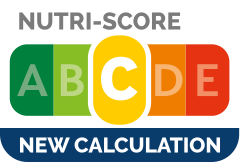 Average nutritional quality
Nutri-Score data warning
Nutrient levels
Fat in low quantity (1%)
Saturated fat in low quantity (0%)
Sugars in low quantity (1%)
Salt in moderate quantity (0.63%)
Nutrition facts
| Nutrition facts | As sold for 100 g / 100 ml | Compared to: Gyoza |
|---|---|---|
| Energy | ~ 1108 kJ (280 kcal) | 694.077 kJ (164 kcal) (+60%) |
| Fat | 1 g | 4.469 g (-78%) |
| Saturated fat | 0 g | 0.91 g (-100%) |
| Carbohydrates | 54 g | 22.873 g (+136%) |
| Sugars | 1 g | 2.383 g (-58%) |
| Dietary fiber | ? | ? |
| Proteins | 9 g | 6.843 g (+32%) |
| Salt | 0.63 g | 1.171 g (-46%) |
| Sodium | 0.252 g | 0.474 g (-47%) |
| Fruits, vegetables and legumes | ~ 0 % | ? |
Nutrition facts (Detailed data)
| Nutrition facts | As sold for 100 g / 100 ml | As sold Per 100 g (packaging) | As sold Per 100 g (estimate) |
|---|---|---|---|
| Energy | ~ 1108 kJ (280 kcal) | ? (280 kcal) | ? |
| Fat | 1 g | 1 g | ? |
| Saturated fat | 0 g | 0 g | ? |
| Carbohydrates | 54 g | 54 g | ? |
| Sugars | 1 g | 1 g | ? |
| Dietary fiber | ? | ? | ? |
| Proteins | 9 g | 9 g | ? |
| Salt | 0.63 g | 0.63 g | ? |
| Sodium | 0.252 g | 0.252 g | ? |
| Fruits, vegetables and legumes | ~ 0 % | ? | ~ 0 % |
Ingredients
Ingredients image

Ingredients list
Ingredient information
Allergens
Ingredients analysis
No ingredients containing palm oil.
Contains non-vegan ingredients.
Vegetarian status unknown
Food Processing
NOVA group
 Ultra-processed food and drink products
Elements that indicate the product is in NOVA group 4
How NOVA works
Additives
E211 - Sodium benzoate EFSA overexposure risk: highPreservative
SODIUM BENZOATE is a substance which has the chemical formula NaC7H5O2
E280 - Propionic acidPreservative
Propionic acid (from the Greek words protos, meaning "first", and pion, meaning "fat"; also known as propanoic acid) is a naturally occurring carboxylic acid with chemical formula CH3CH2CO2H. It is a liquid with a pungent and unpleasant smell somewhat resembling body odor. The anion CH3CH2CO2− as well as the salts and esters of propionic acid are known as propionates (or propanoates).
E282 - calcium propionatePreservative
CALCIUM PROPIONATE has the formula Ca(C2H5COO)2. Calcium propionate is used as a preservative in a wide variety of products, including but not limited to:bread, other baked goods, processed meat, whey, and other dairy products.
E420 - SorbitolHumectantSequestrantStabiliserSweetenerThickener
Sorbitol (), less commonly known as glucitol (), is a sugar alcohol with a sweet taste which the human body metabolizes slowly. It can be obtained by reduction of glucose, which changes the aldehyde group to a hydroxyl group. Most sorbitol is made from corn syrup, but it is also found in nature, for example in apples, pears, peaches, and prunes. It is converted to fructose by sorbitol-6-phosphate 2-dehydrogenase. Sorbitol is an isomer of mannitol, another sugar alcohol; the two differ only in the orientation of the hydroxyl group on carbon 2. While similar, the two sugar alcohols have very different sources in nature, melting points, and uses.
Environment
Green-Score, origins bonus, and transportation impact are shown for Worldwide .
Green Score
Overall grade
 Unknown environmental impact
About Green-Score
Current scope
Green-Score availability
Bonuses and maluses
Origins of ingredients
Packaging impact
Packaging
Packaging impact
Packaging components
| Shape | Material | Recycling | Impact |
|---|---|---|---|
| Unknown | Plastic | Unknown | High |
Declared packaging
Data precision
Transportation
Origins of ingredients
Origins breakdown
| Origin | Percent of ingredients | Impact |
|---|---|---|
| United States | 105 % | Medium |
Forest footprint
Forest footprint
Ingredients linked to forest pressure
| Ingredient | Type | Percent in product | Forest footprint |
|---|---|---|---|
| EGG White | Oeufs Importés | 0.63 % | 0.00 |
| EGG Yolk | Oeufs Importés | 0.63 % | 0.00 |
Data Source
Product data comes from Open Food Facts. Food Benchmark also adds translations, category comparisons and explanatory calculations.
The database is licensed under ODbL 1.0, individual contents under DbCL 1.0, and product photos under CC BY-SA 3.0.
Product added on February 25, 2015 at 9:12:31 AM UTC by jiehong .
Last edit on March 25, 2026 at 6:13:19 PM UTC by new-nutrition-bot .
Product page also edited by jiehong, moon-rabbit, new-nutrition-bot, packbot, yuka.ZEo5ZUxJQUttYWNFbHNRd3JpSHo5OTR0MXI2Z1hXZW9JTkEvSVE9PQ.