
Hill & Valley, Pumpkin Pie, No Sugar Added
Health
Nutrition
Nutri-Score
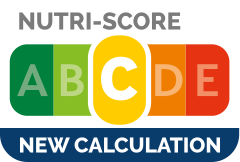 Average nutritional quality
Nutri-Score data warning
Nutrient levels
Fat in moderate quantity (10.6%)
Saturated fat in moderate quantity (4.81%)
Sugars in low quantity (1.92%)
Salt in moderate quantity (1.01%)
Nutrition facts
| Nutrition facts | As sold for 100 g / 100 ml | Compared to: Cakes |
|---|---|---|
| Energy | 1004 kcal (240 kcal) | 1,676.944 kJ (400 kcal) |
| Fat | 10.58 g | 19.139 g (-45%) |
| Saturated fat | 4.81 g | 7.077 g (-32%) |
| Trans fat | 0 g | 0.036 g (-100%) |
| Cholesterol | 0.029 mg | 53.811 mg (-100%) |
| Carbohydrates | 33.65 g | 50.108 g (-33%) |
| Sugars | 1.92 g | 27.77 g (-93%) |
| Polyols | 13 g | ? |
| Dietary fiber | 2.9 g | ? |
| Proteins | 3.85 g | 5.453 g (-29%) |
| Salt | 1.01 mg | 0.583 g (-100%) |
| Sodium | 0.404 mg | 0.233 g (-100%) |
| Vitamin A | 0.0007212 IU | 62.686 µg |
| Vitamin C | 0.0012 mg | ? |
| Calcium | 0.038 mg | 44.963 mg (-100%) |
| Iron | 0.00104 mg | 1.51 mg (-100%) |
| Fruits, vegetables and legumes | ? | ? |
Nutrition facts (Detailed data)
| Nutrition facts | As sold for 100 g / 100 ml | As sold Per serving (legacy) |
|---|---|---|
| Energy | 1004 kcal (240 kcal) | 1040 kcal (250 kcal) |
| Fat | 10.58 g | 11 g |
| Saturated fat | 4.81 g | 5 g |
| Trans fat | 0 g | 0 g |
| Cholesterol | 0.029 mg | 0.0302 mg |
| Carbohydrates | 33.65 g | 35 g |
| Sugars | 1.92 g | 2 g |
| Polyols | 13 g | 13.5 g |
| Dietary fiber | 2.9 g | 3.02 g |
| Proteins | 3.85 g | 4 g |
| Salt | 1.01 mg | 1.05 mg |
| Sodium | 0.404 mg | 0.42 mg |
| Vitamin A | 0.0007212 IU | 0.00075 IU |
| Vitamin C | 0.0012 mg | 0.00125 mg |
| Calcium | 0.038 mg | 0.0395 mg |
| Iron | 0.00104 mg | 0.00108 mg |
| Fruits, vegetables and legumes | ? | ? |
Serving size
Ingredients
Ingredients list
Ingredient information
Allergens
Ingredients analysis
Contains ingredients containing palm oil.
Contains non-vegan ingredients.
Unrecognized: en:blend, en:mono-and-diesters-of-fatty-acids, en:glyceryl-lacto-esters-of-fatty-acids, en:carageenan
Vegetarian status unknown
Unrecognized: en:blend, en:mono-and-diesters-of-fatty-acids, en:glyceryl-lacto-esters-of-fatty-acids, en:carageenan
Food Processing
NOVA group
 Ultra-processed food and drink products
Elements that indicate the product is in NOVA group 4
How NOVA works
Additives
E1520 - Propylene Glycol EFSA overexposure risk: noEmulsifierHumectant
No additive description is available yet.
E200 - Sorbic acid EFSA overexposure risk: highPreservative
SORBIC ACID, or 2,4-hexadienoic acid, is a natural organic compound used as a food preservative. It has the chemical formula CH3(CH)4CO2H.
E211 - Sodium benzoate EFSA overexposure risk: highPreservative
SODIUM BENZOATE is a substance which has the chemical formula NaC7H5O2
E282 - calcium propionatePreservative
CALCIUM PROPIONATE has the formula Ca(C2H5COO)2. Calcium propionate is used as a preservative in a wide variety of products, including but not limited to:bread, other baked goods, processed meat, whey, and other dairy products.
E420 - SorbitolHumectantSequestrantStabiliserSweetenerThickener
Sorbitol (), less commonly known as glucitol (), is a sugar alcohol with a sweet taste which the human body metabolizes slowly. It can be obtained by reduction of glucose, which changes the aldehyde group to a hydroxyl group. Most sorbitol is made from corn syrup, but it is also found in nature, for example in apples, pears, peaches, and prunes. It is converted to fructose by sorbitol-6-phosphate 2-dehydrogenase. Sorbitol is an isomer of mannitol, another sugar alcohol; the two differ only in the orientation of the hydroxyl group on carbon 2. While similar, the two sugar alcohols have very different sources in nature, melting points, and uses.
E420ii - Sorbitol syrupHumectantSequestrantStabiliserSweetenerThickener
No additive description is available yet.
E471 - Mono- and diglycerides of fatty acidsEmulsifierStabiliser
Mono- and diglycerides of fatty acids (E471), are food additives commonly used as emulsifiers in various processed foods.
These compounds consist of glycerol molecules linked to one or two fatty acid chains, which help stabilize and blend water and oil-based ingredients. E471 enhances the texture and shelf life of products like margarine, baked goods, and ice cream, ensuring a smooth and consistent texture.
It is generally considered safe for consumption within established regulatory limits.
E500 - Sodium carbonatesStabiliserThickener
Sodium carbonates (E500) are compounds commonly used in food preparation as leavening agents, helping baked goods rise by releasing carbon dioxide when they interact with acids.
Often found in baking soda, they regulate the pH of food, preventing it from becoming too acidic or too alkaline. In the culinary world, sodium carbonates can also enhance the texture and structure of foods, such as noodles, by modifying the gluten network.
Generally recognized as safe, sodium carbonates are non-toxic when consumed in typical amounts found in food.
E500ii - Sodium hydrogen carbonateStabiliserThickener
Sodium hydrogen carbonate, also known as E500ii, is a food additive commonly used as a leavening agent.
When added to recipes, it releases carbon dioxide gas upon exposure to heat or acids, causing dough to rise and resulting in a light, fluffy texture in baked goods.
It is generally recognized as safe (GRAS) by regulatory authorities when used in appropriate quantities and poses no significant health risks when consumed in typical food applications.
E570 - Fatty acids
In chemistry, particularly in biochemistry, a fatty acid is a carboxylic acid with a long aliphatic chain, which is either saturated or unsaturated. Most naturally occurring fatty acids have an unbranched chain of an even number of carbon atoms, from 4 to 28. Fatty acids are usually not found per se in organisms, but instead as three main classes of esters: triglycerides, phospholipids, and cholesterol esters. In any of these forms, fatty acids are both important dietary sources of fuel for animals and they are important structural components for cells.
E575 - Glucono-delta-lactoneSequestrant
Glucono delta-lactone (GDL), also known as gluconolactone, is a food additive with the E number E575 used as a sequestrant, an acidifier, or a curing, pickling, or leavening agent. It is a lactone of D-gluconic acid. Pure GDL is a white odorless crystalline powder. GDL has been marketed for use in feta cheese. GDL is neutral, but hydrolyses in water to gluconic acid which is acidic, adding a tangy taste to foods, though it has roughly a third of the sourness of citric acid. It is metabolized to 6-phospho-D-gluconate; one gram of GDL yields roughly the same amount of metabolic energy as one gram of sugar. Upon addition to water, GDL is partially hydrolysed to gluconic acid, with the balance between the lactone form and the acid form established as a chemical equilibrium. The rate of hydrolysis of GDL is increased by heat and high pH.The yeast Saccharomyces bulderi can be used to ferment gluconolactone to ethanol and carbon dioxide. The pH value greatly affects culture growth. Gluconolactone at 1 or 2% in a mineral media solution causes the pH to drop below 3.It is also a complete inhibitor of the enzyme amygdalin beta-glucosidase at concentrations of 1 mM.
E950 - Acesulfame kSweetener
Acesulfame potassium ( AY-see-SUL-faym), also known as acesulfame K (K is the symbol for potassium) or Ace K, is a calorie-free sugar substitute (artificial sweetener) often marketed under the trade names Sunett and Sweet One. In the European Union, it is known under the E number (additive code) E950. It was discovered accidentally in 1967 by German chemist Karl Clauss at Hoechst AG (now Nutrinova). In chemical structure, acesulfame potassium is the potassium salt of 6-methyl-1,2,3-oxathiazine-4(3H)-one 2,2-dioxide. It is a white crystalline powder with molecular formula C4H4KNO4S and a molecular weight of 201.24 g/mol.
E955 - SucraloseSweetener
Sucralose is an artificial sweetener and sugar substitute. The majority of ingested sucralose is not broken down by the body, so it is noncaloric. In the European Union, it is also known under the E number E955. It is produced by chlorination of sucrose. Sucralose is about 320 to 1,000 times sweeter than sucrose, three times as sweet as both aspartame and acesulfame potassium, and twice as sweet as sodium saccharin. Evidence of benefit is lacking for long-term weight loss with some data supporting weight gain and heart disease risks.It is stable under heat and over a broad range of pH conditions. Therefore, it can be used in baking or in products that require a long shelf life. The commercial success of sucralose-based products stems from its favorable comparison to other low-calorie sweeteners in terms of taste, stability, and safety. Common brand names of sucralose-based sweeteners are Splenda, Zerocal, Sukrana, SucraPlus, Candys, Cukren, and Nevella. Canderel Yellow also contains sucralose, but the original Canderel and Green Canderel do not.
E965 - maltitolEmulsifierHumectantStabiliserSweetenerThickener
MALTITOL is a sugar alcohol (a polyol) used as a sugar substitute. It has 75–90% of the sweetness of sucrose (table sugar) and nearly identical properties, except for browning. Maltitol's high sweetness allows it to be used without being mixed with other sweeteners. It is used in candy manufacture, particularly sugar-free hard candy, chewing gum, chocolates, baked goods, and ice cream.
Environment
Green-Score, origins bonus, and transportation impact are shown for Worldwide .
Green Score
Overall grade
 Unknown environmental impact
About Green-Score
Current scope
Green-Score availability
Bonuses and maluses
Declared origins
Threatened species risk
Packaging impact
Packaging
Packaging impact
Data precision
Transportation
Declared origins
Forest footprint
Forest footprint
Ingredients linked to forest pressure
| Ingredient | Type | Percent in product | Forest footprint |
|---|---|---|---|
| EGG | Oeufs Importés | 0.75 % | 0.00 |
Data Source
Product data comes from Open Food Facts. Food Benchmark also adds translations, category comparisons and explanatory calculations.
The database is licensed under ODbL 1.0, individual contents under DbCL 1.0, and product photos under CC BY-SA 3.0.
Product added on March 10, 2017 at 10:26:49 AM UTC by usda-ndb-import .
Last edit on April 23, 2020 at 9:29:42 AM UTC by org-database-usda .
Product page also edited by org-database-usda, usda-ndb-import.
Source List
- usda-ndb
- database-usda