
Panera Bread, Asiago Ranch Dressing With Yogurt
Health
Nutrition
Nutri-Score
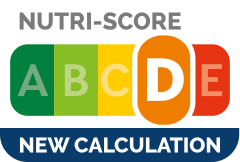 Lower nutritional quality
Nutri-Score data warning
Nutrient levels
Fat in high quantity (30%)
Saturated fat in high quantity (6.67%)
Sugars in low quantity (3.33%)
Salt in high quantity (1.58%)
Nutrition facts
| Nutrition facts | As sold for 100 g / 100 ml | Compared to: Sauces |
|---|---|---|
| Energy | 1255 kcal (300 kcal) | 877.81 kJ (214 kcal) |
| Fat | 30 g | 15.716 g (+91%) |
| Saturated fat | 6.67 g | 2.067 g (+223%) |
| Trans fat | 0 g | 0.001 g (-100%) |
| Cholesterol | 0.033 mg | 7.338 mg (-100%) |
| Carbohydrates | 6.67 g | 10.933 g (-39%) |
| Sugars | 3.33 g | 6.733 g (-51%) |
| Dietary fiber | 0 g | ? |
| Proteins | 3.33 g | 2.602 g (+28%) |
| Salt | 1.5825 mg | 2.015 g (-100%) |
| Sodium | 0.633 mg | 0.805 g (-100%) |
| Vitamin A | 0 IU | 5.635 µg |
| Vitamin C | 0 mg | ? |
| Calcium | 0.133 mg | 27.588 mg (-100%) |
| Iron | 0 mg | 0.585 mg (-100%) |
| Fruits, vegetables and legumes | ? | ? |
Nutrition facts (Detailed data)
| Nutrition facts | As sold for 100 g / 100 ml | As sold Per serving (legacy) |
|---|---|---|
| Energy | 1255 kcal (300 kcal) | 376 kcal (90 kcal) |
| Fat | 30 g | 9 g |
| Saturated fat | 6.67 g | 2 g |
| Trans fat | 0 g | 0 g |
| Cholesterol | 0.033 mg | 0.0099 mg |
| Carbohydrates | 6.67 g | 2 g |
| Sugars | 3.33 g | 0.999 g |
| Dietary fiber | 0 g | 0 g |
| Proteins | 3.33 g | 0.999 g |
| Salt | 1.5825 mg | 0.475 mg |
| Sodium | 0.633 mg | 0.19 mg |
| Vitamin A | 0 IU | 0 IU |
| Vitamin C | 0 mg | 0 mg |
| Calcium | 0.133 mg | 0.0399 mg |
| Iron | 0 mg | 0 mg |
| Fruits, vegetables and legumes | ? | ? |
Serving size
Ingredients
Ingredients list
Ingredient information
Added sugars
Allergens
Ingredients analysis
Palm oil content unknown
Contains non-vegan ingredients.
Unrecognized: en:sodium-citrate, en:cultured-pasteurized-grade-a-reduced-fat-milk, en:natamycin-to-maintain-freshness, en:contains-less-than-2-of-salt, en:parsley-spice
Vegetarian status unknown
Unrecognized: en:sodium-citrate, en:cultured-pasteurized-grade-a-reduced-fat-milk, en:natamycin-to-maintain-freshness, en:contains-less-than-2-of-salt, en:parsley-spice
Food Processing
NOVA group
 Ultra-processed food and drink products
Elements that indicate the product is in NOVA group 4
How NOVA works
Additives
E270 - Lactic acid
LACTIC ACID is an organic compound with the formula CH3CH(OH)CO2H. In the form of its conjugate base called lactate (this is thus different and kept as a separate ingredient). Lactic acid is chiral, consisting of two optical isomers. One is known as L-(+)-lactic acid or (S)-lactic acid and the other, its mirror image, is D-(−)-lactic acid or (R)-lactic acid in food the L-variant is used
E331 - Sodium citratesEmulsifierSequestrantStabiliser
DISODIUM CITRATE, more properly, disodium hydrogen citrate, is an acid salt of citric acid with the chemical formula Na2C6H6O7. It is used as an antioxidant in food and to improve the effects of other antioxidants. It is also used as an acidity regulator and sequestrant. Typical products include gelatin, jam, sweets, ice cream, carbonated beverages, milk powder, wine, and processed cheeses.
E407 - Carrageenan EFSA overexposure risk: highCarrierEmulsifierHumectantStabiliserThickener
Carrageenan (E407), derived from red seaweed, is widely employed in the food industry as a gelling, thickening, and stabilizing agent, notably in dairy and meat products.
It can exist in various forms, each imparting distinct textural properties to food.
However, its degraded form, often referred to as poligeenan, has raised health concerns due to its potential inflammatory effects and its classification as a possible human carcinogen (Group 2B) by the International Agency for Research on Cancer (IARC).
Nevertheless, food-grade carrageenan has been deemed safe by various regulatory bodies when consumed in amounts typically found in food.
E410 - Locust bean gumEmulsifierStabiliserThickener
Locust bean gum (LBG, also known as carob gum, carob bean gum, carobin, E410) is a thickening agent and a gelling agent used in food technology.
E415 - Xanthan gumEmulsifierStabiliserThickener
Xanthan gum (E415) is a natural polysaccharide derived from fermented sugars, often used in the food industry as a thickening and stabilizing agent.
This versatile food additive enhances texture and prevents ingredient separation in a wide range of products, including salad dressings, sauces, and gluten-free baked goods.
It is considered safe for consumption even at high intake amounts.
E466 - Sodium carboxy methyl celluloseEmulsifierHumectantStabiliserThickener
Carboxymethyl cellulose (CMC) or cellulose gum or tylose powder is a cellulose derivative with carboxymethyl groups (-CH2-COOH) bound to some of the hydroxyl groups of the glucopyranose monomers that make up the cellulose backbone. It is often used as its sodium salt, sodium carboxymethyl cellulose.
E471 - Mono- and diglycerides of fatty acidsEmulsifierStabiliser
Mono- and diglycerides of fatty acids (E471), are food additives commonly used as emulsifiers in various processed foods.
These compounds consist of glycerol molecules linked to one or two fatty acid chains, which help stabilize and blend water and oil-based ingredients. E471 enhances the texture and shelf life of products like margarine, baked goods, and ice cream, ensuring a smooth and consistent texture.
It is generally considered safe for consumption within established regulatory limits.
Environment
Green-Score, origins bonus, and transportation impact are shown for Worldwide .
Green Score
Overall grade
 Unknown environmental impact
About Green-Score
Current scope
Green-Score availability
Bonuses and maluses
Declared origins
Packaging impact
Packaging
Packaging impact
Data precision
Transportation
Declared origins
Forest footprint
Forest footprint
Ingredients linked to forest pressure
| Ingredient | Type | Percent in product | Forest footprint |
|---|---|---|---|
| EGG Yolk | Oeufs Importés | 0.37 % | 0.00 |
Data Source
Product data comes from Open Food Facts. Food Benchmark also adds translations, category comparisons and explanatory calculations.
The database is licensed under ODbL 1.0, individual contents under DbCL 1.0, and product photos under CC BY-SA 3.0.
Product added on March 9, 2017 at 9:12:52 PM UTC by usda-ndb-import .
Last edit on April 22, 2020 at 10:09:18 PM UTC by org-database-usda .
Product page also edited by org-database-usda, usda-ndb-import.
Source List
- usda-ndb
- database-usda