

Ranch Dressing
Health
Nutrition
Nutri-Score
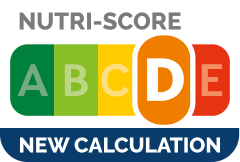 Lower nutritional quality
Nutri-Score data warning
Nutrient levels
Fat in high quantity (40%)
Saturated fat in moderate quantity (2%)
Sugars in low quantity (1%)
Salt in high quantity (2.46%)
Nutrition facts
| Nutrition facts | As sold for 100 ml | Compared to: Salad dressings |
|---|---|---|
| Energy | ~ 1514 kJ (367 kcal) | 1,270.422 kJ (308 kcal) (+19%) |
| Fat | 40 g | 29.095 g (+37%) |
| Saturated fat | 2 g | 3.103 g (-36%) |
| Cholesterol | 0.0344827586206897 g | 10.994 mg (+214%) |
| Carbohydrates | 2 g | 8.113 g (-75%) |
| Sugars | 1 g | 5.678 g (-82%) |
| Added sugars | 1.72413793103448 g | 3.55 g (-51%) |
| Dietary fiber | ~ 0 g | ? |
| Proteins | 0 g | 0.949 g (-100%) |
| Salt | 2.4553 g | 1.749 g (+40%) |
| Sodium | 0.98212 g | 0.698 g (+41%) |
| Fruits, vegetables and legumes | ~ 0 % | ? |
Nutrition facts (Detailed data)
| Nutrition facts | As sold for 100 ml | As sold Per 100 ml (packaging) | As sold Per serving (29 g) (packaging) | As sold Per 100 g (estimate) |
|---|---|---|---|---|
| Energy | ~ 1514 kJ (367 kcal) | ? (367 kcal) | ? (120 kcal) | ~ 1329.9068 kJ (322 kcal) |
| Fat | 40 g | 40 g | 12 g | ~ 34.6432 g |
| Saturated fat | 2 g | 2 g | 2 g | ~ 5.08767 g |
| Cholesterol | 0.0344827586206897 g | ? | 0.01 g | ~ 0 g |
| Carbohydrates | 2 g | 2 g | 2 g | ~ 1.20384 g |
| Sugars | 1 g | 1 g | 1 g | ~ 1.01128 g |
| Added sugars | 1.72413793103448 g | ? | 0.5 g | ~ 1 g |
| Dietary fiber | ~ 0 g | ? | ? | ~ 0 g |
| Proteins | 0 g | 0 g | 0 g | ~ 0.01328 g |
| Salt | 2.4553 g | 2.4553 g | ? | ~ 0.0135332 g |
| Sodium | 0.98212 g | 0.98212 g | 0.98212 g | ~ 0.005361516 g |
| Fruits, vegetables and legumes | ~ 0 % | ? | ? | ~ 0 % |
Serving size
Ingredients
Ingredients image

Ingredients list
Ingredient information
Added sugars
Allergens
Ingredients analysis
No ingredients containing palm oil.
Unrecognized: en:contains less than 2% of modified food starch, en:to protect freshness, en:kraft heinz f0ods company
Contains non-vegan ingredients.
Unrecognized: en:contains less than 2% of modified food starch, en:to protect freshness, en:kraft heinz f0ods company
Vegetarian status unknown
Unrecognized: en:contains less than 2% of modified food starch, en:to protect freshness, en:kraft heinz f0ods company
Food Processing
NOVA group
 Ultra-processed food and drink products
Elements that indicate the product is in NOVA group 4
How NOVA works
Additives
E202 - Potassium sorbate EFSA overexposure risk: highPreservative
Potassium sorbate (E202) is a synthetic food preservative commonly used to extend the shelf life of various food products.
It works by inhibiting the growth of molds, yeast, and some bacteria, preventing spoilage. When added to foods, it helps maintain their freshness and quality.
Some studies have shown that when combined with nitrites, potassium sorbate have genotoxic activity in vitro. However, potassium sorbate is generally recognized as safe (GRAS) by regulatory authorities.
E338 - Phosphoric acid EFSA overexposure risk: highAntioxidantSequestrant
Phosphoric acid (also known as orthophosphoric acid or phosphoric(V) acid) is a weak acid with the chemical formula H3PO4. Orthophosphoric acid refers to phosphoric acid, which is the IUPAC name for this compound. The prefix ortho- is used to distinguish the acid from related phosphoric acids, called polyphosphoric acids. Orthophosphoric acid is a non-toxic acid, which, when pure, is a solid at room temperature and pressure. The conjugate base of phosphoric acid is the dihydrogen phosphate ion, H2PO−4, which in turn has a conjugate base of hydrogen phosphate, HPO2−4, which has a conjugate base of phosphate, PO3−4. Phosphates are essential for life.The most common source of phosphoric acid is an 85% aqueous solution; such solutions are colourless, odourless, and non-volatile. The 85% solution is a syrupy liquid, but still pourable. Although phosphoric acid does not meet the strict definition of a strong acid, the 85% solution is acidic enough to be corrosive. Because of the high percentage of phosphoric acid in this reagent, at least some of the orthophosphoric acid is condensed into polyphosphoric acids; for the sake of labeling and simplicity, the 85% represents H3PO4 as if it were all in the ortho form. Dilute aqueous solutions of phosphoric acid exist in the ortho form.
E385 - Calcium disodium ethylenediaminetetraacetateAntioxidantPreservativeSequestrant
No additive description is available yet.
E415 - Xanthan gumEmulsifierStabiliserThickener
Xanthan gum (E415) is a natural polysaccharide derived from fermented sugars, often used in the food industry as a thickening and stabilizing agent.
This versatile food additive enhances texture and prevents ingredient separation in a wide range of products, including salad dressings, sauces, and gluten-free baked goods.
It is considered safe for consumption even at high intake amounts.
E621 - Monosodium glutamate EFSA overexposure risk: highFlavour Enhancer
Monosodium glutamate (MSG), or E621, is the sodium salt of glutamic acid, an amino acid found naturally in many foods.
It is widely used as a flavor enhancer to provide an "umami" or savory taste to a variety of processed foods, including soups, snack chips, and frozen meals.
MSG is generally recognized as safe (GRAS) by food authorities. However, some people report sensitivity to MSG, experiencing short-term symptoms like headaches and flushing, though scientific studies have not shown a consistent link.
E627 - Disodium guanylate
Disodium guanylate, also known as sodium 5'-guanylate and disodium 5'-guanylate, is a natural sodium salt of the flavor enhancing nucleotide guanosine monophosphate (GMP). Disodium guanylate is a food additive with the E number E627. It is commonly used in conjunction with glutamic acid. As it is a fairly expensive additive, it is not used independently of glutamic acid; if disodium guanylate is present in a list of ingredients but MSG does not appear to be, it is likely that glutamic acid is provided as part of another ingredient such as a processed soy protein complex. It is often added to foods in conjunction with disodium inosinate; the combination is known as disodium 5'-ribonucleotides. Disodium guanylate is produced from dried seaweed and is often added to instant noodles, potato chips and other snacks, savory rice, tinned vegetables, cured meats, and packaged soup.
E631 - Disodium inosinate
Disodium inosinate (E631) is the disodium salt of inosinic acid with the chemical formula C10H11N4Na2O8P. It is used as a food additive and often found in instant noodles, potato chips, and a variety of other snacks. Although it can be obtained from bacterial fermentation of sugars, it is often commercially prepared from animal sources.
Environment
Green-Score, origins bonus, and transportation impact are shown for Worldwide .
Green Score
Overall grade
 High environmental impact
About Green-Score
Current scope
Life cycle analysis
Average impact of the category
 Salad dressing, prepacked • Score: 58/100
Life-cycle reference
Overall environmental impact by stage (PEF)
The overall environmental impact figure (PEF) comes from ADEME's Agribalyse database, for the category: Salad dressing, prepacked. Source: ADEME Agribalyse Database.
| Stage | Impact |
|---|---|
| Agriculture | 68.6 % |
| Processing | 11.3 % |
| Packaging | 11.6 % |
| Transportation | 5.8 % |
| Distribution | 2.3 % |
| Consumption | 0.6 % |
Bonuses and maluses
Declared origins
Packaging impact
Green-Score for this product
Green-Score for this product
Final score: 38/100Final score breakdown
Carbon footprint
Carbon footprint
Climate impact by stage (CO2e)
The carbon emission figure comes from ADEME's Agribalyse database, for the category: Salad dressing, prepacked. Source: ADEME Agribalyse Database.
| Stage | Impact |
|---|---|
| Agriculture | 59.7 % |
| Processing | 12.1 % |
| Packaging | 13.7 % |
| Transportation | 12.4 % |
| Distribution | 1.8 % |
| Consumption | 0.3 % |
Packaging
Packaging impact
Data precision
Transportation
Declared origins
Forest footprint
Forest footprint
Ingredients linked to forest pressure
| Ingredient | Type | Percent in product | Forest footprint |
|---|---|---|---|
| EGG Yolk | Oeufs Importés | 0.00 % | 0.00 |
Data Source
Product data comes from Open Food Facts. Food Benchmark also adds translations, category comparisons and explanatory calculations.
The database is licensed under ODbL 1.0, individual contents under DbCL 1.0, and product photos under CC BY-SA 3.0.
Product added on May 2, 2018 at 7:08:51 PM UTC by kiliweb .
Last edit on July 21, 2026 at 10:35:46 PM UTC by macrofactor .
Product page also edited by foodless, inf, kiliweb, macrofactor, new-nutrition-bot, openfoodfacts-contributors, paz974, teolemon, yuka.KZdjP8K6Tux6R_HDw7sd_x-dH_fPH_JrKW5cog, yuka.V1lBaERyZ1BuYWtKb2NSandqSFIySTR1eXJtWEJYR2JjTUFySVE9PQ.