
Healthy Life, Whole Grain Bread
Health
Nutrition
Nutri-Score
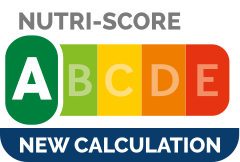 Very good nutritional quality
Nutri-Score data warning
Nutrient levels
Fat in low quantity (2.44%)
Saturated fat in low quantity (0%)
Sugars in low quantity (0%)
Salt in moderate quantity (0.792%)
Nutrition facts
| Nutrition facts | As sold for 100 g / 100 ml | Compared to: Breads |
|---|---|---|
| Energy | ~ 998.11 kJ (195 kcal) | 1,245.584 kJ (294 kcal) (-20%) |
| Fat | 2.44 g | 5.131 g (-52%) |
| Saturated fat | 0 g | 0.904 g (-100%) |
| Monounsaturated fat | 0 g | 1.201 g (-100%) |
| Polyunsaturated fat | 0 g | 1.393 g (-100%) |
| Trans fat | 0 g | 0 g |
| Cholesterol | 0 g | 1.297 mg (-100%) |
| Carbohydrates | 36.59 g | 50.537 g (-28%) |
| Sugars | 0 g | 3.588 g (-100%) |
| Dietary fiber | 9.8 g | ? |
| Proteins | 12.2 g | 9.282 g (+31%) |
| Salt | 0.7925 g | 1.224 g (-35%) |
| Sodium | 0.317 g | 0.489 g (-35%) |
| Vitamin A | 0 g | 2.523 µg (-100%) |
| Vitamin C | 0 g | ? |
| Vitamin PP | 0.003902 g | ? |
| Calcium | 0.146 g | 54.609 mg (+167%) |
| Iron | 0.00351 g | 2.196 mg (+60%) |
| Fruits, vegetables and legumes | ~ 0 % | ? |
Nutrition facts (Detailed data)
| Nutrition facts | As sold for 100 g / 100 ml | As sold Per 100 g (packaging) | As sold Per 100 g (estimate) |
|---|---|---|---|
| Energy | ~ 998.11 kJ (195 kcal) | ? (195 kcal) | ? |
| Fat | 2.44 g | 2.44 g | ? |
| Saturated fat | 0 g | 0 g | ? |
| Monounsaturated fat | 0 g | 0 g | ? |
| Polyunsaturated fat | 0 g | 0 g | ? |
| Trans fat | 0 g | 0 g | ? |
| Cholesterol | 0 g | 0 g | ? |
| Carbohydrates | 36.59 g | 36.59 g | ? |
| Sugars | 0 g | 0 g | ? |
| Dietary fiber | 9.8 g | 9.8 g | ? |
| Proteins | 12.2 g | 12.2 g | ? |
| Salt | 0.7925 g | 0.7925 g | ? |
| Sodium | 0.317 g | 0.317 g | ? |
| Vitamin A | 0 g | 0 g | ? |
| Vitamin C | 0 g | 0 g | ? |
| Vitamin PP | 0.003902 g | 0.003902 g | ? |
| Calcium | 0.146 g | 0.146 g | ? |
| Iron | 0.00351 g | 0.00351 g | ? |
| Fruits, vegetables and legumes | ~ 0 % | ? | ~ 0 % |
Serving size
Ingredients
Ingredients list
Ingredient information
Allergens
Ingredients analysis
Palm oil content unknown
Vegan status unknown
Unrecognized: en:ethoxylated-mono-and-diglycerides, en:monoglycerides, en:to-retain-freshness, en:to-retain-freshness
Vegetarian status unknown
Unrecognized: en:ethoxylated-mono-and-diglycerides, en:monoglycerides, en:to-retain-freshness, en:to-retain-freshness
Food Processing
NOVA group
 Ultra-processed food and drink products
Elements that indicate the product is in NOVA group 4
How NOVA works
Additives
E1200 - PolydextroseHumectantStabiliserThickener
Polydextrose is a synthetic polymer of glucose. It is a food ingredient classified as soluble fiber by the U.S. Food and Drug Administration (FDA) as well as Health Canada, as of April 2013. It is frequently used to increase the dietary fiber content of food, to replace sugar, and to reduce calories and fat content. It is a multi-purpose food ingredient synthesized from dextrose (glucose), plus about 10 percent sorbitol and 1 percent citric acid. Its E number is E1200. The FDA approved it in 1981. It is 0.1 times as sweet as sugar.
E202 - Potassium sorbate EFSA overexposure risk: highPreservative
Potassium sorbate (E202) is a synthetic food preservative commonly used to extend the shelf life of various food products.
It works by inhibiting the growth of molds, yeast, and some bacteria, preventing spoilage. When added to foods, it helps maintain their freshness and quality.
Some studies have shown that when combined with nitrites, potassium sorbate have genotoxic activity in vitro. However, potassium sorbate is generally recognized as safe (GRAS) by regulatory authorities.
E263 - Calcium acetatePreservativeStabiliser
CALCIUM ACETATE is a chemical compound which is a calcium salt of acetic acid. Calcium acetate is used as a food additive, as a stabilizer, buffer and sequestrant, mainly in candy products.
E281 - Sodium propionatePreservative
Sodium propanoate or SODIUM PROPIONATE is the sodium salt of propionic acid.
E282 - calcium propionatePreservative
CALCIUM PROPIONATE has the formula Ca(C2H5COO)2. Calcium propionate is used as a preservative in a wide variety of products, including but not limited to:bread, other baked goods, processed meat, whey, and other dairy products.
E297 - Fumaric acid
Fumaric acid or trans-butenedioic acid is the chemical compound with the formula HO2CCH=CHCO2H. It is produced in eukaryotic organisms from succinate in complex 2 of the electron transport chain via the enzyme succinate dehydrogenase. It is one of two isomeric unsaturated dicarboxylic acids, the other being maleic acid. In fumaric acid the carboxylic acid groups are trans (E) and in maleic acid they are cis (Z). Fumaric acid has a fruit-like taste. The salts and esters are known as fumarates. Fumarate can also refer to the C4H2O2−4 ion (in solution).
E300 - Ascorbic acidAntioxidantSequestrant
No additive description is available yet.
E322 - LecithinsAntioxidantEmulsifier
Lecithins are natural compounds commonly used in the food industry as emulsifiers and stabilizers.
Extracted from sources like soybeans and eggs, lecithins consist of phospholipids that enhance the mixing of oil and water, ensuring smooth textures in various products like chocolates, dressings, and baked goods.
They do not present any known health risks.
E322i - LecithinAntioxidantEmulsifier
Lecithins are natural compounds commonly used in the food industry as emulsifiers and stabilizers.
Extracted from sources like soybeans and eggs, lecithins consist of phospholipids that enhance the mixing of oil and water, ensuring smooth textures in various products like chocolates, dressings, and baked goods.
They do not present any known health risks.
E341 - Calcium phosphates EFSA overexposure risk: highEmulsifierHumectantSequestrantStabiliserThickener
Calcium phosphate is a family of materials and minerals containing calcium ions (Ca2+) together with inorganic phosphate anions. Some so-called calcium phosphates contain oxide and hydroxide as well. They are white solids of nutritious value.
E341i - Monocalcium phosphateEmulsifierHumectantSequestrantStabiliserThickener
No additive description is available yet.
E471 - Mono- and diglycerides of fatty acidsEmulsifierStabiliser
Mono- and diglycerides of fatty acids (E471), are food additives commonly used as emulsifiers in various processed foods.
These compounds consist of glycerol molecules linked to one or two fatty acid chains, which help stabilize and blend water and oil-based ingredients. E471 enhances the texture and shelf life of products like margarine, baked goods, and ice cream, ensuring a smooth and consistent texture.
It is generally considered safe for consumption within established regulatory limits.
E481 - Sodium stearoyl-2-lactylate EFSA overexposure risk: highEmulsifierStabiliser
Sodium stearoyl-2-lactylate (sodium stearoyl lactylate or SSL) is a versatile, FDA approved food additive used to improve the mix tolerance and volume of processed foods. It is one type of a commercially available lactylate. SSL is non-toxic, biodegradable, and typically manufactured using biorenewable feedstocks. Because SSL is a safe and highly effective food additive, it is used in a wide variety of products ranging from baked goods and desserts to pet foods.As described by the Food Chemicals Codex 7th edition, SSL is a cream-colored powder or brittle solid. SSL is currently manufactured by the esterification of stearic acid with lactic acid and partially neutralized with either food-grade soda ash (sodium carbonate) or caustic soda (concentrated sodium hydroxide). Commercial grade SSL is a mixture of sodium salts of stearoyl lactylic acids and minor proportions of other sodium salts of related acids. The HLB for SSL is 10-12. SSL is slightly hygroscopic, soluble in ethanol and in hot oil or fat, and dispersible in warm water. These properties are the reason that SSL is an excellent emulsifier for fat-in-water emulsions and can also function as a humectant.
E516 - Calcium sulphateSequestrantStabiliser
Calcium sulfate (or calcium sulphate) is the inorganic compound with the formula CaSO4 and related hydrates. In the form of γ-anhydrite (the anhydrous form), it is used as a desiccant. One particular hydrate is better known as plaster of Paris, and another occurs naturally as the mineral gypsum. It has many uses in industry. All forms are white solids that are poorly soluble in water. Calcium sulfate causes permanent hardness in water.
E517 - Ammonium sulphate
Ammonium sulfate (American English and international scientific usage; ammonium sulphate in British English); (NH4)2SO4, is an inorganic salt with a number of commercial uses. The most common use is as a soil fertilizer. It contains 21% nitrogen and 24% sulfur.
E955 - SucraloseSweetener
Sucralose is an artificial sweetener and sugar substitute. The majority of ingested sucralose is not broken down by the body, so it is noncaloric. In the European Union, it is also known under the E number E955. It is produced by chlorination of sucrose. Sucralose is about 320 to 1,000 times sweeter than sucrose, three times as sweet as both aspartame and acesulfame potassium, and twice as sweet as sodium saccharin. Evidence of benefit is lacking for long-term weight loss with some data supporting weight gain and heart disease risks.It is stable under heat and over a broad range of pH conditions. Therefore, it can be used in baking or in products that require a long shelf life. The commercial success of sucralose-based products stems from its favorable comparison to other low-calorie sweeteners in terms of taste, stability, and safety. Common brand names of sucralose-based sweeteners are Splenda, Zerocal, Sukrana, SucraPlus, Candys, Cukren, and Nevella. Canderel Yellow also contains sucralose, but the original Canderel and Green Canderel do not.
Environment
Green-Score, origins bonus, and transportation impact are shown for Worldwide .
Green Score
Overall grade
 Unknown environmental impact
About Green-Score
Current scope
Green-Score availability
Bonuses and maluses
Declared origins
Packaging impact
Packaging
Packaging impact
Data precision
Transportation
Declared origins
Data Source
Product data comes from Open Food Facts. Food Benchmark also adds translations, category comparisons and explanatory calculations.
The database is licensed under ODbL 1.0, individual contents under DbCL 1.0, and product photos under CC BY-SA 3.0.
Product added on March 9, 2017 at 1:29:21 PM UTC by usda-ndb-import .
Last edit on February 26, 2026 at 6:28:33 PM UTC by new-nutrition-bot .
Product page also edited by new-nutrition-bot, org-database-usda, usda-ndb-import.
Source List
- usda-ndb
- database-usda