

Plant-based Deli Slices Smoked Ham style
Health
Nutrition
Nutri-Score
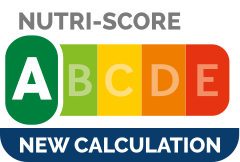 Very good nutritional quality
Nutri-Score data warning
Nutrient levels
Fat in moderate quantity (7.7%)
Saturated fat in low quantity (0%)
Sugars in low quantity (1.9%)
Salt in moderate quantity (1.4%)
Nutrition label

Nutrition facts
| Nutrition facts | As sold for 100 g / 100 ml | Compared to: Meat analogues |
|---|---|---|
| Energy | ~ 837.2 kJ (200 kcal) | 835.712 kJ (201 kcal) (~0%) |
| Fat | 7.7 g | 9.821 g (-22%) |
| Saturated fat | 0 g | 1.425 g (-100%) |
| Carbohydrates | 1.9 g | 10.145 g (-81%) |
| Sugars | 1.9 g | 1.666 g (+14%) |
| Dietary fiber | 3.8 g | ? |
| Proteins | 28.8 g | 14.305 g (+101%) |
| Salt | 1.4 g | 1.316 g (+6%) |
| Sodium | 0.56 g | 0.525 g (+7%) |
| Fruits, vegetables and legumes | ~ 2.95138888888889 % | ? |
Nutrition facts (Detailed data)
| Nutrition facts | As sold for 100 g / 100 ml | As sold Per 100 g (packaging) | As sold Per 100 g (estimate) |
|---|---|---|---|
| Energy | ~ 837.2 kJ (200 kcal) | ? (200 kcal) | ? |
| Fat | 7.7 g | 7.7 g | ? |
| Saturated fat | 0 g | 0 g | ? |
| Carbohydrates | 1.9 g | 1.9 g | ? |
| Sugars | 1.9 g | 1.9 g | ? |
| Dietary fiber | 3.8 g | 3.8 g | ? |
| Proteins | 28.8 g | 28.8 g | ? |
| Salt | 1.4 g | 1.4 g | ? |
| Sodium | 0.56 g | 0.56 g | ? |
| Fruits, vegetables and legumes | ~ 2.95138888888889 % | ? | ~ 2.95138888888889 % |
Serving size
Ingredients
Ingredients image

Ingredients list
Ingredient information
Added sugars
Allergens
Ingredients analysis
No ingredients containing palm oil.
No non-vegan ingredients.
Unrecognized: en:purple-carrot-juice
No non-vegetarian ingredients.
Unrecognized: en:purple-carrot-juice
Food Processing
NOVA group
 Ultra-processed food and drink products
Elements that indicate the product is in NOVA group 4
How NOVA works
Additives
E160d - LycopeneColour
Lycopene (from the neo-Latin Lycopersicum, the tomato species) is a bright red carotene and carotenoid pigment and phytochemical found in tomatoes and other red fruits and vegetables, such as red carrots, watermelons, gac, and papayas, but it is not in strawberries or cherries. Although lycopene is chemically a carotene, it has no vitamin A activity. Foods that are not red may also contain lycopene, such as asparagus and parsley.In plants, algae, and other photosynthetic organisms, lycopene is an intermediate in the biosynthesis of many carotenoids, including beta-carotene, which is responsible for yellow, orange, or red pigmentation, photosynthesis, and photoprotection. Like all carotenoids, lycopene is a tetraterpene. It is insoluble in water. Eleven conjugated double bonds give lycopene its deep red color. Owing to the strong color, lycopene is useful as a food coloring (registered as E160d) and is approved for use in the USA, Australia and New Zealand (registered as 160d) and the European Union.
E407 - Carrageenan EFSA overexposure risk: highCarrierEmulsifierHumectantStabiliserThickener
Carrageenan (E407), derived from red seaweed, is widely employed in the food industry as a gelling, thickening, and stabilizing agent, notably in dairy and meat products.
It can exist in various forms, each imparting distinct textural properties to food.
However, its degraded form, often referred to as poligeenan, has raised health concerns due to its potential inflammatory effects and its classification as a possible human carcinogen (Group 2B) by the International Agency for Research on Cancer (IARC).
Nevertheless, food-grade carrageenan has been deemed safe by various regulatory bodies when consumed in amounts typically found in food.
E415 - Xanthan gumEmulsifierStabiliserThickener
Xanthan gum (E415) is a natural polysaccharide derived from fermented sugars, often used in the food industry as a thickening and stabilizing agent.
This versatile food additive enhances texture and prevents ingredient separation in a wide range of products, including salad dressings, sauces, and gluten-free baked goods.
It is considered safe for consumption even at high intake amounts.
E425 - KonjacCarrierEmulsifierHumectantStabiliserThickener
No additive description is available yet.
E508 - Potassium chloride EFSA overexposure risk: moderateStabiliserThickenerPreservative
Potassium chloride (KCl) is a metal halide salt composed of potassium and chlorine. It is odorless and has a white or colorless vitreous crystal appearance. The solid dissolves readily in water and its solutions have a salt-like taste. KCl is used as a fertilizer, in medicine, in scientific applications, and in food processing. In a few states of the United States it is used to cause cardiac arrest as the third drug in the "three drug cocktail" for executions by lethal injection. It occurs naturally as the mineral sylvite, and in combination with sodium chloride as sylvinite.The version for injection is on the World Health Organization's List of Essential Medicines, the most important medications needed in a basic health system.
E509 - Calcium chloride EFSA overexposure risk: moderateStabiliserThickenerCoagulant
Calcium chloride is an inorganic compound, a salt with the chemical formula CaCl2. It is a colorless crystalline solid at room temperature, highly soluble in water. Calcium chloride is commonly encountered as a hydrated solid with generic formula CaCl2(H2O)x, where x = 0, 1, 2, 4, and 6. These compounds are mainly used for de-icing and dust control. Because the anhydrous salt is hygroscopic, it is used as a desiccant.
E511 - Magnesium chloride EFSA overexposure risk: moderateStabiliserCoagulant
Magnesium chloride is the name for the chemical compound with the formula MgCl2 and its various hydrates MgCl2(H2O)x. These salts are typical ionic halides, being highly soluble in water. The hydrated magnesium chloride can be extracted from brine or sea water. In North America, magnesium chloride is produced primarily from Great Salt Lake brine. It is extracted in a similar process from the Dead Sea in the Jordan Valley. Magnesium chloride, as the natural mineral bischofite, is also extracted (by solution mining) out of ancient seabeds, for example, the Zechstein seabed in northwest Europe. Some magnesium chloride is made from solar evaporation of seawater. Anhydrous magnesium chloride is the principal precursor to magnesium metal, which is produced on a large scale. Hydrated magnesium chloride is the form most readily available.
Environment
Green-Score, origins bonus, and transportation impact are shown for Worldwide .
Green Score
Overall grade
 Unknown environmental impact
About Green-Score
Current scope
Green-Score availability
Bonuses and maluses
Declared origins
Packaging impact
Packaging

Packaging impact
Packaging components
| Shape | Material | Recycling | Impact |
|---|---|---|---|
| BOX | Plastic | Unknown | High |
Declared packaging
Transportation
Manufacturing locations
Declared origins
Data Source
Product data comes from Open Food Facts. Food Benchmark also adds translations, category comparisons and explanatory calculations.
The database is licensed under ODbL 1.0, individual contents under DbCL 1.0, and product photos under CC BY-SA 3.0.
Product added on November 2, 2017 at 5:48:19 PM UTC by kiliweb .
Last edit on March 27, 2026 at 4:59:32 PM UTC by new-nutrition-bot .
Product page also edited by inf, kiliweb, mrproject, new-nutrition-bot, openfoodfacts-contributors, packbot, raphael0202, roboto-app, swipe-studio, yuka.SGE1WUxmOWNwcU0zdi9jbTJTcU45c01rbWFDR0RGR1NkdGRQSVE9PQ, yuka.UmZnQVFZOFJuOUFxc2NWZzl4LzdxdUJWMXBMNVgxdW9lK3RPSVE9PQ.