

Soft Taco Flour Tortillas
Health
Nutrition
Nutri-Score
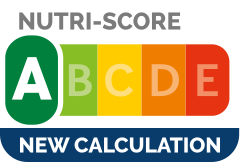 Very good nutritional quality
Nutri-Score data warning
Nutrient levels
Fat in moderate quantity (8.5%)
Saturated fat in moderate quantity (2%)
Sugars in low quantity (2.3%)
Salt in moderate quantity (0.55%)
Nutrition label

Nutrition facts
| Nutrition facts | As sold for 100 g / 100 ml | Compared to: Wheat flatbreads |
|---|---|---|
| Energy | ~ 1198.2 kJ (286 kcal) | 1,266.481 kJ (298 kcal) (-5%) |
| Fat | 8.5 g | 6.673 g (+27%) |
| Saturated fat | 2 g | 1.628 g (+23%) |
| Cholesterol | 0 g | ? |
| Carbohydrates | 40.2 g | 49.736 g (-19%) |
| Sugars | 2.3 g | 2.369 g (-3%) |
| Added sugars | 0 g | 0.601 g (-100%) |
| Starch | 0 g | 14.896 g (-100%) |
| Dietary fiber | 5.7 g | ? |
| Proteins | 9.1 g | 8.5 g (+7%) |
| Salt | ~ 0.55 g | 1.207 g (-54%) |
| Sodium | 0.22 g | 0.482 g (-54%) |
| Vitamin D | 0 g | ? |
| Potassium | 0.035 g | 181.615 mg (-81%) |
| Calcium | 0.056 g | 66.505 mg (-16%) |
| Iron | 0.0022 g | 1.507 mg (+46%) |
| Fruits, vegetables and legumes | ~ 0 % | ? |
| Choline | 0 g | 0 g |
Nutrition facts (Detailed data)
| Nutrition facts | As sold for 100 g / 100 ml | As sold Per 100 g (packaging) | As sold Per serving (45 g) (packaging) | As sold Per 100 g (estimate) |
|---|---|---|---|---|
| Energy | ~ 1198.2 kJ (286 kcal) | ? (286 kcal) | ? (140 kcal) | ? |
| Fat | 8.5 g | 8.5 g | 4 g | ? |
| Saturated fat | 2 g | 2 g | 2 g | ? |
| Cholesterol | 0 g | ? | 0 g | ? |
| Carbohydrates | 40.2 g | 40.2 g | 23 g | ? |
| Sugars | 2.3 g | 2.3 g | 1 g | ? |
| Added sugars | 0 g | ? | 0 g | ~ 1.12 g |
| Starch | 0 g | ? | 0 g | ? |
| Dietary fiber | 5.7 g | 5.7 g | 1 g | ? |
| Proteins | 9.1 g | 9.1 g | 3 g | ? |
| Salt | ~ 0.55 g | ? | 0.55 g | ? |
| Sodium | 0.22 g | 0.22 g | 0.22 g | ? |
| Vitamin D | 0 g | ? | 0 g | ? |
| Potassium | 0.035 g | 0.035 g | 0.035 g | ? |
| Calcium | 0.056 g | 0.056 g | 0.056 g | ? |
| Iron | 0.0022 g | 0.0022 g | 0.001 g | ? |
| Fruits, vegetables and legumes | ~ 0 % | ? | ? | ~ 0 % |
| Choline | 0 g | ? | 0 g | ? |
Serving size
Ingredients
Ingredients image

Ingredients list
Ingredient information
Added sugars
Allergens
Ingredients analysis
Palm oil content unknown
Vegan status unknown
Unrecognized: en:MONONITRATE, en:PARTIAL, en:LY HYDROGENATED SOYBEAN and COTTONSEED OILS and PALM OIL and CORN OIL, en:SLAT, en:DISTILLED, en:GUM BLEND
Vegetarian status unknown
Unrecognized: en:MONONITRATE, en:PARTIAL, en:LY HYDROGENATED SOYBEAN and COTTONSEED OILS and PALM OIL and CORN OIL, en:SLAT, en:DISTILLED, en:GUM BLEND
Food Processing
NOVA group
 Ultra-processed food and drink products
Elements that indicate the product is in NOVA group 4
How NOVA works
Additives
E200 - Sorbic acid EFSA overexposure risk: highPreservative
SORBIC ACID, or 2,4-hexadienoic acid, is a natural organic compound used as a food preservative. It has the chemical formula CH3(CH)4CO2H.
E223 - Sodium metabisulphite EFSA overexposure risk: highAntioxidantPreservative
SODIUM METABISULFITE or sodium pyrosulfite (IUPAC spelling; Br. E. sodium metabisulphite or sodium pyrosulphite) is an inorganic compound of chemical formula Na2S2O5.
E282 - calcium propionatePreservative
CALCIUM PROPIONATE has the formula Ca(C2H5COO)2. Calcium propionate is used as a preservative in a wide variety of products, including but not limited to:bread, other baked goods, processed meat, whey, and other dairy products.
E297 - Fumaric acid
Fumaric acid or trans-butenedioic acid is the chemical compound with the formula HO2CCH=CHCO2H. It is produced in eukaryotic organisms from succinate in complex 2 of the electron transport chain via the enzyme succinate dehydrogenase. It is one of two isomeric unsaturated dicarboxylic acids, the other being maleic acid. In fumaric acid the carboxylic acid groups are trans (E) and in maleic acid they are cis (Z). Fumaric acid has a fruit-like taste. The salts and esters are known as fumarates. Fumarate can also refer to the C4H2O2−4 ion (in solution).
E341 - Calcium phosphates EFSA overexposure risk: highEmulsifierHumectantSequestrantStabiliserThickener
Calcium phosphate is a family of materials and minerals containing calcium ions (Ca2+) together with inorganic phosphate anions. Some so-called calcium phosphates contain oxide and hydroxide as well. They are white solids of nutritious value.
E341ii - Dicalcium phosphateEmulsifierHumectantSequestrantStabiliserThickener
No additive description is available yet.
E460 - CelluloseCarrierEmulsifierHumectantStabiliserThickener
CELLULOSE is an organic compound with the formula (C6H10O5)n, a polysaccharide consisting of a linear chain of several hundred to many thousands of linked D-glucose units. Cellulose is used as emulsifier, thickener and stabilizer in processed foods. Cellulose powder is, for example, used in processed cheese to prevent caking inside the package.
E460i - Microcrystalline celluloseCarrierEmulsifierHumectantStabiliserThickener
No additive description is available yet.
E471 - Mono- and diglycerides of fatty acidsEmulsifierStabiliser
Mono- and diglycerides of fatty acids (E471), are food additives commonly used as emulsifiers in various processed foods.
These compounds consist of glycerol molecules linked to one or two fatty acid chains, which help stabilize and blend water and oil-based ingredients. E471 enhances the texture and shelf life of products like margarine, baked goods, and ice cream, ensuring a smooth and consistent texture.
It is generally considered safe for consumption within established regulatory limits.
Environment
Green-Score, origins bonus, and transportation impact are shown for Worldwide .
Green Score
Overall grade
 Low environmental impact
About Green-Score
Current scope
Life cycle analysis
Average impact of the category
 Wheat tortilla wrap, to be filled • Score: 93/100
Life-cycle reference
Overall environmental impact by stage (PEF)
The overall environmental impact figure (PEF) comes from ADEME's Agribalyse database, for the category: Wheat tortilla wrap, to be filled. Source: ADEME Agribalyse Database.
| Stage | Impact |
|---|---|
| Agriculture | 52.1 % |
| Processing | 26.6 % |
| Packaging | 13.1 % |
| Transportation | 7.6 % |
| Distribution | 0.8 % |
| Consumption | 0.0 % |
Bonuses and maluses
Declared origins
Packaging impact
Green-Score for this product
Green-Score for this product
Final score: 73/100Final score breakdown
Carbon footprint
Carbon footprint
Climate impact by stage (CO2e)
The carbon emission figure comes from ADEME's Agribalyse database, for the category: Wheat tortilla wrap, to be filled. Source: ADEME Agribalyse Database.
| Stage | Impact |
|---|---|
| Agriculture | 44.5 % |
| Processing | 14.2 % |
| Packaging | 26.9 % |
| Transportation | 13.1 % |
| Distribution | 1.0 % |
| Consumption | 0.0 % |
Packaging

Packaging impact
Data precision
Transportation
Declared origins
Forest footprint
Forest footprint
Deforestation risk details
Data Source
Product data comes from Open Food Facts. Food Benchmark also adds translations, category comparisons and explanatory calculations.
The database is licensed under ODbL 1.0, individual contents under DbCL 1.0, and product photos under CC BY-SA 3.0.
Product added on March 9, 2017 at 9:35:00 AM UTC by usda-ndb-import .
Last edit on October 25, 2026 at 11:53:32 PM UTC by macrofactor .
Product page also edited by anonymous-aaaguohtxqdv6, dieter501, foodless, foodvisor, inf, khello13, kiliweb, macrofactor, municorn-calorie-counter-app, new-nutrition-bot, openfoodfacts-contributors, org-database-usda, roboto-app, thaialagata, tmbe7, usda-ndb-import, vaporous, workspace99, yuka.sY2b0xO6T85zoF3NwEKvlhd5UNTQizznCBXvo1-s1uawdr7BUI5K_JbQLqg.
Source List
- usda-ndb
- database-usda