ProductsGiant EagleGiant eagle, shrimp stir-fry
NO_IMAGE
Barcode 0030034086169
Giant Eagle, Giant Eagle Inc.

Giant eagle, shrimp stir-fry

BARCODE:0030034086169
BRAND OWNER:Giant Eagle, Inc.
CATEGORIES:Frozen Foods
COUNTRIES:United States

Health

Nutrition

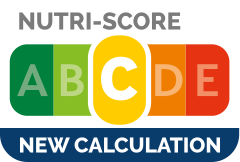
Nutri-Score

CAverage nutritional quality

Nutri-Score data warning

Warning: the amount of fruits, vegetables and nuts is not specified on the label, it was estimated from the list of ingredients: 69

Nutrient levels

Fat in low quantity (0.55%)
What you need to know • A high consumption of fat, especially saturated fats, can raise cholesterol, which increases the risk of heart diseases. Recommendation: Limit the consumption of fat and saturated fat • Choose products with lower fat and saturated fat content. Source: National Health Service UK (NHS) - Fat: the facts
Saturated fat in low quantity (0%)
What you need to know • A high consumption of fat, especially saturated fats, can raise cholesterol, which increases the risk of heart diseases. Recommendation: Limit the consumption of fat and saturated fat • Choose products with lower fat and saturated fat content. Source: National Health Service UK (NHS) - Fat: the facts
Sugars in moderate quantity (6.2%)
What you need to know • A high consumption of sugar can cause weight gain and tooth decay. It also augments the risk of type 2 diabetes and cardio-vascular diseases. Recommendation: Limit the consumption of sugar and sugary drinks • Sugary drinks (such as sodas, fruit beverages, and fruit juices and nectars) should be limited as much as possible (no more than 1 glass a day). • Choose products with lower sugar content and reduce the consumption of products with added sugars. Source: National Health Service UK (NHS) - Sugar: the facts
Salt in moderate quantity (1.21%)
What you need to know • A high consumption of salt (or sodium) can cause raised blood pressure, which can increase the risk of heart disease and stroke. • Many people who have high blood pressure do not know it, as there are often no symptoms. • Most people consume too much salt (on average 9 to 12 grams per day), around twice the recommended maximum level of intake. Recommendation: Limit the consumption of salt and salted food • Reduce the quantity of salt used when cooking, and don't salt again at the table. • Limit the consumption of salty snacks and choose products with lower salt content. Source: World Health Organization (WHO) - Fact sheet - Salt reduction Source: National Health Service UK (NHS) - Salt: the facts

Nutrition facts

Nutrition factsAs sold for 100 g / 100 mlCompared to: Frozen foods
Energy305 kcal (73 kcal)768.118 kJ (184 kcal)
Fat0.55 g7.716 g (-93%)
Saturated fat0 g3.856 g (-100%)
Trans fat0 g0.032 g (-100%)
Cholesterol0.038 mg17.702 mg (-100%)
Carbohydrates10.22 g21.015 g (-51%)
Sugars6.2 g11.756 g (-47%)
Dietary fiber1.8 g?
Proteins6.57 g4.899 g (+34%)
Salt1.2125 mg0.409 g (-100%)
Sodium0.485 mg0.163 g (-100%)
Vitamin A0.0007665 IU18.183 µg
Vitamin C0.0175 mg?
Calcium0.036 mg49.51 mg (-100%)
Iron0.00099 mg0.835 mg (-100%)
Fruits, vegetables and legumes??

Nutrition facts (Detailed data)

Nutrition factsAs sold for 100 g / 100 mlAs sold Per serving (legacy)
Energy305 kcal (73 kcal)836 kcal (200 kcal)
Fat0.55 g1.51 g
Saturated fat0 g0 g
Trans fat0 g0 g
Cholesterol0.038 mg0.104 mg
Carbohydrates10.22 g28 g
Sugars6.2 g17 g
Dietary fiber1.8 g4.93 g
Proteins6.57 g18 g
Salt1.2125 mg3.32 mg
Sodium0.485 mg1.33 mg
Vitamin A0.0007665 IU0.0021 IU
Vitamin C0.0175 mg0.048 mg
Calcium0.036 mg0.0986 mg
Iron0.00099 mg0.00271 mg
Fruits, vegetables and legumes??

Serving size

1.75 cup (274 g)

Ingredients

Ingredients list

Vegetables (broccoli, pea pods, carrots, celery, onion, red bell peppers, green beans, water chestnuts), shrimp (uncooked shrimp, water, sodium phosphate), sauce (soy sauce [water, soybeans, wheat, salt], sugar, mirin [water, dextrose, sake (rice extract, salt), lactic and succinic acids], food starch-modified, water, garlic, spices, sodium benzoate [preservative]).

Ingredient information

Vegetable
66.67% (estimate)
Broccoli
35.42% (estimate)
Pea Pods
15.63% (estimate)
Carrot
7.81% (estimate)
Celery
3.91% (estimate)
Onion
1.95% (estimate)
Red Bell Pepper
0.98% (estimate)
Green Bean
0.49% (estimate)
Water Chestnut
0.49% (estimate)
Shrimp
16.67% (estimate)
Shrimp
8.33% (estimate)
Water
4.17% (estimate)
E339
4.17% (estimate)
Sauce
16.67% (estimate)
Soy Sauce
8.33% (estimate)
Water
4.17% (estimate)
Soya Bean
2.08% (estimate)
Wheat
1.04% (estimate)
Salt
1.04% (estimate)
Sugar
3.1% (estimate)
Mirin
2.62% (estimate)
Water
1.31% (estimate)
Dextrose
0.65% (estimate)
Sake
0.33% (estimate)
Rice Extract
0.16% (estimate)
Salt
0.16% (estimate)
Lactic
0.16% (estimate)
E363
0.16% (estimate)
Modified Starch
1.31% (estimate)
Water
0.65% (estimate)
Garlic
0.33% (estimate)
Spice
0.16% (estimate)
E211
0.16% (estimate)
Preservative
0.16% (estimate)

Added sugars

Contains added sugars (~ 3%) Added sugars: sugar, dextrose Estimated quantity of added sugars in ingredients: 3%

Allergens

CeleryCrustaceansGlutenSoybeans

Ingredients analysis

Palm oil free
Unknown

Palm oil content unknown

Unrecognized: en:pea-pods, en:lactic

Vegan
No

Contains non-vegan ingredients.

Unrecognized: en:pea-pods, en:lactic

Vegetarian
No

Contains non-vegetarian ingredients.

Unrecognized: en:pea-pods, en:lactic


Food Processing

NOVA group

4Ultra-processed food and drink products

Elements that indicate the product is in NOVA group 4

Ingredients
Dextrose
Ingredients
Glucose
Ingredients
Modified Starch

How NOVA works

The NOVA classification assigns food products into 4 groups based on their degree of processing: 1. Unprocessed or minimally processed foods 2. Processed culinary ingredients 3. Processed foods 4. Ultra-processed food and drink products

Additives

E211 - Sodium benzoate EFSA overexposure risk: highPreservative

SODIUM BENZOATE is a substance which has the chemical formula NaC7H5O2

E363 - Succinic acid

Succinic acid () is a dicarboxylic acid with the chemical formula (CH2)2(CO2H)2. The name derives from Latin succinum, meaning amber. In living organisms, succinic acid takes the form of an anion, succinate, which has multiple biological roles as a metabolic intermediate being converted into fumarate by the enzyme succinate dehydrogenase in complex 2 of the electron transport chain which is involved in making ATP, and as a signaling molecule reflecting the cellular metabolic state. Succinate is generated in mitochondria via the tricarboxylic acid cycle (TCA), an energy-yielding process shared by all organisms. Succinate can exit the mitochondrial matrix and function in the cytoplasm as well as the extracellular space, changing gene expression patterns, modulating epigenetic landscape or demonstrating hormone-like signaling. As such, succinate links cellular metabolism, especially ATP formation, to the regulation of cellular function. Dysregulation of succinate synthesis, and therefore ATP synthesis, happens in some genetic mitochondrial diseases, such as Leigh syndrome, and Melas syndrome, and degradation can lead to pathological conditions, such as malignant transformation, inflammation and tissue injury.

Environment

Green-Score, origins bonus, and transportation impact are shown for Worldwide .

Green Score

Overall grade

UnknownUnknown environmental impact

About Green-Score

The Green-Score is an experimental score that summarizes the environmental impacts of food products.

Current scope

The Green-Score was initially developed for France and it is being extended to other European countries. The Green-Score formula is subject to change as it is regularly improved to make it more precise and better suited to each country. Select a country to include the full impact of transportation in the final score.

Green-Score availability

We could not compute the Green-Score of this product because some data is missing. A more precise category, ingredients list, origins or packaging data can unlock the computation.

Bonuses and maluses

Declared origins

Origins of ingredients are missing for this product. Ingredients need to be completed before the transportation bonus can be computed precisely.

Packaging impact

Packaging with a high impact Malus: -15 The information about the packaging of this product is not filled in.

Packaging

Packaging impact

Packaging with a high impact Malus: -15 The information about the packaging of this product is not filled in.

Data precision

The packaging information is not sufficiently precise to compute the most accurate packaging impact. Exact shapes and materials of all packaging components help improve the Green-Score.

Transportation

Declared origins

Origins of ingredients are missing for this product. Ingredients need to be completed before the transportation bonus can be computed precisely.

Data Source

Product data comes from Open Food Facts. Food Benchmark also adds translations, category comparisons and explanatory calculations.

The database is licensed under ODbL 1.0, individual contents under DbCL 1.0, and product photos under CC BY-SA 3.0.

Product added on March 9, 2017 at 9:21:10 PM UTC by usda-ndb-import .

Last edit on April 22, 2020 at 10:14:57 PM UTC by org-database-usda .

Product page also edited by usda-ndb-import, org-database-usda.

Source List