ProductsGiant EagleGiant eagle, chef inspired meals at home, meatloaf
NO_IMAGE
Barcode 0030034086381
Giant Eagle, Giant Eagle Inc.

Giant eagle, chef inspired meals at home, meatloaf

BARCODE:0030034086381
BRAND OWNER:Giant Eagle, Inc.
CATEGORIES:Frozen Foods
COUNTRIES:United States

Health

Nutrition

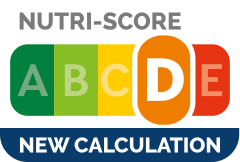
Nutri-Score

DLower nutritional quality

Nutri-Score data warning

Warning: the amount of fruits, vegetables and nuts is not specified on the label, it was estimated from the list of ingredients: 12

Nutrient levels

Fat in moderate quantity (14.3%)
What you need to know • A high consumption of fat, especially saturated fats, can raise cholesterol, which increases the risk of heart diseases. Recommendation: Limit the consumption of fat and saturated fat • Choose products with lower fat and saturated fat content. Source: National Health Service UK (NHS) - Fat: the facts
Saturated fat in high quantity (5.36%)
What you need to know • A high consumption of fat, especially saturated fats, can raise cholesterol, which increases the risk of heart diseases. Recommendation: Limit the consumption of fat and saturated fat • Choose products with lower fat and saturated fat content. Source: National Health Service UK (NHS) - Fat: the facts
Sugars in low quantity (1.79%)
What you need to know • A high consumption of sugar can cause weight gain and tooth decay. It also augments the risk of type 2 diabetes and cardio-vascular diseases. Recommendation: Limit the consumption of sugar and sugary drinks • Sugary drinks (such as sodas, fruit beverages, and fruit juices and nectars) should be limited as much as possible (no more than 1 glass a day). • Choose products with lower sugar content and reduce the consumption of products with added sugars. Source: National Health Service UK (NHS) - Sugar: the facts
Salt in high quantity (1.7%)
What you need to know • A high consumption of salt (or sodium) can cause raised blood pressure, which can increase the risk of heart disease and stroke. • Many people who have high blood pressure do not know it, as there are often no symptoms. • Most people consume too much salt (on average 9 to 12 grams per day), around twice the recommended maximum level of intake. Recommendation: Limit the consumption of salt and salted food • Reduce the quantity of salt used when cooking, and don't salt again at the table. • Limit the consumption of salty snacks and choose products with lower salt content. Source: World Health Organization (WHO) - Fact sheet - Salt reduction Source: National Health Service UK (NHS) - Salt: the facts

Nutrition facts

Nutrition factsAs sold for 100 g / 100 mlCompared to: Frozen foods
Energy1008 kcal (241 kcal)768.107 kJ (184 kcal)
Fat14.29 g7.715 g (+85%)
Saturated fat5.36 g3.856 g (+39%)
Trans fat0.89 g0.032 g (+2681%)
Cholesterol0.08 mg17.696 mg (-100%)
Carbohydrates5.36 g21.015 g (-74%)
Sugars1.79 g11.755 g (-85%)
Dietary fiber0.9 g?
Proteins21.43 g4.898 g (+338%)
Salt1.6975 mg0.409 g (-100%)
Sodium0.679 mg0.163 g (-100%)
Vitamin A0.0000537 IU18.176 µg
Vitamin C0.0032 mg?
Calcium0.054 mg49.501 mg (-100%)
Iron0.00241 mg0.835 mg (-100%)
Fruits, vegetables and legumes??

Nutrition facts (Detailed data)

Nutrition factsAs sold for 100 g / 100 mlAs sold Per serving (legacy)
Energy1008 kcal (241 kcal)1130 kcal (270 kcal)
Fat14.29 g16 g
Saturated fat5.36 g6 g
Trans fat0.89 g0.997 g
Cholesterol0.08 mg0.0896 mg
Carbohydrates5.36 g6 g
Sugars1.79 g2 g
Dietary fiber0.9 g1.01 g
Proteins21.43 g24 g
Salt1.6975 mg1.9 mg
Sodium0.679 mg0.76 mg
Vitamin A0.0000537 IU0.0000601 IU
Vitamin C0.0032 mg0.00358 mg
Calcium0.054 mg0.0605 mg
Iron0.00241 mg0.0027 mg
Fruits, vegetables and legumes??

Serving size

4 ONZ (112 g)

Ingredients

Ingredients list

Ground beef, bacon (cured with water, salt, sugar, sodium phosphates, sodium erythorbate, sodium nitrite), onion, eggs (whole eggs, citric acid, water), parmesan cheese (part-skimmed pasteurized cow's milk, cheese cultures, salt, enzymes, rice flour and powdered cellulose added to prevent caking), milk (milk, vitamin d3), bread crumbs (enriched flour [wheat flour, niacin, iron, thiamin mononitrate, riboflavin, folic acid], high fructose corn syrup, less than 2% of: dextrose, salt, partially hydrogenated vegetable oil [soybean and/or cottonseed], yeast, calcium propionate, monocalcium phosphate, calcium sulfate, ammonium sulfate, corn starch, soy lecithin, soy flour), ketchup (tomato concentrate [water, tomato paste], high fructose corn syrup, corn syrup, vinegar, salt, onion powder, spice, natural flavors), parsley, salt, worcestershire sauce (distilled vinegar, molasses, corn syrup, water, salt, caramel color, sugar, spices, anchovies, natural flavor [contains soy], tamarind), garlic (garlic, water), black pepper, thyme, bay leaf.

Ingredient information

Minced Beef
53.33% (estimate)
Bacon
23.33% (estimate)
Water
11.67% (estimate)
Salt
0.85% (estimate)
Sugar
0.85% (estimate)
E339
0.85% (estimate)
E316
0.85% (estimate)
E250
8.27% (estimate)
Onion
11.67% (estimate)
Egg
5.83% (estimate)
Whole Egg
2.92% (estimate)
E330
1.46% (estimate)
Water
1.46% (estimate)
Parmigiano Reggiano
2.92% (estimate)
Part Skimmed Pasteurized Cow S Milk
1.46% (estimate)
Lactic Ferments
0.73% (estimate)
Salt
0.36% (estimate)
Enzyme
0.18% (estimate)
Rice Flour
0.09% (estimate)
Powdered Cellulose Added To Prevent Caking
0.09% (estimate)
Milk
1.46% (estimate)
Milk
0.73% (estimate)
Cholecalciferol
0.73% (estimate)
Breadcrumbs
0.73% (estimate)
Flour
0.36% (estimate)
Wheat Flour
0.18% (estimate)
E375
0.09% (estimate)
Iron
0.05% (estimate)
Thiamin Mononitrate
0.02% (estimate)
E101
0.01% (estimate)
Folic Acid
0.01% (estimate)
High Fructose Corn Syrup
0.18% (estimate)
Less Than 2 Of
0.09% (estimate)
Dextrose
0.09% (estimate)
Salt
0.05% (estimate)
Vegetable Oil
0.02% (estimate)
Soya Bean
0.01% (estimate)
Cottonseed
0.01% (estimate)
Yeast
0.01% (estimate)
E282
0.01% (estimate)
E341i
0% (estimate)
E516
0% (estimate)
E517
0% (estimate)
Corn Starch
0% (estimate)
Soya Lecithin
0% (estimate)
Soya Flour
0% (estimate)
Ketchup
0.36% (estimate)
Tomato Concentrate
0.18% (estimate)
Water
0.09% (estimate)
Tomato Concentrate
0.09% (estimate)
High Fructose Corn Syrup
0.09% (estimate)
Corn Syrup
0.05% (estimate)
Vinegar
0.02% (estimate)
Salt
0.01% (estimate)
Onion
0.01% (estimate)
Spice
0% (estimate)
Natural Flavouring
0% (estimate)
Parsley
0.18% (estimate)
Salt
0.09% (estimate)
Worcestershire Sauce
0.05% (estimate)
Distilled Vinegar
0.02% (estimate)
Molasses
0.01% (estimate)
Corn Syrup
0.01% (estimate)
Water
0% (estimate)
Salt
0% (estimate)
E150a
0% (estimate)
Sugar
0% (estimate)
Spice
0% (estimate)
Anchovy
0% (estimate)
Tamarind
0% (estimate)
Garlic
0.02% (estimate)
Garlic
0.01% (estimate)
Water
0.01% (estimate)
Black Pepper
0.01% (estimate)
Thyme
0.01% (estimate)
Bay Leaf
0.01% (estimate)

Added sugars

Contains added sugars (~ 1%) Added sugars: sugar, high fructose corn syrup, dextrose, corn syrup, molasses Estimated quantity of added sugars in ingredients: 1%

Allergens

EggsFishGlutenMilkSoybeans

Ingredients analysis

Palm oil free
Yes

No ingredients containing palm oil.

Unrecognized: en:part-skimmed-pasteurized-cow-s-milk, en:powdered-cellulose-added-to-prevent-caking, en:less-than-2-of

Vegan
No

Contains non-vegan ingredients.

Unrecognized: en:part-skimmed-pasteurized-cow-s-milk, en:powdered-cellulose-added-to-prevent-caking, en:iron, en:less-than-2-of

Vegetarian
No

Contains non-vegetarian ingredients.

Unrecognized: en:part-skimmed-pasteurized-cow-s-milk, en:powdered-cellulose-added-to-prevent-caking, en:iron, en:less-than-2-of


Food Processing

NOVA group

4Ultra-processed food and drink products

Elements that indicate the product is in NOVA group 4

Additives
E150c - Ammonia caramel
Additives
E322 - Lecithins
Ingredients
Dextrose
Ingredients
Flavouring
Ingredients
Glucose
Ingredients
High Fructose Corn Syrup
Ingredients
Fructose

How NOVA works

The NOVA classification assigns food products into 4 groups based on their degree of processing: 1. Unprocessed or minimally processed foods 2. Processed culinary ingredients 3. Processed foods 4. Ultra-processed food and drink products

Additives

E150c - Ammonia caramel EFSA overexposure risk: moderateColour

No additive description is available yet.

E250 - Sodium nitrite EFSA overexposure risk: highPreservative

Sodium nitrite (E250) is a salt used for curing and preserving meat products.

It plays a critical role in preventing the growth of Clostridium botulinum, the bacterium responsible for botulism, in cured meats like bacon, ham, and sausages. It also provides the characteristic pink color and flavor.

However, nitrites can react with amines in the stomach to form nitrosamines, which are potent carcinogens. High intake of processed meats containing nitrites is associated with an increased risk of colorectal cancer. Regulatory bodies have set strict limits on its use in food.

E282 - calcium propionatePreservative

CALCIUM PROPIONATE has the formula Ca(C2H5COO)2. Calcium propionate is used as a preservative in a wide variety of products, including but not limited to:bread, other baked goods, processed meat, whey, and other dairy products.

E316 - sodium erythorbate EFSA overexposure risk: noAntioxidant

SODIUM ERYTHORBATE is the sodium salt of erythorbic acid. Sodium erythorbate is produced from sugars derived from different sources, such as beets, sugar cane, and corn. It is used predominantly in meats, poultry, and soft drinks.

E322 - LecithinsAntioxidantEmulsifier

Lecithins are natural compounds commonly used in the food industry as emulsifiers and stabilizers.

Extracted from sources like soybeans and eggs, lecithins consist of phospholipids that enhance the mixing of oil and water, ensuring smooth textures in various products like chocolates, dressings, and baked goods.

They do not present any known health risks.

E322i - LecithinAntioxidantEmulsifier

Lecithins are natural compounds commonly used in the food industry as emulsifiers and stabilizers.

Extracted from sources like soybeans and eggs, lecithins consist of phospholipids that enhance the mixing of oil and water, ensuring smooth textures in various products like chocolates, dressings, and baked goods.

They do not present any known health risks.

E330 - Citric acidAntioxidantSequestrant

Citric acid is a natural organic acid found in citrus fruits such as lemons, oranges, and limes.

It is widely used in the food industry as a flavor enhancer, acidulant, and preservative due to its tart and refreshing taste.

Citric acid is safe for consumption when used in moderation and is considered a generally recognized as safe (GRAS) food additive by regulatory agencies worldwide.

E341 - Calcium phosphates EFSA overexposure risk: highEmulsifierHumectantSequestrantStabiliserThickener

Calcium phosphate is a family of materials and minerals containing calcium ions (Ca2+) together with inorganic phosphate anions. Some so-called calcium phosphates contain oxide and hydroxide as well. They are white solids of nutritious value.

E341i - Monocalcium phosphateEmulsifierHumectantSequestrantStabiliserThickener

No additive description is available yet.

E517 - Ammonium sulphate

Ammonium sulfate (American English and international scientific usage; ammonium sulphate in British English); (NH4)2SO4, is an inorganic salt with a number of commercial uses. The most common use is as a soil fertilizer. It contains 21% nitrogen and 24% sulfur.

Environment

Green-Score, origins bonus, and transportation impact are shown for Worldwide .

Green Score

Overall grade

UnknownUnknown environmental impact

About Green-Score

The Green-Score is an experimental score that summarizes the environmental impacts of food products.

Current scope

The Green-Score was initially developed for France and it is being extended to other European countries. The Green-Score formula is subject to change as it is regularly improved to make it more precise and better suited to each country. Select a country to include the full impact of transportation in the final score.

Green-Score availability

We could not compute the Green-Score of this product because some data is missing. A more precise category, ingredients list, origins or packaging data can unlock the computation.

Bonuses and maluses

Declared origins

Origins of ingredients are missing for this product. Ingredients need to be completed before the transportation bonus can be computed precisely.

Packaging impact

Packaging with a high impact Malus: -15 The information about the packaging of this product is not filled in.

Packaging

Packaging impact

Packaging with a high impact Malus: -15 The information about the packaging of this product is not filled in.

Data precision

The packaging information is not sufficiently precise to compute the most accurate packaging impact. Exact shapes and materials of all packaging components help improve the Green-Score.

Transportation

Declared origins

Origins of ingredients are missing for this product. Ingredients need to be completed before the transportation bonus can be computed precisely.

Forest footprint

Forest footprint

Total forest footprint: 0.00 m2 per kg of food This estimate highlights ingredients that depend on soy-linked animal feed and deforestation risk.

Ingredients linked to forest pressure

IngredientTypePercent in productForest footprint
Whole EGGOeufs Importés2.92 %0.00

Data Source

Product data comes from Open Food Facts. Food Benchmark also adds translations, category comparisons and explanatory calculations.

The database is licensed under ODbL 1.0, individual contents under DbCL 1.0, and product photos under CC BY-SA 3.0.

Product added on March 9, 2017 at 9:21:02 PM UTC by usda-ndb-import .

Last edit on April 22, 2020 at 10:14:50 PM UTC by org-database-usda .

Product page also edited by org-database-usda, usda-ndb-import.

Source List