

Keebler, sugar wafers, vanilla
Health
Nutrition
Nutri-Score
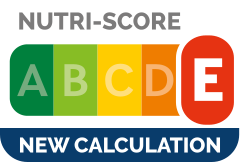 Lower nutritional quality
Nutri-Score data warning
Nutrient levels
Fat in high quantity (22.6%)
Saturated fat in high quantity (9.68%)
Sugars in high quantity (45.2%)
Salt in low quantity (0.215%)
Nutrition facts
| Nutrition facts | As sold for 100 g / 100 ml | Compared to: Vanilla stuffed wafers |
|---|---|---|
| Energy | 2025 kcal (484 kcal) | 2,152.92 kJ (514 kcal) |
| Fat | 22.58 g | 26.339 g (-14%) |
| Saturated fat | 9.68 g | 16.903 g (-43%) |
| Monounsaturated fat | 9.5 g | 6.281 g (+51%) |
| Polyunsaturated fat | 3 g | 2.445 g (+23%) |
| Trans fat | 0 g | 0 g |
| Cholesterol | 0 mg | 1.592 mg (-100%) |
| Carbohydrates | 70.97 g | 64.437 g (+10%) |
| Sugars | 45.16 g | 32.283 g (+40%) |
| Dietary fiber | 0 g | ? |
| Soluble fiber | 0 g | ? |
| Insoluble fiber | 1 g | ? |
| Proteins | 3.23 g | 4.338 g (-26%) |
| Salt | 0.215 g | 0.284 g (-24%) |
| Sodium | 0.086 g | 0.114 g (-25%) |
| Vitamin A | 0 IU | 0.063 µg |
| Vitamin C | 0 mg | ? |
| Vitamin B1 | 0 mg | ? |
| Vitamin B2 | 0 mg | ? |
| Vitamin PP | 0 mg | ? |
| Vitamin B6 | 0 mg | ? |
| Folates | 0 µg | ? |
| Vitamin B12 | 0 µg | ? |
| Biotin | 0 µg | ? |
| Pantothenic acid | 0 mg | ? |
| Potassium | 0.002 mg | 148.345 mg (-100%) |
| Calcium | 0 mg | 34.774 mg (-100%) |
| Phosphorus | 0.005 mg | 90.317 mg (-100%) |
| Iron | 0.00116 mg | 1.131 mg (-100%) |
| Magnesium | 0 mg | 26.706 mg (-100%) |
| Zinc | 0 mg | 0.703 mg (-100%) |
| Copper | 0 mg | 0.098 mg (-100%) |
| Manganese | 0 mg | 0.718 mg (-100%) |
| Selenium | 0 µg | 6.326 µg (-100%) |
| Chromium | 0 µg | ? |
| Molybdenum | 0 µg | ? |
| Iodine | 0 µg | 7.081 µg (-100%) |
| Fruits, vegetables and legumes | ? | ? |
| Phylloquinone | 0 µg | ? |
Nutrition facts (Detailed data)
| Nutrition facts | As sold for 100 g / 100 ml | As sold Per serving (legacy) |
|---|---|---|
| Energy | 2025 kcal (484 kcal) | 628 kcal (150 kcal) |
| Fat | 22.58 g | 7 g |
| Saturated fat | 9.68 g | 3 g |
| Monounsaturated fat | 9.5 g | 2.94 g |
| Polyunsaturated fat | 3 g | 0.93 g |
| Trans fat | 0 g | 0 g |
| Cholesterol | 0 mg | 0 mg |
| Carbohydrates | 70.97 g | 22 g |
| Sugars | 45.16 g | 14 g |
| Dietary fiber | 0 g | 0 g |
| Soluble fiber | 0 g | 0 g |
| Insoluble fiber | 1 g | 0.31 g |
| Proteins | 3.23 g | 1 g |
| Salt | 0.215 g | 0.0667 g |
| Sodium | 0.086 g | 0.0267 g |
| Vitamin A | 0 IU | 0 IU |
| Vitamin C | 0 mg | 0 mg |
| Vitamin B1 | 0 mg | 0 mg |
| Vitamin B2 | 0 mg | 0 mg |
| Vitamin PP | 0 mg | 0 mg |
| Vitamin B6 | 0 mg | 0 mg |
| Folates | 0 µg | 0 µg |
| Vitamin B12 | 0 µg | 0 µg |
| Biotin | 0 µg | 0 µg |
| Pantothenic acid | 0 mg | 0 mg |
| Potassium | 0.002 mg | 0.00062 mg |
| Calcium | 0 mg | 0 mg |
| Phosphorus | 0.005 mg | 0.00155 mg |
| Iron | 0.00116 mg | 0.00036 mg |
| Magnesium | 0 mg | 0 mg |
| Zinc | 0 mg | 0 mg |
| Copper | 0 mg | 0 mg |
| Manganese | 0 mg | 0 mg |
| Selenium | 0 µg | 0 µg |
| Chromium | 0 µg | 0 µg |
| Molybdenum | 0 µg | 0 µg |
| Iodine | 0 µg | 0 µg |
| Fruits, vegetables and legumes | ? | ? |
| Phylloquinone | 0 µg | 0 µg |
Serving size
Ingredients
Ingredients image

Ingredients list
Ingredient information
Added sugars
Allergens
Ingredients analysis
Contains ingredients containing palm oil.
Vegan status unknown
Unrecognized: en:reduced-iron, en:vitamin-b-1, en:contains-two-percent-and-less-of-cornstarch
Vegetarian status unknown
Unrecognized: en:reduced-iron, en:vitamin-b-1, en:contains-two-percent-and-less-of-cornstarch
Food Processing
NOVA group
 Ultra-processed food and drink products
Elements that indicate the product is in NOVA group 4
How NOVA works
Additives
E101 - RiboflavinColour
Riboflavin, also known as vitamin B2, is a vitamin found in food and used as a dietary supplement. Food sources include eggs, green vegetables, milk and other dairy product, meat, mushrooms, and almonds. Some countries require its addition to grains. As a supplement it is used to prevent and treat riboflavin deficiency and prevent migraines. It may be given by mouth or injection.It is nearly always well tolerated. Normal doses are safe during pregnancy. Riboflavin is in the vitamin B group. It is required by the body for cellular respiration.Riboflavin was discovered in 1920, isolated in 1933, and first made in 1935. It is on the World Health Organization's List of Essential Medicines, the most effective and safe medicines needed in a health system. Riboflavin is available as a generic medication and over the counter. In the United States a month of supplements costs less than 25 USD.
E102 - TartrazineColour
Tartrazine (E102) is a synthetic lemon-yellow azo dye used as a food coloring.
It is found in a wide range of products such as soft drinks, desserts, candies, and snack foods to give them a vibrant yellow appearance.
While approved by many regulatory agencies, tartrazine has been linked to allergic reactions, such as hives, in a small portion of the population. Some studies have also suggested a link to increased hyperactivity in children, particularly when consumed with other additives like benzoates.
E110 - Sunset yellow FCFColour
Sunset Yellow FCF (also known as Orange Yellow S, or C.I. 15985) is a petroleum-derived orange azo dye with a pH dependent maximum absorption at about 480 nm at pH 1 and 443 nm at pH 13 with a shoulder at 500 nm. When added to foods sold in the US it is known as FD&C Yellow 6; when sold in Europe, it is denoted by E Number E110.
E127 - ErythrosineColour
ERYTHROSINE, is an organoiodine compound, specifically a derivative of fluorone. It is cherry or melon-pink synthetic, primarily used for food coloring.
E322 - LecithinsAntioxidantEmulsifier
Lecithins are natural compounds commonly used in the food industry as emulsifiers and stabilizers.
Extracted from sources like soybeans and eggs, lecithins consist of phospholipids that enhance the mixing of oil and water, ensuring smooth textures in various products like chocolates, dressings, and baked goods.
They do not present any known health risks.
E322i - LecithinAntioxidantEmulsifier
Lecithins are natural compounds commonly used in the food industry as emulsifiers and stabilizers.
Extracted from sources like soybeans and eggs, lecithins consist of phospholipids that enhance the mixing of oil and water, ensuring smooth textures in various products like chocolates, dressings, and baked goods.
They do not present any known health risks.
E330 - Citric acidAntioxidantSequestrant
Citric acid is a natural organic acid found in citrus fruits such as lemons, oranges, and limes.
It is widely used in the food industry as a flavor enhancer, acidulant, and preservative due to its tart and refreshing taste.
Citric acid is safe for consumption when used in moderation and is considered a generally recognized as safe (GRAS) food additive by regulatory agencies worldwide.
E500 - Sodium carbonatesStabiliserThickener
Sodium carbonates (E500) are compounds commonly used in food preparation as leavening agents, helping baked goods rise by releasing carbon dioxide when they interact with acids.
Often found in baking soda, they regulate the pH of food, preventing it from becoming too acidic or too alkaline. In the culinary world, sodium carbonates can also enhance the texture and structure of foods, such as noodles, by modifying the gluten network.
Generally recognized as safe, sodium carbonates are non-toxic when consumed in typical amounts found in food.
E500ii - Sodium hydrogen carbonateStabiliserThickener
Sodium hydrogen carbonate, also known as E500ii, is a food additive commonly used as a leavening agent.
When added to recipes, it releases carbon dioxide gas upon exposure to heat or acids, causing dough to rise and resulting in a light, fluffy texture in baked goods.
It is generally recognized as safe (GRAS) by regulatory authorities when used in appropriate quantities and poses no significant health risks when consumed in typical food applications.
Environment
Green-Score, origins bonus, and transportation impact are shown for Worldwide .
Green Score
Overall grade
 High environmental impact
About Green-Score
Current scope
Life cycle analysis
Average impact of the category
 Wafer biscuit, plain or vanilla flavoured, prepacked • Score: 70/100
Life-cycle reference
Overall environmental impact by stage (PEF)
The overall environmental impact figure (PEF) comes from ADEME's Agribalyse database, for the category: Wafer biscuit, plain or vanilla flavoured, prepacked. Source: ADEME Agribalyse Database.
| Stage | Impact |
|---|---|
| Agriculture | 80.2 % |
| Processing | 12.0 % |
| Packaging | 3.2 % |
| Transportation | 3.2 % |
| Distribution | 1.4 % |
| Consumption | 0.0 % |
Bonuses and maluses
Declared origins
Threatened species risk
Packaging impact
Green-Score for this product
Green-Score for this product
Final score: 40/100Final score breakdown
Carbon footprint
Carbon footprint
Climate impact by stage (CO2e)
The carbon emission figure comes from ADEME's Agribalyse database, for the category: Wafer biscuit, plain or vanilla flavoured, prepacked. Source: ADEME Agribalyse Database.
| Stage | Impact |
|---|---|
| Agriculture | 82.7 % |
| Processing | 8.0 % |
| Packaging | 3.8 % |
| Transportation | 4.7 % |
| Distribution | 0.7 % |
| Consumption | 0.0 % |
Packaging
Packaging impact
Data precision
Transportation
Declared origins
Data Source
Product data comes from Open Food Facts. Food Benchmark also adds translations, category comparisons and explanatory calculations.
The database is licensed under ODbL 1.0, individual contents under DbCL 1.0, and product photos under CC BY-SA 3.0.
Product added on April 16, 2019 at 4:49:21 PM UTC by openfoodfacts-contributors .
Last edit on October 29, 2025 at 6:56:59 PM UTC by sebleouf .
Product page also edited by clockwerx, foodless, inf, openfoodfacts-contributors, org-database-usda, sebleouf.
Source List
- database-usda