

American Style Pasta Salad with Chicken
Health
Nutrition
Nutri-Score
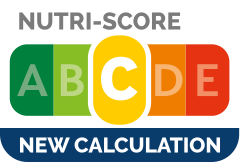 Average nutritional quality
Nutri-Score data warning
Nutrient levels
Fat in moderate quantity (9.06%)
Saturated fat in moderate quantity (2.17%)
Sugars in low quantity (1.45%)
Salt in moderate quantity (0.615%)
Nutrition label

Nutrition facts
| Nutrition facts | As sold for 100 g / 100 ml |
|---|---|
| Energy | 788 kcal (188 kcal) |
| Fat | 9.06 g |
| Saturated fat | 2.17 g |
| Cholesterol | 0.0145 g |
| Carbohydrates | 19.6 g |
| Sugars | 1.45 g |
| Added sugars | 0 g |
| Starch | 0 g |
| Dietary fiber | 1.45 g |
| Proteins | 6.88 g |
| Salt | 0.615 g |
| Sodium | 0.246 g |
| Vitamin A | 0 mcg |
| Vitamin E | 0 mg |
| Vitamin K | 0 mcg |
| Vitamin C | 0 mg |
| Vitamin B1 | 0 mg |
| Vitamin B2 | 0 mg |
| Vitamin B6 | 0 mg |
| Vitamin B9 | 0 mcg |
| Vitamin B12 | 0 mcg |
| Calcium | 0 g |
| Phosphorus | 0 mg |
| Iron | 0 mg |
| Magnesium | 0 mg |
| Zinc | 0 mg |
| Copper | 0 mg |
| Manganese | 0 mg |
| Selenium | 0 mcg |
| Caffeine | 0 mg |
| Fruits, vegetables and legumes | ? |
| Choline | 0 mg |
Nutrition facts (Detailed data)
| Nutrition facts | As sold for 100 g / 100 ml | As sold Per serving (legacy) |
|---|---|---|
| Energy | 788 kcal (188 kcal) | 2176 kcal (520 kcal) |
| Fat | 9.06 g | 25 g |
| Saturated fat | 2.17 g | 6 g |
| Cholesterol | 0.0145 g | 0.04 g |
| Carbohydrates | 19.6 g | 54 g |
| Sugars | 1.45 g | 4 g |
| Added sugars | 0 g | 0 g |
| Starch | 0 g | 0 g |
| Dietary fiber | 1.45 g | 4 g |
| Proteins | 6.88 g | 19 g |
| Salt | 0.615 g | 1.6975 g |
| Sodium | 0.246 g | 0.679 g |
| Vitamin A | 0 mcg | 0 mcg |
| Vitamin E | 0 mg | 0 mg |
| Vitamin K | 0 mcg | 0 mcg |
| Vitamin C | 0 mg | 0 mg |
| Vitamin B1 | 0 mg | 0 mg |
| Vitamin B2 | 0 mg | 0 mg |
| Vitamin B6 | 0 mg | 0 mg |
| Vitamin B9 | 0 mcg | 0 mcg |
| Vitamin B12 | 0 mcg | 0 mcg |
| Calcium | 0 g | 0 g |
| Phosphorus | 0 mg | 0 mg |
| Iron | 0 mg | 0 mg |
| Magnesium | 0 mg | 0 mg |
| Zinc | 0 mg | 0 mg |
| Copper | 0 mg | 0 mg |
| Manganese | 0 mg | 0 mg |
| Selenium | 0 mcg | 0 mcg |
| Caffeine | 0 mg | 0 mg |
| Fruits, vegetables and legumes | ? | ? |
| Choline | 0 mg | 0 mg |
Serving size
Ingredients
Ingredients list
Ingredient information
Added sugars
Allergens
Ingredients analysis
No ingredients containing palm oil.
Contains non-vegan ingredients.
Unrecognized: en:ferrous-sulfate, en:e339ii, en:carrageenan-gum, en:dairy-whey, en:mustard, en:grape-tomatoes, en:ripe-olives, en:chicken-breast-with-rib-meat, en:sodium-citrate, en:sodium-dicaetate, en:mesquite-smoke-flavor, en:vegetable-pigment, en:to-prevent-cakin
Contains non-vegetarian ingredients.
Unrecognized: en:ferrous-sulfate, en:e339ii, en:carrageenan-gum, en:dairy-whey, en:mustard, en:grape-tomatoes, en:ripe-olives, en:chicken-breast-with-rib-meat, en:sodium-citrate, en:sodium-dicaetate, en:mesquite-smoke-flavor, en:vegetable-pigment, en:to-prevent-cakin
Food Processing
NOVA group
 Ultra-processed food and drink products
Elements that indicate the product is in NOVA group 4
How NOVA works
Additives
E160b - AnnattoColour
No additive description is available yet.
E235 - NatamycinPreservative
NATAMYCIN is used in the food industry as a preservative.
E250 - Sodium nitrite EFSA overexposure risk: highPreservative
Sodium nitrite (E250) is a salt used for curing and preserving meat products.
It plays a critical role in preventing the growth of Clostridium botulinum, the bacterium responsible for botulism, in cured meats like bacon, ham, and sausages. It also provides the characteristic pink color and flavor.
However, nitrites can react with amines in the stomach to form nitrosamines, which are potent carcinogens. High intake of processed meats containing nitrites is associated with an increased risk of colorectal cancer. Regulatory bodies have set strict limits on its use in food.
E316 - sodium erythorbate EFSA overexposure risk: noAntioxidant
SODIUM ERYTHORBATE is the sodium salt of erythorbic acid. Sodium erythorbate is produced from sugars derived from different sources, such as beets, sugar cane, and corn. It is used predominantly in meats, poultry, and soft drinks.
E325 - sodium lactateAntioxidantEmulsifierHumectantThickener
SODIUM LACTATE is the sodium salt of lactic acid, and has a mild saline taste. It is produced by fermentation of a sugar source, such as corn or beets. It acts as a preservative, acidity regulator, and bulking agent.
E326 - potassium lactateAntioxidantEmulsifierHumectant
POTASSIUM LACTATE is a compound with formula KC3H5O3. It is produced by neutralizing lactic acid which is fermented from a sugar source. Potassium lactate is commonly used in meat and poultry products to extend shelf life and increase food safety as it has a broad antimicrobial action. lactic acid and lactates can be consumed by all religious groups, vegans and vegetarians. Although the name refers to milk, it is not made from milk and thus suitable for people with milk allergy or lactose intolerance.
E330 - Citric acidAntioxidantSequestrant
Citric acid is a natural organic acid found in citrus fruits such as lemons, oranges, and limes.
It is widely used in the food industry as a flavor enhancer, acidulant, and preservative due to its tart and refreshing taste.
Citric acid is safe for consumption when used in moderation and is considered a generally recognized as safe (GRAS) food additive by regulatory agencies worldwide.
E339ii - Disodium phosphateEmulsifierHumectantPreservativeSequestrantStabiliserThickener
No additive description is available yet.
E410 - Locust bean gumEmulsifierStabiliserThickener
Locust bean gum (LBG, also known as carob gum, carob bean gum, carobin, E410) is a thickening agent and a gelling agent used in food technology.
E412 - Guar gumEmulsifierStabiliserThickener
Guar gum (E412) is a natural food additive derived from guar beans.
This white, odorless powder is valued for its remarkable thickening and stabilizing properties, making it a common ingredient in various food products, including sauces, dressings, and ice creams.
When used in moderation, guar gum is considered safe for consumption, with no known adverse health effects.
E415 - Xanthan gumEmulsifierStabiliserThickener
Xanthan gum (E415) is a natural polysaccharide derived from fermented sugars, often used in the food industry as a thickening and stabilizing agent.
This versatile food additive enhances texture and prevents ingredient separation in a wide range of products, including salad dressings, sauces, and gluten-free baked goods.
It is considered safe for consumption even at high intake amounts.
E460 - CelluloseCarrierEmulsifierHumectantStabiliserThickener
CELLULOSE is an organic compound with the formula (C6H10O5)n, a polysaccharide consisting of a linear chain of several hundred to many thousands of linked D-glucose units. Cellulose is used as emulsifier, thickener and stabilizer in processed foods. Cellulose powder is, for example, used in processed cheese to prevent caking inside the package.
E460ii - Powdered celluloseCarrierEmulsifierHumectantStabiliserThickener
No additive description is available yet.
E627 - Disodium guanylate
Disodium guanylate, also known as sodium 5'-guanylate and disodium 5'-guanylate, is a natural sodium salt of the flavor enhancing nucleotide guanosine monophosphate (GMP). Disodium guanylate is a food additive with the E number E627. It is commonly used in conjunction with glutamic acid. As it is a fairly expensive additive, it is not used independently of glutamic acid; if disodium guanylate is present in a list of ingredients but MSG does not appear to be, it is likely that glutamic acid is provided as part of another ingredient such as a processed soy protein complex. It is often added to foods in conjunction with disodium inosinate; the combination is known as disodium 5'-ribonucleotides. Disodium guanylate is produced from dried seaweed and is often added to instant noodles, potato chips and other snacks, savory rice, tinned vegetables, cured meats, and packaged soup.
E631 - Disodium inosinate
Disodium inosinate (E631) is the disodium salt of inosinic acid with the chemical formula C10H11N4Na2O8P. It is used as a food additive and often found in instant noodles, potato chips, and a variety of other snacks. Although it can be obtained from bacterial fermentation of sugars, it is often commercially prepared from animal sources.
Environment
Green-Score, origins bonus, and transportation impact are shown for Worldwide .
Green Score
Overall grade
 Unknown environmental impact
About Green-Score
Current scope
Green-Score availability
Bonuses and maluses
Declared origins
Packaging impact
Packaging
Packaging impact
Data precision
Transportation
Declared origins
Forest footprint
Forest footprint
Ingredients linked to forest pressure
| Ingredient | Type | Percent in product | Forest footprint |
|---|---|---|---|
| EGG Yolk | Oeufs Importés | 1.30 % | 0.00 |
Data Source
Product data comes from Open Food Facts. Food Benchmark also adds translations, category comparisons and explanatory calculations.
The database is licensed under ODbL 1.0, individual contents under DbCL 1.0, and product photos under CC BY-SA 3.0.
Product added on March 9, 2017 at 1:30:06 PM UTC by usda-ndb-import .
Last edit on January 13, 2026 at 6:43:56 PM UTC by municorn-calorie-counter-app .
Product page also edited by kiliweb, macrofactor, municorn-calorie-counter-app, openfoodfacts-contributors, org-database-usda, roboto-app, usda-ndb-import, yuka.sY2b0xO6T85zoF3NwEKvlhcbCfTckCrFCxXjwBGtm9OhK7zwMN1o56_lLas, yuka.sY2b0xO6T85zoF3NwEKvlmt6fMLbqzn_LDDnmULWxMjXKZ3iOOF7wtbRFas.
Source List
- usda-ndb
- database-usda