ProductsFood ClubCheesy Ultimate Cheeseburger Pasta And Seasoning
NO_IMAGE
Barcode 0036800382855
Food Club

Cheesy Ultimate Cheeseburger Pasta And Seasoning

70 g
BARCODE:0036800382855
BRAND OWNER:Topco Associates, Inc.
CATEGORIES:Undefined
COUNTRIES:United States

Health

Nutrition

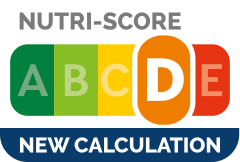
Nutri-Score

DLower nutritional quality

Nutri-Score data warning

Warning: the amount of fruits, vegetables and nuts is not specified on the label, it was estimated from the list of ingredients: 3

Nutrient levels

Fat in moderate quantity (18.4%)
What you need to know • A high consumption of fat, especially saturated fats, can raise cholesterol, which increases the risk of heart diseases. Recommendation: Limit the consumption of fat and saturated fat • Choose products with lower fat and saturated fat content. Source: National Health Service UK (NHS) - Fat: the facts
Saturated fat in high quantity (5.1%)
What you need to know • A high consumption of fat, especially saturated fats, can raise cholesterol, which increases the risk of heart diseases. Recommendation: Limit the consumption of fat and saturated fat • Choose products with lower fat and saturated fat content. Source: National Health Service UK (NHS) - Fat: the facts
Sugars in high quantity (14.3%)
What you need to know • A high consumption of sugar can cause weight gain and tooth decay. It also augments the risk of type 2 diabetes and cardio-vascular diseases. Recommendation: Limit the consumption of sugar and sugary drinks • Sugary drinks (such as sodas, fruit beverages, and fruit juices and nectars) should be limited as much as possible (no more than 1 glass a day). • Choose products with lower sugar content and reduce the consumption of products with added sugars. Source: National Health Service UK (NHS) - Sugar: the facts
Salt in low quantity (0.00393%)
What you need to know • A high consumption of salt (or sodium) can cause raised blood pressure, which can increase the risk of heart disease and stroke. • Many people who have high blood pressure do not know it, as there are often no symptoms. • Most people consume too much salt (on average 9 to 12 grams per day), around twice the recommended maximum level of intake. Recommendation: Limit the consumption of salt and salted food • Reduce the quantity of salt used when cooking, and don't salt again at the table. • Limit the consumption of salty snacks and choose products with lower salt content. Source: World Health Organization (WHO) - Fact sheet - Salt reduction Source: National Health Service UK (NHS) - Salt: the facts

Nutrition facts

Nutrition factsAs sold for 100 g / 100 ml
Energy1960 kcal (467 kcal)
Fat18.4 g
Saturated fat5.1 g
Trans fat0 g
Cholesterol0.02 mg
Carbohydrates61.2 g
Sugars14.3 g
Dietary fiber2 g
Proteins14.3 g
Salt0.00393 mg
Sodium0.00157 mg
Vitamin A0 IU
Vitamin C0.00000486 mg
Calcium0.000306 mg
Iron0.0000022 mg
Fruits, vegetables and legumes?

Nutrition facts (Detailed data)

Nutrition factsAs sold for 100 g / 100 mlAs sold Per serving (legacy)
Energy1960 kcal (467 kcal)1369 kcal (327 kcal)
Fat18.4 g12.86 g
Saturated fat5.1 g3.57 g
Trans fat0 g0 g
Cholesterol0.02 mg0.014 mg
Carbohydrates61.2 g42.86 g
Sugars14.3 g10 g
Dietary fiber2 g1.4 g
Proteins14.3 g10 g
Salt0.00393 mg0.00275 mg
Sodium0.00157 mg0.0011 mg
Vitamin A0 IU0 IU
Vitamin C0.00000486 mg0.0000034 mg
Calcium0.000306 mg0.000214 mg
Iron0.0000022 mg0.00000154 mg
Fruits, vegetables and legumes??

Serving size

70g

Ingredients

Ingredients list

CHEESE SAUCE (WATER, CHEDDAR CHEESE [PASTREURIZED MILK, CHEESE CULTURES, SALT, ENZYMES] SOY AND/OR CANOLA OIL, WHEY, NON-FAT DRY MILK, MALTODEXTRIN, SODIUM PHOSPHATE, NATURAL FLAVORS, SALT, COLOR ADDED [BETA CAROTENE, PAPRIKA EXTRACT], LACTIC ACID, SODIUM

Ingredient information

Cheese Sauce
53.33% (estimate)
Water
23.33% (estimate)
Cheddar
11.67% (estimate)
Pastreurized Milk
5.83% (estimate)
Lactic Ferments
2.92% (estimate)
Salt
1.46% (estimate)
Enzyme
1.46% (estimate)
Soya
5.83% (estimate)
Canola Oil
2.92% (estimate)
Whey
1.46% (estimate)
Skimmed Milk Powder
0.73% (estimate)
Maltodextrin
0.36% (estimate)
E339
0.18% (estimate)
Natural Flavouring
0.09% (estimate)
Salt
0.05% (estimate)
Colour
0.02% (estimate)
E160ai
0.02% (estimate)
E160c
0.01% (estimate)
E270
0.01% (estimate)
Sodium
0.01% (estimate)

Allergens

GlutenMilk

Ingredients analysis

Palm oil free
Unknown

Palm oil content unknown

Vegan
No

Contains non-vegan ingredients.

Unrecognized: en:pastreurized-milk, en:sodium

Vegetarian
Unknown

Vegetarian status unknown

Unrecognized: en:pastreurized-milk, en:sodium


Food Processing

NOVA group

4Ultra-processed food and drink products

Elements that indicate the product is in NOVA group 4

Additives
E160a - carotene
Additives
E160c - Paprika extract
Ingredients
Colour
Ingredients
Flavouring
Ingredients
Maltodextrin
Ingredients
Whey

How NOVA works

The NOVA classification assigns food products into 4 groups based on their degree of processing: 1. Unprocessed or minimally processed foods 2. Processed culinary ingredients 3. Processed foods 4. Ultra-processed food and drink products

Additives

E160a - caroteneColour

β-Carotene is an organic, strongly colored red-orange pigment abundant in plants and fruits. It is a member of the carotenes, which are terpenoids (isoprenoids), synthesized biochemically from eight isoprene units and thus having 40 carbons. Among the carotenes, β-carotene is distinguished by having beta-rings at both ends of the molecule. β-Carotene is biosynthesized from geranylgeranyl pyrophosphate.β-Carotene is the most common form of carotene in plants. When used as a food coloring, it has the E number E160a. The structure was deduced by Karrer et al. in 1930. In nature, β-carotene is a precursor (inactive form) to vitamin A via the action of beta-carotene 15,15'-monooxygenase.Isolation of β-carotene from fruits abundant in carotenoids is commonly done using column chromatography. It can also be extracted from the beta-carotene rich algae, Dunaliella salina. The separation of β-carotene from the mixture of other carotenoids is based on the polarity of a compound. β-Carotene is a non-polar compound, so it is separated with a non-polar solvent such as hexane. Being highly conjugated, it is deeply colored, and as a hydrocarbon lacking functional groups, it is very lipophilic.

E160ai - Beta-caroteneColour

No additive description is available yet.

E160c - Paprika extractColour

No additive description is available yet.

E270 - Lactic acid

LACTIC ACID is an organic compound with the formula CH3CH(OH)CO2H. In the form of its conjugate base called lactate (this is thus different and kept as a separate ingredient). Lactic acid is chiral, consisting of two optical isomers. One is known as L-(+)-lactic acid or (S)-lactic acid and the other, its mirror image, is D-(−)-lactic acid or (R)-lactic acid in food the L-variant is used

Environment

Green-Score, origins bonus, and transportation impact are shown for Worldwide .

Green Score

Overall grade

UnknownUnknown environmental impact

About Green-Score

The Green-Score is an experimental score that summarizes the environmental impacts of food products.

Current scope

The Green-Score was initially developed for France and it is being extended to other European countries. The Green-Score formula is subject to change as it is regularly improved to make it more precise and better suited to each country. Select a country to include the full impact of transportation in the final score.

Green-Score availability

We could not compute the Green-Score of this product because some data is missing. A more precise category, ingredients list, origins or packaging data can unlock the computation.

Bonuses and maluses

Declared origins

Origins of ingredients are missing for this product. Ingredients need to be completed before the transportation bonus can be computed precisely.

Packaging impact

Packaging with a high impact Malus: -15 The information about the packaging of this product is not filled in.

Packaging

Packaging impact

Packaging with a high impact Malus: -15 The information about the packaging of this product is not filled in.

Data precision

The packaging information is not sufficiently precise to compute the most accurate packaging impact. Exact shapes and materials of all packaging components help improve the Green-Score.

Transportation

Declared origins

Origins of ingredients are missing for this product. Ingredients need to be completed before the transportation bonus can be computed precisely.

Data Source

Product data comes from Open Food Facts. Food Benchmark also adds translations, category comparisons and explanatory calculations.

The database is licensed under ODbL 1.0, individual contents under DbCL 1.0, and product photos under CC BY-SA 3.0.

Product added on March 10, 2017 at 8:43:02 AM UTC by usda-ndb-import .

Product page also edited by openfoodfacts-contributors, org-database-usda, usda-ndb-import.

Source List