
Toasted Whole Grain Oat Cereal
Health
Nutrition
Nutri-Score
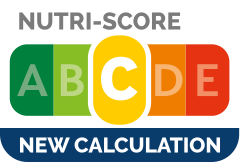 Average nutritional quality
Nutri-Score data warning
Nutrient levels
Fat in moderate quantity (19.1%)
Saturated fat in low quantity (0%)
Sugars in high quantity (12.7%)
Salt in low quantity (0.0051%)
Nutrition facts
| Nutrition facts | As sold for 100 g / 100 ml |
|---|---|
| Energy | 5840 kcal (1400 kcal) |
| Fat | 19.1 g |
| Saturated fat | 0 g |
| Monounsaturated fat | 6.39 g |
| Polyunsaturated fat | 6.39 g |
| Trans fat | 0 g |
| Cholesterol | 0 mg |
| Carbohydrates | 268 g |
| Sugars | 12.7 g |
| Dietary fiber | 38.2 g |
| Soluble fiber | 14.3 g |
| Insoluble fiber | 25 g |
| Proteins | 38.2 g |
| Salt | 0.0051 mg |
| Sodium | 0.00204 mg |
| Vitamin A | 0.00000000383 µg |
| Vitamin D | 0.0000000000255 µg |
| Vitamin C | 0.0000764 mg |
| Vitamin B1 | 0.0000464 mg |
| Vitamin B2 | 0.0000542 mg |
| Vitamin PP | 0.0638 mg |
| Vitamin B6 | 0.00000638 mg |
| Vitamin B9 | 0.0000000001 µg |
| Vitamin B12 | 0.0000000000191 µg |
| Potassium | 0.00217 mg |
| Calcium | 0.00127 mg |
| Phosphorus | 0.00191 mg |
| Iron | 0.000115 mg |
| Magnesium | 0.000511 mg |
| Zinc | 0.0000478 mg |
| Copper | 0.00000153 mg |
| Fruits, vegetables and legumes | ? |
Nutrition facts (Detailed data)
| Nutrition facts | As sold for 100 g / 100 ml | As sold Per serving (legacy) |
|---|---|---|
| Energy | 5840 kcal (1400 kcal) | 1636 kcal (391 kcal) |
| Fat | 19.1 g | 5.36 g |
| Saturated fat | 0 g | 0 g |
| Monounsaturated fat | 6.39 g | 1.79 g |
| Polyunsaturated fat | 6.39 g | 1.79 g |
| Trans fat | 0 g | 0 g |
| Cholesterol | 0 mg | 0 mg |
| Carbohydrates | 268 g | 75 g |
| Sugars | 12.7 g | 3.57 g |
| Dietary fiber | 38.2 g | 10.7 g |
| Soluble fiber | 14.3 g | 4 g |
| Insoluble fiber | 25 g | 7 g |
| Proteins | 38.2 g | 10.71 g |
| Salt | 0.0051 mg | 0.0014275 mg |
| Sodium | 0.00204 mg | 0.000571 mg |
| Vitamin A | 0.00000000383 µg | 0.0000000010713 µg |
| Vitamin D | 0.0000000000255 µg | 0.00000000000715 µg |
| Vitamin C | 0.0000764 mg | 0.0000214 mg |
| Vitamin B1 | 0.0000464 mg | 0.000013 mg |
| Vitamin B2 | 0.0000542 mg | 0.000015179 mg |
| Vitamin PP | 0.0638 mg | 0.017857 mg |
| Vitamin B6 | 0.00000638 mg | 0.000001786 mg |
| Vitamin B9 | 0.0000000001 µg | 0.000000000028 µg |
| Vitamin B12 | 0.0000000000191 µg | 0.00000000000536 µg |
| Potassium | 0.00217 mg | 0.000607 mg |
| Calcium | 0.00127 mg | 0.000357 mg |
| Phosphorus | 0.00191 mg | 0.000536 mg |
| Iron | 0.000115 mg | 0.00003214 mg |
| Magnesium | 0.000511 mg | 0.000143 mg |
| Zinc | 0.0000478 mg | 0.00001339 mg |
| Copper | 0.00000153 mg | 0.000000429 mg |
| Fruits, vegetables and legumes | ? | ? |
Serving size
Ingredients
Ingredients list
Ingredient information
Added sugars
Allergens
Ingredients analysis
No ingredients containing palm oil.
Unrecognized: en:includes-the-oat-bran, en:added-to-preserve-freshness
Vegan status unknown
Unrecognized: en:includes-the-oat-bran, en:vitamin-e, en:added-to-preserve-freshness, en:reduced-iron, en:zinc-oxide, en:vitamin-c, en:thiamin, en:vitamin-d, en:vitamin-b12
Vegetarian status unknown
Unrecognized: en:includes-the-oat-bran, en:vitamin-e, en:added-to-preserve-freshness, en:reduced-iron, en:zinc-oxide, en:vitamin-c, en:thiamin, en:vitamin-d, en:vitamin-b12
Food Processing
NOVA group
 Ultra-processed food and drink products
Elements that indicate the product is in NOVA group 4
How NOVA works
Additives
E340 - Potassium phosphates EFSA overexposure risk: highEmulsifierHumectantSequestrantStabiliserThickener
Potassium phosphate is a generic term for the salts of potassium and phosphate ions including: Monopotassium phosphate (KH2PO4) (Molar mass approx: 136 g/mol) Dipotassium phosphate (K2HPO4) (Molar mass approx: 174 g/mol) Tripotassium phosphate (K3PO4) (Molar mass approx: 212.27 g/mol)As food additives, potassium phosphates have the E number E340.
E340iii - Tripotassium phosphateEmulsifierHumectantSequestrantStabiliserThickener
No additive description is available yet.
E341 - Calcium phosphates EFSA overexposure risk: highEmulsifierHumectantSequestrantStabiliserThickener
Calcium phosphate is a family of materials and minerals containing calcium ions (Ca2+) together with inorganic phosphate anions. Some so-called calcium phosphates contain oxide and hydroxide as well. They are white solids of nutritious value.
E341ii - Dicalcium phosphateEmulsifierHumectantSequestrantStabiliserThickener
No additive description is available yet.
Environment
Green-Score, origins bonus, and transportation impact are shown for Worldwide .
Green Score
Overall grade
 Unknown environmental impact
About Green-Score
Current scope
Green-Score availability
Bonuses and maluses
Declared origins
Packaging impact
Packaging
Packaging impact
Data precision
Transportation
Declared origins
Data Source
Product data comes from Open Food Facts. Food Benchmark also adds translations, category comparisons and explanatory calculations.
The database is licensed under ODbL 1.0, individual contents under DbCL 1.0, and product photos under CC BY-SA 3.0.
Product added on March 9, 2017 at 9:51:58 AM UTC by usda-ndb-import .
Product page also edited by openfoodfacts-contributors, org-database-usda, usda-ndb-import.
Source List
- usda-ndb
- database-usda