
Western, Fat Free Sweet & Smooth Dressing
Health
Nutrition
Nutri-Score
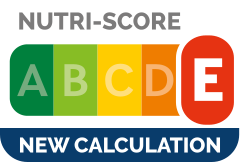 Lower nutritional quality
Nutri-Score data warning
Nutrient levels
Fat in low quantity (0%)
Saturated fat in low quantity (0%)
Sugars in high quantity (33.3%)
Salt in high quantity (2.08%)
Nutrition facts
| Nutrition facts | As sold for 100 g / 100 ml | Compared to: Sauces |
|---|---|---|
| Energy | 628 kcal (150 kcal) | 878.116 kJ (214 kcal) |
| Fat | 0 g | 15.725 g (-100%) |
| Saturated fat | 0 g | 2.068 g (-100%) |
| Trans fat | 0 g | 0.001 g (-100%) |
| Cholesterol | 0 mg | 7.343 mg (-100%) |
| Carbohydrates | 36.67 g | 10.936 g (+235%) |
| Sugars | 33.33 g | 6.737 g (+395%) |
| Dietary fiber | 0 g | ? |
| Proteins | 0 g | 2.6 g (-100%) |
| Salt | 2.0825 mg | 2.014 g (-100%) |
| Sodium | 0.833 mg | 0.805 g (-100%) |
| Vitamin A | 0.0002001 IU | 5.615 µg |
| Vitamin C | 0 mg | ? |
| Calcium | 0 mg | 27.603 mg (-100%) |
| Iron | 0 mg | 0.585 mg (-100%) |
| Fruits, vegetables and legumes | ? | ? |
Nutrition facts (Detailed data)
| Nutrition facts | As sold for 100 g / 100 ml | As sold Per serving (legacy) |
|---|---|---|
| Energy | 628 kcal (150 kcal) | 188 kcal (45 kcal) |
| Fat | 0 g | 0 g |
| Saturated fat | 0 g | 0 g |
| Trans fat | 0 g | 0 g |
| Cholesterol | 0 mg | 0 mg |
| Carbohydrates | 36.67 g | 11 g |
| Sugars | 33.33 g | 10 g |
| Dietary fiber | 0 g | 0 g |
| Proteins | 0 g | 0 g |
| Salt | 2.0825 mg | 0.625 mg |
| Sodium | 0.833 mg | 0.25 mg |
| Vitamin A | 0.0002001 IU | 0.00006 IU |
| Vitamin C | 0 mg | 0 mg |
| Calcium | 0 mg | 0 mg |
| Iron | 0 mg | 0 mg |
| Fruits, vegetables and legumes | ? | ? |
Serving size
Ingredients
Ingredients list
Ingredient information
Added sugars
Allergens
Ingredients analysis
No ingredients containing palm oil.
Unrecognized: en:used-to-protect-quality
Vegan status unknown
Unrecognized: en:used-to-protect-quality, en:dl-alpha-tocopheryl-acetate, en:vitamin-e
Vegetarian status unknown
Unrecognized: en:used-to-protect-quality, en:dl-alpha-tocopheryl-acetate, en:vitamin-e
Food Processing
NOVA group
 Ultra-processed food and drink products
Elements that indicate the product is in NOVA group 4
How NOVA works
Additives
E211 - Sodium benzoate EFSA overexposure risk: highPreservative
SODIUM BENZOATE is a substance which has the chemical formula NaC7H5O2
E322 - LecithinsAntioxidantEmulsifier
Lecithins are natural compounds commonly used in the food industry as emulsifiers and stabilizers.
Extracted from sources like soybeans and eggs, lecithins consist of phospholipids that enhance the mixing of oil and water, ensuring smooth textures in various products like chocolates, dressings, and baked goods.
They do not present any known health risks.
E322i - LecithinAntioxidantEmulsifier
Lecithins are natural compounds commonly used in the food industry as emulsifiers and stabilizers.
Extracted from sources like soybeans and eggs, lecithins consist of phospholipids that enhance the mixing of oil and water, ensuring smooth textures in various products like chocolates, dressings, and baked goods.
They do not present any known health risks.
E385 - Calcium disodium ethylenediaminetetraacetateAntioxidantPreservativeSequestrant
No additive description is available yet.
E405 - Propane-1‚2-diol alginateCarrierEmulsifierStabiliserThickener
Propylene glycol alginate (PGA) is an emulsifier, stabilizer, and thickener used in food products. It is a food additive with E number E405. Chemically, propylene glycol alginate is an ester of alginic acid, which is derived from kelp. Some of the carboxyl groups are esterified with propylene glycol, some are neutralized with an appropriate alkali, and some remain free.
E415 - Xanthan gumEmulsifierStabiliserThickener
Xanthan gum (E415) is a natural polysaccharide derived from fermented sugars, often used in the food industry as a thickening and stabilizing agent.
This versatile food additive enhances texture and prevents ingredient separation in a wide range of products, including salad dressings, sauces, and gluten-free baked goods.
It is considered safe for consumption even at high intake amounts.
Environment
Green-Score, origins bonus, and transportation impact are shown for Worldwide .
Green Score
Overall grade
 Unknown environmental impact
About Green-Score
Current scope
Green-Score availability
Bonuses and maluses
Declared origins
Packaging impact
Packaging
Packaging impact
Data precision
Transportation
Declared origins
Data Source
Product data comes from Open Food Facts. Food Benchmark also adds translations, category comparisons and explanatory calculations.
The database is licensed under ODbL 1.0, individual contents under DbCL 1.0, and product photos under CC BY-SA 3.0.
Product added on March 9, 2017 at 2:41:29 PM UTC by usda-ndb-import .
Last edit on April 22, 2020 at 7:38:07 PM UTC by org-database-usda .
Product page also edited by org-database-usda, usda-ndb-import.
Source List
- usda-ndb
- database-usda