
Extra Large Stuffed Shrimp Made With Real Crabmeat
Health
Nutrition
Nutri-Score
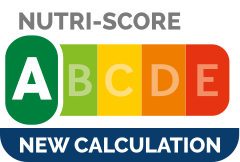 Very good nutritional quality
Nutri-Score data warning
Nutrient levels
Fat in moderate quantity (7.7%)
Saturated fat in moderate quantity (1.54%)
Sugars in low quantity (0%)
Salt in low quantity (0.00131%)
Nutrition facts
| Nutrition facts | As sold for 100 g / 100 ml |
|---|---|
| Energy | 1370 kcal (328 kcal) |
| Fat | 7.7 g |
| Saturated fat | 1.54 g |
| Trans fat | 0 g |
| Cholesterol | 0.093 mg |
| Carbohydrates | 46.2 g |
| Sugars | 0 g |
| Dietary fiber | 0 g |
| Proteins | 18.5 g |
| Salt | 0.00131 mg |
| Sodium | 0.000523 mg |
| Vitamin A | 0 IU |
| Vitamin C | 0 mg |
| Calcium | 0 mg |
| Iron | 0.00000221 mg |
| Fruits, vegetables and legumes | ? |
Nutrition facts (Detailed data)
| Nutrition facts | As sold for 100 g / 100 ml | As sold Per serving (legacy) |
|---|---|---|
| Energy | 1370 kcal (328 kcal) | 782 kcal (186 kcal) |
| Fat | 7.7 g | 4.39 g |
| Saturated fat | 1.54 g | 0.88 g |
| Trans fat | 0 g | 0 g |
| Cholesterol | 0.093 mg | 0.053 mg |
| Carbohydrates | 46.2 g | 26.32 g |
| Sugars | 0 g | 0 g |
| Dietary fiber | 0 g | 0 g |
| Proteins | 18.5 g | 10.53 g |
| Salt | 0.00131 mg | 0.000745 mg |
| Sodium | 0.000523 mg | 0.000298 mg |
| Vitamin A | 0 IU | 0 IU |
| Vitamin C | 0 mg | 0 mg |
| Calcium | 0 mg | 0 mg |
| Iron | 0.00000221 mg | 0.00000126 mg |
| Fruits, vegetables and legumes | ? | ? |
Serving size
Ingredients
Ingredients list
Ingredient information
Added sugars
Allergens
Ingredients analysis
Palm oil content unknown
Contains non-vegan ingredients.
Unrecognized: en:crabmeat, en:crab-surimi, en:contains-one-and-more-of-the-following, en:pacific-whiting, en:contains-2-and-less-of, en:invert-sugar, en:hydrolyzed-corn, en:sodium-tripolyphosphate-disodium-granulate, en:dissodium-inosinate, en:margarine, en:crab-seasoning, en:cultured-dextrose, en:niacin-preparation-and-xanthium-gum, en:cocktail-sauce-ingredients, en:horseradish-root, en:unhydrogenated-soybean-oil
Contains non-vegetarian ingredients.
Unrecognized: en:crabmeat, en:crab-surimi, en:contains-one-and-more-of-the-following, en:pacific-whiting, en:contains-2-and-less-of, en:invert-sugar, en:hydrolyzed-corn, en:sodium-tripolyphosphate-disodium-granulate, en:dissodium-inosinate, en:margarine, en:crab-seasoning, en:cultured-dextrose, en:niacin-preparation-and-xanthium-gum, en:cocktail-sauce-ingredients, en:horseradish-root, en:unhydrogenated-soybean-oil
Food Processing
NOVA group
 Ultra-processed food and drink products
Elements that indicate the product is in NOVA group 4
How NOVA works
Additives
E150c - Ammonia caramel EFSA overexposure risk: moderateColour
No additive description is available yet.
E282 - calcium propionatePreservative
CALCIUM PROPIONATE has the formula Ca(C2H5COO)2. Calcium propionate is used as a preservative in a wide variety of products, including but not limited to:bread, other baked goods, processed meat, whey, and other dairy products.
E330 - Citric acidAntioxidantSequestrant
Citric acid is a natural organic acid found in citrus fruits such as lemons, oranges, and limes.
It is widely used in the food industry as a flavor enhancer, acidulant, and preservative due to its tart and refreshing taste.
Citric acid is safe for consumption when used in moderation and is considered a generally recognized as safe (GRAS) food additive by regulatory agencies worldwide.
E385 - Calcium disodium ethylenediaminetetraacetateAntioxidantPreservativeSequestrant
No additive description is available yet.
E420 - SorbitolHumectantSequestrantStabiliserSweetenerThickener
Sorbitol (), less commonly known as glucitol (), is a sugar alcohol with a sweet taste which the human body metabolizes slowly. It can be obtained by reduction of glucose, which changes the aldehyde group to a hydroxyl group. Most sorbitol is made from corn syrup, but it is also found in nature, for example in apples, pears, peaches, and prunes. It is converted to fructose by sorbitol-6-phosphate 2-dehydrogenase. Sorbitol is an isomer of mannitol, another sugar alcohol; the two differ only in the orientation of the hydroxyl group on carbon 2. While similar, the two sugar alcohols have very different sources in nature, melting points, and uses.
E422 - GlycerolHumectantThickener
Glycerol (; also called glycerine or glycerin; see spelling differences) is a simple polyol compound. It is a colorless, odorless, viscous liquid that is sweet-tasting and non-toxic. The glycerol backbone is found in all lipids known as triglycerides. It is widely used in the food industry as a sweetener and humectant and in pharmaceutical formulations. Glycerol has three hydroxyl groups that are responsible for its solubility in water and its hygroscopic nature.
E450 - Diphosphates EFSA overexposure risk: highEmulsifierHumectantSequestrantStabiliserThickener
Diphosphates (E450) are food additives often utilized to modify the texture of products, acting as leavening agents in baking and preventing the coagulation of canned food.
These salts can stabilize whipped cream and are also found in powdered products to maintain their flow properties. They are commonly present in baked goods, processed meats, and soft drinks.
Derived from phosphoric acid, they're part of our daily phosphate intake, which often surpasses recommended levels due to the prevalence of phosphates in processed foods and drinks.
Excessive phosphate consumption is linked to health issues, such as impaired kidney function and weakened bone health. Though diphosphates are generally regarded as safe when consumed within established acceptable daily intakes, it's imperative to monitor overall phosphate consumption to maintain optimal health.
Environment
Green-Score, origins bonus, and transportation impact are shown for Worldwide .
Green Score
Overall grade
 Unknown environmental impact
About Green-Score
Current scope
Green-Score availability
Bonuses and maluses
Declared origins
Packaging impact
Packaging
Packaging impact
Data precision
Transportation
Declared origins
Forest footprint
Forest footprint
Ingredients linked to forest pressure
| Ingredient | Type | Percent in product | Forest footprint |
|---|---|---|---|
| EGG Yolk | Oeufs Importés | 0.76 % | 0.00 |
| EGG White | Oeufs Importés | 0.09 % | 0.00 |
Data Source
Product data comes from Open Food Facts. Food Benchmark also adds translations, category comparisons and explanatory calculations.
The database is licensed under ODbL 1.0, individual contents under DbCL 1.0, and product photos under CC BY-SA 3.0.
Product added on March 9, 2017 at 11:05:09 AM UTC by usda-ndb-import .
Product page also edited by openfoodfacts-contributors, usda-ndb-import.
Source List