
Nature's Grain, Hawaiian Rolls
Health
Nutrition
Nutri-Score
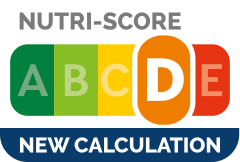 Lower nutritional quality
Nutri-Score data warning
Nutrient levels
Fat in moderate quantity (4.55%)
Saturated fat in moderate quantity (3.03%)
Sugars in moderate quantity (6.06%)
Salt in moderate quantity (1.21%)
Nutrition facts
| Nutrition facts | As sold for 100 g / 100 ml | Compared to: Breads |
|---|---|---|
| Energy | ~ 1171.04 kJ (273 kcal) | 1,245.869 kJ (294 kcal) (-6%) |
| Fat | 4.55 g | 5.131 g (-11%) |
| Saturated fat | 3.03 g | 0.904 g (+235%) |
| Trans fat | 0 g | 0 g |
| Cholesterol | 0.045 g | 1.312 mg (+3330%) |
| Carbohydrates | 48.48 g | 50.554 g (-4%) |
| Sugars | 6.06 g | 3.59 g (+69%) |
| Dietary fiber | 3 g | ? |
| Proteins | 9.09 g | 9.282 g (-2%) |
| Salt | 1.2125 g | 1.224 g (-1%) |
| Sodium | 0.485 g | 0.489 g (-1%) |
| Vitamin A | 0 g | 2.558 µg (-100%) |
| Vitamin C | 0 g | ? |
| Vitamin PP | 0 g | ? |
| Folates | 0 g | ? |
| Potassium | 0.106 g | 216.107 mg (-51%) |
| Calcium | 0.061 g | 54.651 mg (+12%) |
| Iron | 0.00109 g | 2.196 mg (-50%) |
| Fruits, vegetables and legumes | ~ 0 % | ? |
Nutrition facts (Detailed data)
| Nutrition facts | As sold for 100 g / 100 ml | As sold Per 100 g (packaging) | As sold Per 100 g (estimate) |
|---|---|---|---|
| Energy | ~ 1171.04 kJ (273 kcal) | ? (273 kcal) | ~ 1002.66887349668 kJ (237 kcal) |
| Fat | 4.55 g | 4.55 g | ~ 3.4666957880103 g |
| Saturated fat | 3.03 g | 3.03 g | ~ 1.32648978938227 g |
| Trans fat | 0 g | 0 g | ? |
| Cholesterol | 0.045 g | 0.045 g | ~ 0.0508660508529 g |
| Carbohydrates | 48.48 g | 48.48 g | ~ 40.1566015542072 g |
| Sugars | 6.06 g | 6.06 g | ~ 4.01288675349692 g |
| Dietary fiber | 3 g | 3 g | ~ 4.89621230830317 g |
| Proteins | 9.09 g | 9.09 g | ~ 8.96272889925086 g |
| Salt | 1.2125 g | 1.2125 g | ~ 0.105229645903212 g |
| Sodium | 0.485 g | 0.485 g | ~ 0.0301391544847895 g |
| Vitamin A | 0 g | 0 g | ~ 0.0000324769151637865 g |
| Vitamin C | 0 g | 0 g | ~ 0.000145510333517323 g |
| Vitamin PP | 0 g | 0 g | ~ 0.00114068753416642 g |
| Folates | 0 g | 0 g | ? |
| Potassium | 0.106 g | 0.106 g | ~ 0.264873982037254 g |
| Calcium | 0.061 g | 0.061 g | ~ 0.0331381230553337 g |
| Iron | 0.00109 g | 0.00109 g | ~ 0.00162867671676304 g |
| Fruits, vegetables and legumes | ~ 0 % | ? | ~ 0 % |
Serving size
Ingredients
Ingredients list
Ingredient information
Added sugars
Allergens
Ingredients analysis
Palm oil content unknown
Contains non-vegan ingredients.
Unrecognized: en:dairy-whey, en:ethoxylated-mono-and-diglycerides, en:ferrous-sulfate
Vegetarian status unknown
Unrecognized: en:dairy-whey, en:ethoxylated-mono-and-diglycerides, en:ferrous-sulfate
Food Processing
NOVA group
 Ultra-processed food and drink products
Elements that indicate the product is in NOVA group 4
How NOVA works
Additives
E160b - AnnattoColour
No additive description is available yet.
E200 - Sorbic acid EFSA overexposure risk: highPreservative
SORBIC ACID, or 2,4-hexadienoic acid, is a natural organic compound used as a food preservative. It has the chemical formula CH3(CH)4CO2H.
E300 - Ascorbic acidAntioxidantSequestrant
No additive description is available yet.
E322 - LecithinsAntioxidantEmulsifier
Lecithins are natural compounds commonly used in the food industry as emulsifiers and stabilizers.
Extracted from sources like soybeans and eggs, lecithins consist of phospholipids that enhance the mixing of oil and water, ensuring smooth textures in various products like chocolates, dressings, and baked goods.
They do not present any known health risks.
E322i - LecithinAntioxidantEmulsifier
Lecithins are natural compounds commonly used in the food industry as emulsifiers and stabilizers.
Extracted from sources like soybeans and eggs, lecithins consist of phospholipids that enhance the mixing of oil and water, ensuring smooth textures in various products like chocolates, dressings, and baked goods.
They do not present any known health risks.
E341 - Calcium phosphates EFSA overexposure risk: highEmulsifierHumectantSequestrantStabiliserThickener
Calcium phosphate is a family of materials and minerals containing calcium ions (Ca2+) together with inorganic phosphate anions. Some so-called calcium phosphates contain oxide and hydroxide as well. They are white solids of nutritious value.
E341i - Monocalcium phosphateEmulsifierHumectantSequestrantStabiliserThickener
No additive description is available yet.
E412 - Guar gumEmulsifierStabiliserThickener
Guar gum (E412) is a natural food additive derived from guar beans.
This white, odorless powder is valued for its remarkable thickening and stabilizing properties, making it a common ingredient in various food products, including sauces, dressings, and ice creams.
When used in moderation, guar gum is considered safe for consumption, with no known adverse health effects.
E471 - Mono- and diglycerides of fatty acidsEmulsifierStabiliser
Mono- and diglycerides of fatty acids (E471), are food additives commonly used as emulsifiers in various processed foods.
These compounds consist of glycerol molecules linked to one or two fatty acid chains, which help stabilize and blend water and oil-based ingredients. E471 enhances the texture and shelf life of products like margarine, baked goods, and ice cream, ensuring a smooth and consistent texture.
It is generally considered safe for consumption within established regulatory limits.
E481 - Sodium stearoyl-2-lactylate EFSA overexposure risk: highEmulsifierStabiliser
Sodium stearoyl-2-lactylate (sodium stearoyl lactylate or SSL) is a versatile, FDA approved food additive used to improve the mix tolerance and volume of processed foods. It is one type of a commercially available lactylate. SSL is non-toxic, biodegradable, and typically manufactured using biorenewable feedstocks. Because SSL is a safe and highly effective food additive, it is used in a wide variety of products ranging from baked goods and desserts to pet foods.As described by the Food Chemicals Codex 7th edition, SSL is a cream-colored powder or brittle solid. SSL is currently manufactured by the esterification of stearic acid with lactic acid and partially neutralized with either food-grade soda ash (sodium carbonate) or caustic soda (concentrated sodium hydroxide). Commercial grade SSL is a mixture of sodium salts of stearoyl lactylic acids and minor proportions of other sodium salts of related acids. The HLB for SSL is 10-12. SSL is slightly hygroscopic, soluble in ethanol and in hot oil or fat, and dispersible in warm water. These properties are the reason that SSL is an excellent emulsifier for fat-in-water emulsions and can also function as a humectant.
E516 - Calcium sulphateSequestrantStabiliser
Calcium sulfate (or calcium sulphate) is the inorganic compound with the formula CaSO4 and related hydrates. In the form of γ-anhydrite (the anhydrous form), it is used as a desiccant. One particular hydrate is better known as plaster of Paris, and another occurs naturally as the mineral gypsum. It has many uses in industry. All forms are white solids that are poorly soluble in water. Calcium sulfate causes permanent hardness in water.
E955 - SucraloseSweetener
Sucralose is an artificial sweetener and sugar substitute. The majority of ingested sucralose is not broken down by the body, so it is noncaloric. In the European Union, it is also known under the E number E955. It is produced by chlorination of sucrose. Sucralose is about 320 to 1,000 times sweeter than sucrose, three times as sweet as both aspartame and acesulfame potassium, and twice as sweet as sodium saccharin. Evidence of benefit is lacking for long-term weight loss with some data supporting weight gain and heart disease risks.It is stable under heat and over a broad range of pH conditions. Therefore, it can be used in baking or in products that require a long shelf life. The commercial success of sucralose-based products stems from its favorable comparison to other low-calorie sweeteners in terms of taste, stability, and safety. Common brand names of sucralose-based sweeteners are Splenda, Zerocal, Sukrana, SucraPlus, Candys, Cukren, and Nevella. Canderel Yellow also contains sucralose, but the original Canderel and Green Canderel do not.
Environment
Green-Score, origins bonus, and transportation impact are shown for Worldwide .
Green Score
Overall grade
 Unknown environmental impact
About Green-Score
Current scope
Green-Score availability
Bonuses and maluses
Declared origins
Packaging impact
Packaging
Packaging impact
Data precision
Transportation
Declared origins
Forest footprint
Forest footprint
Ingredients linked to forest pressure
| Ingredient | Type | Percent in product | Forest footprint |
|---|---|---|---|
| EGG | Oeufs Importés | 11.96 % | 0.01 |
Data Source
Product data comes from Open Food Facts. Food Benchmark also adds translations, category comparisons and explanatory calculations.
The database is licensed under ODbL 1.0, individual contents under DbCL 1.0, and product photos under CC BY-SA 3.0.
Product added on March 9, 2017 at 9:24:31 PM UTC by usda-ndb-import .
Last edit on February 26, 2026 at 6:09:23 PM UTC by new-nutrition-bot .
Product page also edited by new-nutrition-bot, org-database-usda, usda-ndb-import.
Source List
- usda-ndb
- database-usda