

TORTILLA ORIGINAL
Health
Nutrition
Nutri-Score
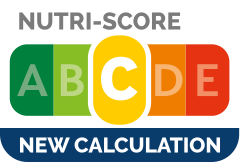 Average nutritional quality
Nutri-Score data warning
Nutrient levels
Fat in moderate quantity (6.56%)
Saturated fat in moderate quantity (1.64%)
Sugars in low quantity (1.64%)
Salt in moderate quantity (1.39%)
Nutrition label

Nutrition facts
| Nutrition facts | As sold for 100 g / 100 ml |
|---|---|
| Energy | ~ 1162.42 kJ (295 kcal) |
| Fat | 6.56 g |
| Saturated fat | 1.64 g |
| Carbohydrates | 45.9 g |
| Sugars | 1.64 g |
| Added sugars | 0 g |
| Starch | 0 g |
| Dietary fiber | ? |
| Proteins | 8.2 g |
| Salt | 1.39 g |
| Sodium | 0.556 g |
| Vitamin A | 0 g |
| Vitamin E | 0 g |
| Vitamin K | 0 g |
| Vitamin C | 0 g |
| Vitamin B1 | 0.000409836065573771 g |
| Vitamin B2 | 0.000245901639344262 g |
| Vitamin B6 | 0.00147540983606557 g |
| Phosphorus | 0 g |
| Iron | 0.00286885245901639 g |
| Magnesium | 0 g |
| Zinc | 0 g |
| Copper | 0 g |
| Manganese | 0 g |
| Selenium | 0 g |
| Caffeine | 0 g |
| Fruits, vegetables and legumes | ~ 0 % |
| Choline | 0 g |
Nutrition facts (Detailed data)
| Nutrition facts | As sold for 100 g / 100 ml | As sold Per 100 g (packaging) | As sold Per 100 g (estimate) |
|---|---|---|---|
| Energy | ~ 1162.42 kJ (295 kcal) | ? (295 kcal) | ? |
| Fat | 6.56 g | 6.56 g | ? |
| Saturated fat | 1.64 g | 1.64 g | ? |
| Carbohydrates | 45.9 g | 45.9 g | ? |
| Sugars | 1.64 g | 1.64 g | ? |
| Added sugars | 0 g | 0 g | ~ 1.515 g |
| Starch | 0 g | 0 g | ? |
| Dietary fiber | ? | ? | ? |
| Proteins | 8.2 g | 8.2 g | ? |
| Salt | 1.39 g | 1.39 g | ? |
| Sodium | 0.556 g | 0.556 g | ? |
| Vitamin A | 0 g | 0 g | ? |
| Vitamin E | 0 g | 0 g | ? |
| Vitamin K | 0 g | 0 g | ? |
| Vitamin C | 0 g | 0 g | ? |
| Vitamin B1 | 0.000409836065573771 g | 0.409836065573771 mg | ? |
| Vitamin B2 | 0.000245901639344262 g | 0.245901639344262 mg | ? |
| Vitamin B6 | 0.00147540983606557 g | 1.47540983606557 mg | ? |
| Phosphorus | 0 g | 0 g | ? |
| Iron | 0.00286885245901639 g | 2.86885245901639 mg | ? |
| Magnesium | 0 g | 0 g | ? |
| Zinc | 0 g | 0 g | ? |
| Copper | 0 g | 0 g | ? |
| Manganese | 0 g | 0 g | ? |
| Selenium | 0 g | 0 g | ? |
| Caffeine | 0 g | 0 g | ? |
| Fruits, vegetables and legumes | ~ 0 % | ? | ~ 0 % |
| Choline | 0 g | 0 g | ? |
Serving size
Ingredients
Ingredients image

Ingredients list
Ingredient information
Allergens
Traces
Ingredients analysis
Palm oil content unknown
Unrecognized: fr:mono-et-diglycerides, fr:de-fantaisie-et-verte, fr:pyrophosphate-acide-de-calcium, fr:acide-fumarique-stearoyl-2-lactylate-de-sodium, fr:peroxyde-de-calcium-les-ingredients-peuvent-varier, fr:ingredients, fr:enriched-wheat-flour, fr:water, fr:vegetable-oil, fr:canola-or-soybean, fr:vegetable-mono-and-diglycerides, fr:molasses, fr:fancy-and, fr:or-blackstrap, fr:salt, fr:potassium-sorbate, fr:sodium-bicarbonate, fr:sugar, fr:calcium-acid-pyrophosphate, fr:monocalcium-phosphate, fr:sodium-propionate, fr:fumaric-acid, fr:sodium-stearoyl-2-lactylate, fr:cornstarch, fr:guar-gum, fr:cellulose-gum, fr:maltodextrin, fr:carrageenan, fr:calcium-peroxide
Vegan status unknown
Unrecognized: fr:de-fantaisie-et-verte, fr:pyrophosphate-acide-de-calcium, fr:acide-fumarique-stearoyl-2-lactylate-de-sodium, fr:peroxyde-de-calcium-les-ingredients-peuvent-varier, fr:enriched-wheat-flour, fr:water, fr:canola-or-soybean, fr:vegetable-mono-and-diglycerides, fr:fancy-and, fr:or-blackstrap, fr:salt, fr:potassium-sorbate, fr:sodium-bicarbonate, fr:sugar, fr:calcium-acid-pyrophosphate, fr:monocalcium-phosphate, fr:sodium-propionate, fr:fumaric-acid, fr:sodium-stearoyl-2-lactylate, fr:cornstarch, fr:guar-gum, fr:cellulose-gum, fr:maltodextrin, fr:carrageenan, fr:calcium-peroxide
Vegetarian status unknown
Unrecognized: fr:de-fantaisie-et-verte, fr:pyrophosphate-acide-de-calcium, fr:acide-fumarique-stearoyl-2-lactylate-de-sodium, fr:peroxyde-de-calcium-les-ingredients-peuvent-varier, fr:enriched-wheat-flour, fr:water, fr:canola-or-soybean, fr:vegetable-mono-and-diglycerides, fr:fancy-and, fr:or-blackstrap, fr:salt, fr:potassium-sorbate, fr:sodium-bicarbonate, fr:sugar, fr:calcium-acid-pyrophosphate, fr:monocalcium-phosphate, fr:sodium-propionate, fr:fumaric-acid, fr:sodium-stearoyl-2-lactylate, fr:cornstarch, fr:guar-gum, fr:cellulose-gum, fr:maltodextrin, fr:carrageenan, fr:calcium-peroxide
Food Processing
NOVA group
 Ultra-processed food and drink products
Elements that indicate the product is in NOVA group 4
How NOVA works
Additives
E175 - Gold
Gold is a chemical element with symbol Au (from Latin: aurum) and atomic number 79, making it one of the higher atomic number elements that occur naturally. In its purest form, it is a bright, slightly reddish yellow, dense, soft, malleable, and ductile metal. Chemically, gold is a transition metal and a group 11 element. It is one of the least reactive chemical elements and is solid under standard conditions. Gold often occurs in free elemental (native) form, as nuggets or grains, in rocks, in veins, and in alluvial deposits. It occurs in a solid solution series with the native element silver (as electrum) and also naturally alloyed with copper and palladium. Less commonly, it occurs in minerals as gold compounds, often with tellurium (gold tellurides). Gold is resistant to most acids, though it does dissolve in aqua regia, a mixture of nitric acid and hydrochloric acid, which forms a soluble tetrachloroaurate anion. Gold is insoluble in nitric acid, which dissolves silver and base metals, a property that has long been used to refine gold and to confirm the presence of gold in metallic objects, giving rise to the term acid test. Gold also dissolves in alkaline solutions of cyanide, which are used in mining and electroplating. Gold dissolves in mercury, forming amalgam alloys, but this is not a chemical reaction. A relatively rare element, gold is a precious metal that has been used for coinage, jewelry, and other arts throughout recorded history. In the past, a gold standard was often implemented as a monetary policy, but gold coins ceased to be minted as a circulating currency in the 1930s, and the world gold standard was abandoned for a fiat currency system after 1971. A total of 186,700 tonnes of gold exists above ground, as of 2015. The world consumption of new gold produced is about 50% in jewelry, 40% in investments, and 10% in industry. Gold's high malleability, ductility, resistance to corrosion and most other chemical reactions, and conductivity of electricity have led to its continued use in corrosion resistant electrical connectors in all types of computerized devices (its chief industrial use). Gold is also used in infrared shielding, colored-glass production, gold leafing, and tooth restoration. Certain gold salts are still used as anti-inflammatories in medicine. As of 2016, the world's largest gold producer by far was China with 450 tonnes per year.
E202 - Potassium sorbate EFSA overexposure risk: highPreservative
Potassium sorbate (E202) is a synthetic food preservative commonly used to extend the shelf life of various food products.
It works by inhibiting the growth of molds, yeast, and some bacteria, preventing spoilage. When added to foods, it helps maintain their freshness and quality.
Some studies have shown that when combined with nitrites, potassium sorbate have genotoxic activity in vitro. However, potassium sorbate is generally recognized as safe (GRAS) by regulatory authorities.
E281 - Sodium propionatePreservative
Sodium propanoate or SODIUM PROPIONATE is the sodium salt of propionic acid.
E297 - Fumaric acid
Fumaric acid or trans-butenedioic acid is the chemical compound with the formula HO2CCH=CHCO2H. It is produced in eukaryotic organisms from succinate in complex 2 of the electron transport chain via the enzyme succinate dehydrogenase. It is one of two isomeric unsaturated dicarboxylic acids, the other being maleic acid. In fumaric acid the carboxylic acid groups are trans (E) and in maleic acid they are cis (Z). Fumaric acid has a fruit-like taste. The salts and esters are known as fumarates. Fumarate can also refer to the C4H2O2−4 ion (in solution).
E341 - Calcium phosphates EFSA overexposure risk: highEmulsifierHumectantSequestrantStabiliserThickener
Calcium phosphate is a family of materials and minerals containing calcium ions (Ca2+) together with inorganic phosphate anions. Some so-called calcium phosphates contain oxide and hydroxide as well. They are white solids of nutritious value.
E341i - Monocalcium phosphateEmulsifierHumectantSequestrantStabiliserThickener
No additive description is available yet.
E407 - Carrageenan EFSA overexposure risk: highCarrierEmulsifierHumectantStabiliserThickener
Carrageenan (E407), derived from red seaweed, is widely employed in the food industry as a gelling, thickening, and stabilizing agent, notably in dairy and meat products.
It can exist in various forms, each imparting distinct textural properties to food.
However, its degraded form, often referred to as poligeenan, has raised health concerns due to its potential inflammatory effects and its classification as a possible human carcinogen (Group 2B) by the International Agency for Research on Cancer (IARC).
Nevertheless, food-grade carrageenan has been deemed safe by various regulatory bodies when consumed in amounts typically found in food.
E412 - Guar gumEmulsifierStabiliserThickener
Guar gum (E412) is a natural food additive derived from guar beans.
This white, odorless powder is valued for its remarkable thickening and stabilizing properties, making it a common ingredient in various food products, including sauces, dressings, and ice creams.
When used in moderation, guar gum is considered safe for consumption, with no known adverse health effects.
E450 - Diphosphates EFSA overexposure risk: highEmulsifierHumectantSequestrantStabiliserThickener
Diphosphates (E450) are food additives often utilized to modify the texture of products, acting as leavening agents in baking and preventing the coagulation of canned food.
These salts can stabilize whipped cream and are also found in powdered products to maintain their flow properties. They are commonly present in baked goods, processed meats, and soft drinks.
Derived from phosphoric acid, they're part of our daily phosphate intake, which often surpasses recommended levels due to the prevalence of phosphates in processed foods and drinks.
Excessive phosphate consumption is linked to health issues, such as impaired kidney function and weakened bone health. Though diphosphates are generally regarded as safe when consumed within established acceptable daily intakes, it's imperative to monitor overall phosphate consumption to maintain optimal health.
E450i - Disodium diphosphateEmulsifierHumectantSequestrantStabiliserThickener
No additive description is available yet.
E466 - Sodium carboxy methyl celluloseEmulsifierHumectantStabiliserThickener
Carboxymethyl cellulose (CMC) or cellulose gum or tylose powder is a cellulose derivative with carboxymethyl groups (-CH2-COOH) bound to some of the hydroxyl groups of the glucopyranose monomers that make up the cellulose backbone. It is often used as its sodium salt, sodium carboxymethyl cellulose.
E481 - Sodium stearoyl-2-lactylate EFSA overexposure risk: highEmulsifierStabiliser
Sodium stearoyl-2-lactylate (sodium stearoyl lactylate or SSL) is a versatile, FDA approved food additive used to improve the mix tolerance and volume of processed foods. It is one type of a commercially available lactylate. SSL is non-toxic, biodegradable, and typically manufactured using biorenewable feedstocks. Because SSL is a safe and highly effective food additive, it is used in a wide variety of products ranging from baked goods and desserts to pet foods.As described by the Food Chemicals Codex 7th edition, SSL is a cream-colored powder or brittle solid. SSL is currently manufactured by the esterification of stearic acid with lactic acid and partially neutralized with either food-grade soda ash (sodium carbonate) or caustic soda (concentrated sodium hydroxide). Commercial grade SSL is a mixture of sodium salts of stearoyl lactylic acids and minor proportions of other sodium salts of related acids. The HLB for SSL is 10-12. SSL is slightly hygroscopic, soluble in ethanol and in hot oil or fat, and dispersible in warm water. These properties are the reason that SSL is an excellent emulsifier for fat-in-water emulsions and can also function as a humectant.
E500 - Sodium carbonatesStabiliserThickener
Sodium carbonates (E500) are compounds commonly used in food preparation as leavening agents, helping baked goods rise by releasing carbon dioxide when they interact with acids.
Often found in baking soda, they regulate the pH of food, preventing it from becoming too acidic or too alkaline. In the culinary world, sodium carbonates can also enhance the texture and structure of foods, such as noodles, by modifying the gluten network.
Generally recognized as safe, sodium carbonates are non-toxic when consumed in typical amounts found in food.
E500ii - Sodium hydrogen carbonateStabiliserThickener
Sodium hydrogen carbonate, also known as E500ii, is a food additive commonly used as a leavening agent.
When added to recipes, it releases carbon dioxide gas upon exposure to heat or acids, causing dough to rise and resulting in a light, fluffy texture in baked goods.
It is generally recognized as safe (GRAS) by regulatory authorities when used in appropriate quantities and poses no significant health risks when consumed in typical food applications.
E930 - calcium peroxide
Calcium peroxide or calcium dioxide is the inorganic compound with the formula CaO2. It is the peroxide (O22−) salt of Ca2+. Commercial samples can be yellowish, but the pure compound is white. It is almost insoluble in water.
Environment
Green-Score, origins bonus, and transportation impact are shown for Worldwide .
Green Score
Overall grade
 Very low environmental impact
About Green-Score
Current scope
Life cycle analysis
Average impact of the category
 Wheat tortilla wrap, to be filled • Score: 93/100
Life-cycle reference
Overall environmental impact by stage (PEF)
The overall environmental impact figure (PEF) comes from ADEME's Agribalyse database, for the category: Wheat tortilla wrap, to be filled. Source: ADEME Agribalyse Database.
| Stage | Impact |
|---|---|
| Agriculture | 52.1 % |
| Processing | 26.6 % |
| Packaging | 13.1 % |
| Transportation | 7.6 % |
| Distribution | 0.8 % |
| Consumption | 0.0 % |
Bonuses and maluses
Declared origins
Packaging impact
Green-Score for this product
Green-Score for this product
Final score: 78/100Final score breakdown
Carbon footprint
Carbon footprint
Climate impact by stage (CO2e)
The carbon emission figure comes from ADEME's Agribalyse database, for the category: Wheat tortilla wrap, to be filled. Source: ADEME Agribalyse Database.
| Stage | Impact |
|---|---|
| Agriculture | 44.5 % |
| Processing | 14.2 % |
| Packaging | 26.9 % |
| Transportation | 13.1 % |
| Distribution | 1.0 % |
| Consumption | 0.0 % |
Packaging
Packaging impact
Packaging components
| Shape | Material | Recycling | Impact |
|---|---|---|---|
| Unknown | Plastic | Unknown | High |
Declared packaging
Data precision
Transportation
Declared origins
Data Source
Product data comes from Open Food Facts. Food Benchmark also adds translations, category comparisons and explanatory calculations.
The database is licensed under ODbL 1.0, individual contents under DbCL 1.0, and product photos under CC BY-SA 3.0.
Product added on May 27, 2019 at 9:37:08 PM UTC by openfoodfacts-contributors .
Last edit on March 9, 2026 at 9:58:42 PM UTC by municorn-calorie-counter-app .
Product page also edited by inf, kiliweb, municorn-calorie-counter-app, norm39, openfoodfacts-contributors, roboto-app, yuka.V3BBU0c1UVJ0dGNKcTlnRzJ3M2wrTzF6MnBPUlF6S0ZLYm85SVE9PQ.