
Enriched 12 club rolls
Health
Nutrition
Nutri-Score
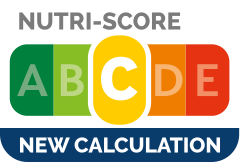 Average nutritional quality
Nutri-Score data warning
Nutrient levels
Fat in low quantity (2.33%)
Saturated fat in low quantity (0%)
Sugars in low quantity (2.33%)
Salt in moderate quantity (1.45%)
Nutrition facts
| Nutrition facts | As sold for 100 g / 100 ml | Compared to: Breads |
|---|---|---|
| Energy | ~ 1132.43 kJ (256 kcal) | 1,245.549 kJ (294 kcal) (-9%) |
| Fat | 2.33 g | 5.13 g (-55%) |
| Saturated fat | 0 g | 0.904 g (-100%) |
| Trans fat | 0 g | 0 g |
| Cholesterol | 0 g | 1.294 mg (-100%) |
| Carbohydrates | 51.16 g | 50.537 g (+1%) |
| Sugars | 2.33 g | 3.589 g (-35%) |
| Dietary fiber | 2.3 g | ? |
| Proteins | 9.3 g | 9.283 g (~0%) |
| Salt | 1.4525 g | 1.224 g (+19%) |
| Sodium | 0.581 g | 0.489 g (+19%) |
| Vitamin A | 0 g | 2.516 µg (-100%) |
| Vitamin C | 0 g | ? |
| Vitamin PP | 0.003721 g | ? |
| Folates | 0.000093 g | ? |
| Calcium | 0.047 g | 54.632 mg (-14%) |
| Iron | 0.00335 g | 2.197 mg (+52%) |
| Fruits, vegetables and legumes | ~ 0 % | ? |
Nutrition facts (Detailed data)
| Nutrition facts | As sold for 100 g / 100 ml | As sold Per 100 g (packaging) | As sold Per 100 g (estimate) |
|---|---|---|---|
| Energy | ~ 1132.43 kJ (256 kcal) | ? (256 kcal) | ~ 1217.0354375 kJ (287 kcal) |
| Fat | 2.33 g | 2.33 g | ~ 2.032046875 g |
| Saturated fat | 0 g | 0 g | ~ 0.3294641875 g |
| Trans fat | 0 g | 0 g | ? |
| Cholesterol | 0 g | 0 g | ~ 0.000002541875 g |
| Carbohydrates | 51.16 g | 51.16 g | ~ 57.190164375 g |
| Sugars | 2.33 g | 2.33 g | ~ 1.555975 g |
| Dietary fiber | 2.3 g | 2.3 g | ~ 5.1901628125 g |
| Proteins | 9.3 g | 9.3 g | ~ 7.6779931875 g |
| Salt | 1.4525 g | 1.4525 g | ~ 0.04800122 g |
| Sodium | 0.581 g | 0.581 g | ~ 0.00324456075 g |
| Vitamin A | 0 g | 0 g | ~ 0.00000007625625 g |
| Vitamin C | 0 g | 0 g | ~ 0.00017660625 g |
| Vitamin PP | 0.003721 g | 0.003721 g | ~ 0.00061592125 g |
| Folates | 0.000093 g | 0.000093 g | ? |
| Calcium | 0.047 g | 0.047 g | ~ 0.0213314680625 g |
| Iron | 0.00335 g | 0.00335 g | ~ 0.0016811646375 g |
| Fruits, vegetables and legumes | ~ 0 % | ? | ~ 0 % |
Serving size
Ingredients
Ingredients list
Ingredient information
Added sugars
Allergens
Ingredients analysis
Palm oil content unknown
Vegan status unknown
Unrecognized: en:reduced-iron, en:a-b-vitamin
Vegetarian status unknown
Unrecognized: en:reduced-iron, en:a-b-vitamin
Food Processing
NOVA group
 Ultra-processed food and drink products
Elements that indicate the product is in NOVA group 4
How NOVA works
Additives
E282 - calcium propionatePreservative
CALCIUM PROPIONATE has the formula Ca(C2H5COO)2. Calcium propionate is used as a preservative in a wide variety of products, including but not limited to:bread, other baked goods, processed meat, whey, and other dairy products.
E300 - Ascorbic acidAntioxidantSequestrant
No additive description is available yet.
E481 - Sodium stearoyl-2-lactylate EFSA overexposure risk: highEmulsifierStabiliser
Sodium stearoyl-2-lactylate (sodium stearoyl lactylate or SSL) is a versatile, FDA approved food additive used to improve the mix tolerance and volume of processed foods. It is one type of a commercially available lactylate. SSL is non-toxic, biodegradable, and typically manufactured using biorenewable feedstocks. Because SSL is a safe and highly effective food additive, it is used in a wide variety of products ranging from baked goods and desserts to pet foods.As described by the Food Chemicals Codex 7th edition, SSL is a cream-colored powder or brittle solid. SSL is currently manufactured by the esterification of stearic acid with lactic acid and partially neutralized with either food-grade soda ash (sodium carbonate) or caustic soda (concentrated sodium hydroxide). Commercial grade SSL is a mixture of sodium salts of stearoyl lactylic acids and minor proportions of other sodium salts of related acids. The HLB for SSL is 10-12. SSL is slightly hygroscopic, soluble in ethanol and in hot oil or fat, and dispersible in warm water. These properties are the reason that SSL is an excellent emulsifier for fat-in-water emulsions and can also function as a humectant.
E516 - Calcium sulphateSequestrantStabiliser
Calcium sulfate (or calcium sulphate) is the inorganic compound with the formula CaSO4 and related hydrates. In the form of γ-anhydrite (the anhydrous form), it is used as a desiccant. One particular hydrate is better known as plaster of Paris, and another occurs naturally as the mineral gypsum. It has many uses in industry. All forms are white solids that are poorly soluble in water. Calcium sulfate causes permanent hardness in water.
E517 - Ammonium sulphate
Ammonium sulfate (American English and international scientific usage; ammonium sulphate in British English); (NH4)2SO4, is an inorganic salt with a number of commercial uses. The most common use is as a soil fertilizer. It contains 21% nitrogen and 24% sulfur.
E920 - l-cysteine
Cysteine (symbol Cys or C; ) is a semi-essential proteinogenic amino acid with the formula HO2CCH(NH2)CH2SH. The thiol side chain in cysteine often participates in enzymatic reactions, as a nucleophile. The thiol is susceptible to oxidation to give the disulfide derivative cystine, which serves an important structural role in many proteins. When used as a food additive, it has the E number E920. It is encoded by the codons UGU and UGC. Cysteine has the same structure as serine, but with one of its oxygen atoms replaced by sulfur; replacing it with selenium gives selenocysteine. (Like other natural proteinogenic amino acids cysteine has (L) chirality in the older D/L notation based on homology to D and L glyceraldehyde. In the newer R/S system of designating chirality, based on the atomic numbers of atoms near the asymmetric carbon, cysteine (and selenocysteine) have R chirality, because of the presence of sulfur (resp. selenium) as a second neighbor to the asymmetric carbon. The remaining chiral amino acids, having lighter atoms in that position, have S chirality.)
E924a - Potassium bromate
Potassium bromate (KBrO3), is a bromate of potassium and takes the form of white crystals or powder. It is a strong oxidizing agent.
Environment
Green-Score, origins bonus, and transportation impact are shown for Worldwide .
Green Score
Overall grade
 Unknown environmental impact
About Green-Score
Current scope
Green-Score availability
Bonuses and maluses
Declared origins
Packaging impact
Packaging
Packaging impact
Data precision
Transportation
Declared origins
Data Source
Product data comes from Open Food Facts. Food Benchmark also adds translations, category comparisons and explanatory calculations.
The database is licensed under ODbL 1.0, individual contents under DbCL 1.0, and product photos under CC BY-SA 3.0.
Product added on March 9, 2017 at 10:55:24 AM UTC by usda-ndb-import .
Last edit on February 26, 2026 at 6:31:50 PM UTC by new-nutrition-bot .
Product page also edited by new-nutrition-bot, org-database-usda, usda-ndb-import.
Source List
- usda-ndb
- database-usda