

Mission white corn tortillas restaurant style
Health
Nutrition
Nutri-Score
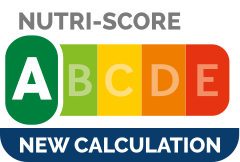 Very good nutritional quality
Nutri-Score data warning
Nutrient levels
Fat in moderate quantity (3.19%)
Saturated fat in low quantity (0%)
Sugars in low quantity (4.26%)
Salt in low quantity (0.0525%)
Nutrition label

Nutrition facts
| Nutrition facts | As sold for 100 g / 100 ml |
|---|---|
| Energy | 891 kcal (213 kcal) |
| Fat | 3.19 g |
| Saturated fat | 0 g |
| Monounsaturated fat | 0 g |
| Polyunsaturated fat | 1.06 g |
| Trans fat | 0 g |
| Cholesterol | 0 mg |
| Carbohydrates | 42.55 g |
| Sugars | 4.26 g |
| Dietary fiber | 6.4 g |
| Proteins | 4.26 g |
| Salt | 0.0525 g |
| Sodium | 0.021 g |
| Vitamin A | 0 IU |
| Vitamin C | 0 mg |
| Calcium | 0.043 mg |
| Iron | 0.00153 mg |
| Fruits, vegetables and legumes | ? |
Nutrition facts (Detailed data)
| Nutrition facts | As sold for 100 g / 100 ml | As sold Per serving (legacy) |
|---|---|---|
| Energy | 891 kcal (213 kcal) | 419 kcal (100 kcal) |
| Fat | 3.19 g | 1.5 g |
| Saturated fat | 0 g | 0 g |
| Monounsaturated fat | 0 g | 0 g |
| Polyunsaturated fat | 1.06 g | 0.498 g |
| Trans fat | 0 g | 0 g |
| Cholesterol | 0 mg | 0 mg |
| Carbohydrates | 42.55 g | 20 g |
| Sugars | 4.26 g | 2 g |
| Dietary fiber | 6.4 g | 3.01 g |
| Proteins | 4.26 g | 2 g |
| Salt | 0.0525 g | 0.0247 g |
| Sodium | 0.021 g | 0.00987 g |
| Vitamin A | 0 IU | 0 IU |
| Vitamin C | 0 mg | 0 mg |
| Calcium | 0.043 mg | 0.0202 mg |
| Iron | 0.00153 mg | 0.000719 mg |
| Fruits, vegetables and legumes | ? | ? |
Serving size
Ingredients
Ingredients image

Ingredients list
Ingredient information
Ingredients analysis
Palm oil content unknown
Unrecognized: en:corn-masa-flour, en:to-preserve-freshness, en:to-preserve-freshness
Vegan status unknown
Unrecognized: en:corn-masa-flour, en:to-preserve-freshness, en:to-preserve-freshness
Vegetarian status unknown
Unrecognized: en:corn-masa-flour, en:to-preserve-freshness, en:to-preserve-freshness
Food Processing
NOVA group
 Ultra-processed food and drink products
Elements that indicate the product is in NOVA group 4
How NOVA works
Additives
E1100 - Alpha-Amylase
An amylase () is an enzyme that catalyses the hydrolysis of starch into sugars. Amylase is present in the saliva of humans and some other mammals, where it begins the chemical process of digestion. Foods that contain large amounts of starch but little sugar, such as rice and potatoes, may acquire a slightly sweet taste as they are chewed because amylase degrades some of their starch into sugar. The pancreas and salivary gland make amylase (alpha amylase) to hydrolyse dietary starch into disaccharides and trisaccharides which are converted by other enzymes to glucose to supply the body with energy. Plants and some bacteria also produce amylase. As diastase, amylase was the first enzyme to be discovered and isolated (by Anselme Payen in 1833). Specific amylase proteins are designated by different Greek letters. All amylases are glycoside hydrolases and act on α-1,4-glycosidic bonds.
E210 - Benzoic acid EFSA overexposure risk: highPreservative
Benzoic acid , C7H6O2 (or C6H5COOH), is a colorless crystalline solid and a simple aromatic carboxylic acid. The name is derived from gum benzoin, which was for a long time its only known source. Benzoic acid occurs naturally in many plants and serves as an intermediate in the biosynthesis of many secondary metabolites. Salts of benzoic acid are used as food preservatives and benzoic acid is an important precursor for the industrial synthesis of many other organic substances. The salts and esters of benzoic acid are known as benzoates .
E280 - Propionic acidPreservative
Propionic acid (from the Greek words protos, meaning "first", and pion, meaning "fat"; also known as propanoic acid) is a naturally occurring carboxylic acid with chemical formula CH3CH2CO2H. It is a liquid with a pungent and unpleasant smell somewhat resembling body odor. The anion CH3CH2CO2− as well as the salts and esters of propionic acid are known as propionates (or propanoates).
E338 - Phosphoric acid EFSA overexposure risk: highAntioxidantSequestrant
Phosphoric acid (also known as orthophosphoric acid or phosphoric(V) acid) is a weak acid with the chemical formula H3PO4. Orthophosphoric acid refers to phosphoric acid, which is the IUPAC name for this compound. The prefix ortho- is used to distinguish the acid from related phosphoric acids, called polyphosphoric acids. Orthophosphoric acid is a non-toxic acid, which, when pure, is a solid at room temperature and pressure. The conjugate base of phosphoric acid is the dihydrogen phosphate ion, H2PO−4, which in turn has a conjugate base of hydrogen phosphate, HPO2−4, which has a conjugate base of phosphate, PO3−4. Phosphates are essential for life.The most common source of phosphoric acid is an 85% aqueous solution; such solutions are colourless, odourless, and non-volatile. The 85% solution is a syrupy liquid, but still pourable. Although phosphoric acid does not meet the strict definition of a strong acid, the 85% solution is acidic enough to be corrosive. Because of the high percentage of phosphoric acid in this reagent, at least some of the orthophosphoric acid is condensed into polyphosphoric acids; for the sake of labeling and simplicity, the 85% represents H3PO4 as if it were all in the ortho form. Dilute aqueous solutions of phosphoric acid exist in the ortho form.
E412 - Guar gumEmulsifierStabiliserThickener
Guar gum (E412) is a natural food additive derived from guar beans.
This white, odorless powder is valued for its remarkable thickening and stabilizing properties, making it a common ingredient in various food products, including sauces, dressings, and ice creams.
When used in moderation, guar gum is considered safe for consumption, with no known adverse health effects.
E466 - Sodium carboxy methyl celluloseEmulsifierHumectantStabiliserThickener
Carboxymethyl cellulose (CMC) or cellulose gum or tylose powder is a cellulose derivative with carboxymethyl groups (-CH2-COOH) bound to some of the hydroxyl groups of the glucopyranose monomers that make up the cellulose backbone. It is often used as its sodium salt, sodium carboxymethyl cellulose.
Environment
Green-Score, origins bonus, and transportation impact are shown for Worldwide .
Green Score
Overall grade
 Unknown environmental impact
About Green-Score
Current scope
Green-Score availability
Bonuses and maluses
Declared origins
Packaging impact
Packaging
Packaging impact
Data precision
Transportation
Declared origins
Data Source
Product data comes from Open Food Facts. Food Benchmark also adds translations, category comparisons and explanatory calculations.
The database is licensed under ODbL 1.0, individual contents under DbCL 1.0, and product photos under CC BY-SA 3.0.
Product added on March 9, 2017 at 11:47:23 AM UTC by usda-ndb-import .
Last edit on August 28, 2023 at 8:03:46 PM UTC by roboto-app .
Product page also edited by kiliweb, openfoodfacts-contributors, org-database-usda, roboto-app, usda-ndb-import, yuka.sY2b0xO6T85zoF3NwEKvllFVXoHsjWKVDSLjuRKJ7_HVA7bhZttox6n5b6o.
Source List
- usda-ndb
- database-usda