
Shirakiku, cuttlefish fillet (sk-mongo)
Health
Nutrition
Nutri-Score
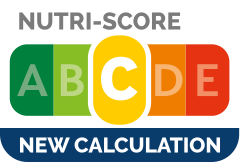 Average nutritional quality
Nutri-Score data warning
Nutrient levels
Fat in low quantity (0.57%)
Saturated fat in low quantity (0%)
Sugars in low quantity (1.14%)
Salt in high quantity (1.82%)
Nutrition facts
| Nutrition facts | As sold for 100 g / 100 ml | Compared to: Frozen seafood |
|---|---|---|
| Energy | 285 kcal (68 kcal) | 521.676 kJ (126 kcal) |
| Fat | 0.57 g | 4.501 g (-87%) |
| Saturated fat | 0 g | 0.772 g (-100%) |
| Trans fat | 0 g | 0.000399 g (-100%) |
| Cholesterol | 0.136 mg | 55.387 mg (-100%) |
| Carbohydrates | 4.55 g | 5.303 g (-14%) |
| Sugars | 1.14 g | 0.511 g (+123%) |
| Dietary fiber | 0 g | ? |
| Proteins | 11.36 g | 14.522 g (-22%) |
| Salt | 1.8175 mg | 0.661 g (-100%) |
| Sodium | 0.727 mg | 0.265 g (-100%) |
| Vitamin A | 0 IU | 7.463 µg |
| Vitamin C | 0 mg | ? |
| Calcium | 0 mg | 25.611 mg (-100%) |
| Iron | 0 mg | 0.654 mg (-100%) |
| Fruits, vegetables and legumes | ? | ? |
Nutrition facts (Detailed data)
| Nutrition facts | As sold for 100 g / 100 ml | As sold Per serving (legacy) |
|---|---|---|
| Energy | 285 kcal (68 kcal) | 251 kcal (59 kcal) |
| Fat | 0.57 g | 0.502 g |
| Saturated fat | 0 g | 0 g |
| Trans fat | 0 g | 0 g |
| Cholesterol | 0.136 mg | 0.12 mg |
| Carbohydrates | 4.55 g | 4 g |
| Sugars | 1.14 g | 1 g |
| Dietary fiber | 0 g | 0 g |
| Proteins | 11.36 g | 10 g |
| Salt | 1.8175 mg | 1.6 mg |
| Sodium | 0.727 mg | 0.64 mg |
| Vitamin A | 0 IU | 0 IU |
| Vitamin C | 0 mg | 0 mg |
| Calcium | 0 mg | 0 mg |
| Iron | 0 mg | 0 mg |
| Fruits, vegetables and legumes | ? | ? |
Serving size
Ingredients
Ingredients list
Ingredient information
Allergens
Ingredients analysis
No ingredients containing palm oil.
Contains non-vegan ingredients.
Contains non-vegetarian ingredients.
Food Processing
NOVA group
 Ultra-processed food and drink products
Elements that indicate the product is in NOVA group 4
How NOVA works
Additives
E420 - SorbitolHumectantSequestrantStabiliserSweetenerThickener
Sorbitol (), less commonly known as glucitol (), is a sugar alcohol with a sweet taste which the human body metabolizes slowly. It can be obtained by reduction of glucose, which changes the aldehyde group to a hydroxyl group. Most sorbitol is made from corn syrup, but it is also found in nature, for example in apples, pears, peaches, and prunes. It is converted to fructose by sorbitol-6-phosphate 2-dehydrogenase. Sorbitol is an isomer of mannitol, another sugar alcohol; the two differ only in the orientation of the hydroxyl group on carbon 2. While similar, the two sugar alcohols have very different sources in nature, melting points, and uses.
E621 - Monosodium glutamate EFSA overexposure risk: highFlavour Enhancer
Monosodium glutamate (MSG), or E621, is the sodium salt of glutamic acid, an amino acid found naturally in many foods.
It is widely used as a flavor enhancer to provide an "umami" or savory taste to a variety of processed foods, including soups, snack chips, and frozen meals.
MSG is generally recognized as safe (GRAS) by food authorities. However, some people report sensitivity to MSG, experiencing short-term symptoms like headaches and flushing, though scientific studies have not shown a consistent link.
Environment
Green-Score, origins bonus, and transportation impact are shown for Worldwide .
Green Score
Overall grade
 Unknown environmental impact
About Green-Score
Current scope
Green-Score availability
Bonuses and maluses
Declared origins
Packaging impact
Packaging
Packaging impact
Data precision
Transportation
Declared origins
Data Source
Product data comes from Open Food Facts. Food Benchmark also adds translations, category comparisons and explanatory calculations.
The database is licensed under ODbL 1.0, individual contents under DbCL 1.0, and product photos under CC BY-SA 3.0.
Product added on March 9, 2017 at 1:22:18 PM UTC by usda-ndb-import .
Last edit on April 22, 2020 at 6:29:40 PM UTC by org-database-usda .
Product page also edited by org-database-usda, usda-ndb-import.
Source List
- usda-ndb
- database-usda