
Hy-vee, honey roasted peanuts
Health
Nutrition
Nutri-Score
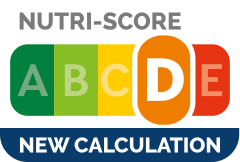 Lower nutritional quality
Nutri-Score data warning
Nutrient levels
Fat in high quantity (42.9%)
Saturated fat in high quantity (5.36%)
Sugars in high quantity (14.3%)
Salt in moderate quantity (0.715%)
Nutrition facts
| Nutrition facts | As sold for 100 g / 100 ml | Compared to: Snacks |
|---|---|---|
| Energy | 2243 kcal (536 kcal) | 1,864.084 kJ (445 kcal) |
| Fat | 42.86 g | 20.375 g (+110%) |
| Saturated fat | 5.36 g | 8.168 g (-34%) |
| Monounsaturated fat | 21.43 g | 8.489 g (+152%) |
| Polyunsaturated fat | 14.29 g | 2.972 g (+381%) |
| Trans fat | 0 g | 0.02 g (-100%) |
| Cholesterol | 0 mg | 12.072 mg (-100%) |
| Carbohydrates | 28.57 g | 55.718 g (-49%) |
| Sugars | 14.29 g | 27.399 g (-48%) |
| Dietary fiber | 7.1 g | ? |
| Proteins | 21.43 g | 6.499 g (+230%) |
| Salt | 0.715 mg | 0.557 g (-100%) |
| Sodium | 0.286 mg | 0.222 g (-100%) |
| Vitamin A | 0 IU | 22.814 µg |
| Vitamin C | 0 mg | ? |
| Vitamin B1 | 0 mg | ? |
| Vitamin B2 | 0 mg | ? |
| Vitamin PP | 0.010714 mg | ? |
| Vitamin B6 | 0.000286 mg | ? |
| Folates | 0.000114 µg | ? |
| Pantothenic acid | 0.001429 mg | ? |
| Calcium | 0.071 mg | 58.959 mg (-100%) |
| Phosphorus | 0.536 mg | 133.285 mg (-100%) |
| Iron | 0.00129 mg | 1.678 mg (-100%) |
| Magnesium | 0.143 mg | 45.815 mg (-100%) |
| Zinc | 0.00536 mg | 0.926 mg (-99%) |
| Copper | 0.001071 mg | 0.199 mg (-99%) |
| Manganese | 0.002 mg | 0.684 mg (-100%) |
| Fruits, vegetables and legumes | ? | ? |
Nutrition facts (Detailed data)
| Nutrition facts | As sold for 100 g / 100 ml | As sold Per serving (legacy) |
|---|---|---|
| Energy | 2243 kcal (536 kcal) | 628 kcal (150 kcal) |
| Fat | 42.86 g | 12 g |
| Saturated fat | 5.36 g | 1.5 g |
| Monounsaturated fat | 21.43 g | 6 g |
| Polyunsaturated fat | 14.29 g | 4 g |
| Trans fat | 0 g | 0 g |
| Cholesterol | 0 mg | 0 mg |
| Carbohydrates | 28.57 g | 8 g |
| Sugars | 14.29 g | 4 g |
| Dietary fiber | 7.1 g | 1.99 g |
| Proteins | 21.43 g | 6 g |
| Salt | 0.715 mg | 0.2 mg |
| Sodium | 0.286 mg | 0.0801 mg |
| Vitamin A | 0 IU | 0 IU |
| Vitamin C | 0 mg | 0 mg |
| Vitamin B1 | 0 mg | 0 mg |
| Vitamin B2 | 0 mg | 0 mg |
| Vitamin PP | 0.010714 mg | 0.003 mg |
| Vitamin B6 | 0.000286 mg | 0.0000801 mg |
| Folates | 0.000114 µg | 0.0000319 µg |
| Pantothenic acid | 0.001429 mg | 0.0004 mg |
| Calcium | 0.071 mg | 0.0199 mg |
| Phosphorus | 0.536 mg | 0.15 mg |
| Iron | 0.00129 mg | 0.000361 mg |
| Magnesium | 0.143 mg | 0.04 mg |
| Zinc | 0.00536 mg | 0.0015 mg |
| Copper | 0.001071 mg | 0.0003 mg |
| Manganese | 0.002 mg | 0.00056 mg |
| Fruits, vegetables and legumes | ? | ? |
Serving size
Ingredients
Ingredients list
Ingredient information
Added sugars
Allergens
Ingredients analysis
No ingredients containing palm oil.
Contains non-vegan ingredients.
No non-vegetarian ingredients.
Food Processing
NOVA group
 Ultra-processed food and drink products
Elements that indicate the product is in NOVA group 4
How NOVA works
Additives
E415 - Xanthan gumEmulsifierStabiliserThickener
Xanthan gum (E415) is a natural polysaccharide derived from fermented sugars, often used in the food industry as a thickening and stabilizing agent.
This versatile food additive enhances texture and prevents ingredient separation in a wide range of products, including salad dressings, sauces, and gluten-free baked goods.
It is considered safe for consumption even at high intake amounts.
Environment
Green-Score, origins bonus, and transportation impact are shown for Worldwide .
Green Score
Overall grade
 Unknown environmental impact
About Green-Score
Current scope
Green-Score availability
Bonuses and maluses
Declared origins
Packaging impact
Packaging
Packaging impact
Data precision
Transportation
Declared origins
Data Source
Product data comes from Open Food Facts. Food Benchmark also adds translations, category comparisons and explanatory calculations.
The database is licensed under ODbL 1.0, individual contents under DbCL 1.0, and product photos under CC BY-SA 3.0.
Product added on March 9, 2017 at 3:01:13 PM UTC by usda-ndb-import .
Last edit on April 22, 2020 at 7:50:10 PM UTC by org-database-usda .
Product page also edited by org-database-usda, usda-ndb-import.
Source List
- usda-ndb
- database-usda