ProductsS.A. Piazza & Associates LlcUltimate pizza
NO_IMAGE
Barcode 0078642302219
S.A. Piazza & Associates Llc

Ultimate pizza

BARCODE:0078642302219
BRAND OWNER:S.A. PIAZZA & ASSOCIATES, LLC
CATEGORIES:Meals, Pizzas Pies And Quiches, Pizzas
COUNTRIES:United States

Health

Nutrition

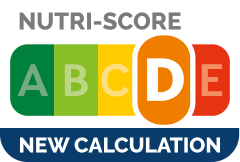
Nutri-Score

DLower nutritional quality

Nutri-Score data warning

Warning: the amount of fruits, vegetables and nuts is not specified on the label, it was estimated from the list of ingredients: 2

Nutrient levels

Fat in moderate quantity (6.96%)
What you need to know • A high consumption of fat, especially saturated fats, can raise cholesterol, which increases the risk of heart diseases. Recommendation: Limit the consumption of fat and saturated fat • Choose products with lower fat and saturated fat content. Source: National Health Service UK (NHS) - Fat: the facts
Saturated fat in moderate quantity (4.43%)
What you need to know • A high consumption of fat, especially saturated fats, can raise cholesterol, which increases the risk of heart diseases. Recommendation: Limit the consumption of fat and saturated fat • Choose products with lower fat and saturated fat content. Source: National Health Service UK (NHS) - Fat: the facts
Sugars in low quantity (1.9%)
What you need to know • A high consumption of sugar can cause weight gain and tooth decay. It also augments the risk of type 2 diabetes and cardio-vascular diseases. Recommendation: Limit the consumption of sugar and sugary drinks • Sugary drinks (such as sodas, fruit beverages, and fruit juices and nectars) should be limited as much as possible (no more than 1 glass a day). • Choose products with lower sugar content and reduce the consumption of products with added sugars. Source: National Health Service UK (NHS) - Sugar: the facts
Salt in moderate quantity (1.07%)
What you need to know • A high consumption of salt (or sodium) can cause raised blood pressure, which can increase the risk of heart disease and stroke. • Many people who have high blood pressure do not know it, as there are often no symptoms. • Most people consume too much salt (on average 9 to 12 grams per day), around twice the recommended maximum level of intake. Recommendation: Limit the consumption of salt and salted food • Reduce the quantity of salt used when cooking, and don't salt again at the table. • Limit the consumption of salty snacks and choose products with lower salt content. Source: World Health Organization (WHO) - Fact sheet - Salt reduction Source: National Health Service UK (NHS) - Salt: the facts

Nutrition facts

Nutrition factsAs sold for 100 g / 100 mlCompared to: Pizzas
Energy929 kcal (222 kcal)974.056 kJ (232 kcal)
Fat6.96 g8.409 g (-17%)
Saturated fat4.43 g3.709 g (+19%)
Trans fat0 g0.064 g (-100%)
Cholesterol0.016 mg19.464 mg (-100%)
Carbohydrates28.48 g27.966 g (+2%)
Sugars1.9 g2.877 g (-34%)
Dietary fiber1.3 g?
Proteins9.49 g10.113 g (-6%)
Salt1.075 mg1.213 g (-100%)
Sodium0.43 mg0.486 g (-100%)
Vitamin A0.0001425 IU33.742 µg
Vitamin C0.0076 mg?
Calcium0.158 mg133.872 mg (-100%)
Iron0.00228 mg1.241 mg (-100%)
Fruits, vegetables and legumes??

Nutrition facts (Detailed data)

Nutrition factsAs sold for 100 g / 100 mlAs sold Per serving (legacy)
Energy929 kcal (222 kcal)1470 kcal (351 kcal)
Fat6.96 g11 g
Saturated fat4.43 g7 g
Trans fat0 g0 g
Cholesterol0.016 mg0.0253 mg
Carbohydrates28.48 g45 g
Sugars1.9 g3 g
Dietary fiber1.3 g2.05 g
Proteins9.49 g15 g
Salt1.075 mg1.7 mg
Sodium0.43 mg0.679 mg
Vitamin A0.0001425 IU0.000225 IU
Vitamin C0.0076 mg0.012 mg
Calcium0.158 mg0.25 mg
Iron0.00228 mg0.0036 mg
Fruits, vegetables and legumes??

Serving size

0.25 PIZZA (158 g)

Ingredients

Ingredients list

Crust: enriched flour (wheat flour, malted barley flour, enriched (niacin, reduced iron, thiamin mononitrate, riboflavin and folic acid)), water, shortening flakes (palm oil, soy lecithin, natural & artificial flavor, beta-carotene (color), citric acid added as a preservative), canola oil, salt, malt (malted barley, wheat flour, dextrose), garlic, yeast, sugar, calcium propionate. cheese blend: mozzarella cheese (pasteurized part skim milk, cultures, salt, enzymes), provolone cheese (cultured part skim milk, salt, enzymes, may contain smoke flavor), romano cheese made from cow's milk (pasteurized part skim milk, cheese cultures, salt enzymes), parmesan cheese (pasteurized part skim milk, cheese cultures, salt, enzymes, sauce: water, tomato paste, sugar, salt, soybean oil, modified food starch, spices, garlic powder, cultured skim milk, sodium benzoate, potassium sorbate, citric acid, hydrolyzed soy protein. cooked pork patty crumbles: sausage (pork, spices, water, salt, sugar, garlic powder), water, textured vegetable protein (soy flour, soy protein concentrate, caramel color). pepperoni: pork and beef, salt, spices, dextrose, lactic acid starter culture, oleoresin of paprika, flavorings, sodium ascorbate, sodium nitrite, bha, bht, citric acid. green peppers, olives, onions and red peppers.

Ingredient information

Crust
50.83% (estimate)
Flour
25.83% (estimate)
Wheat Flour
25% (estimate)
Barley Malt Flour
24.58% (estimate)
Enriched
12.29% (estimate)
E375
6.15% (estimate)
Reduced Iron
3.07% (estimate)
Thiamin Mononitrate
1.54% (estimate)
E101
0.77% (estimate)
Folic Acid
0.77% (estimate)
Water
6.15% (estimate)
Fat
3.07% (estimate)
Palm Oil
1.54% (estimate)
Soya Lecithin
0.77% (estimate)
Natural And Artificial Flavouring
0.38% (estimate)
E160ai
0.19% (estimate)
Colour
0.19% (estimate)
Citric Acid Added As A Preservative
0.19% (estimate)
Canola Oil
1.54% (estimate)
Salt
0.54% (estimate)
Malt
0.5% (estimate)
Malted Barley
0.25% (estimate)
Wheat Flour
0.12% (estimate)
Dextrose
0.12% (estimate)
Garlic
0.25% (estimate)
Yeast
0.12% (estimate)
Sugar
0.06% (estimate)
E282
0.03% (estimate)
Mixed Cheese
0.02% (estimate)
Mozzarella
0.01% (estimate)
Pasteurized Semi Skimmed Milk
0.01% (estimate)
Microbial Culture
0.01% (estimate)
Salt
0% (estimate)
Enzyme
0% (estimate)
Provolone
0% (estimate)
Cultured Part Skim Milk
0% (estimate)
Salt
0% (estimate)
Enzyme
0% (estimate)
May Contain Smoke Flavor
0% (estimate)
Romano Cheese Made From Cow S Milk
0% (estimate)
Pasteurized Semi Skimmed Milk
0% (estimate)
Lactic Ferments
0% (estimate)
Salt Enzymes
0% (estimate)
Parmigiano Reggiano
0% (estimate)
Pasteurized Semi Skimmed Milk
0% (estimate)
Lactic Ferments
0% (estimate)
Salt
0% (estimate)
Enzyme
0% (estimate)
Sauce
0% (estimate)
Water
0% (estimate)
Tomato Concentrate
0% (estimate)
Sugar
0% (estimate)
Salt
0% (estimate)
Soya Oil
0% (estimate)
Modified Starch
0% (estimate)
Spice
0% (estimate)
Garlic
0% (estimate)
Cultured Skim Milk
0% (estimate)
E211
0% (estimate)
E202
0% (estimate)
E330
0% (estimate)
Hydrolysed Soy Protein
0% (estimate)
Cooked Pork Patty Crumbles
0% (estimate)
Sausage
0% (estimate)
Pork
0% (estimate)
Spice
0% (estimate)
Water
0% (estimate)
Salt
0% (estimate)
Sugar
0% (estimate)
Garlic
0% (estimate)
Water
0% (estimate)
Textured Plant Protein
0% (estimate)
Soya Flour
0% (estimate)
Soy Protein
0% (estimate)
E150a
0% (estimate)
Pepperoni
0% (estimate)
Pork
0% (estimate)
Beef
0% (estimate)
Salt
0% (estimate)
Spice
0% (estimate)
Dextrose
0% (estimate)
Lactic Acid Starter Culture
0% (estimate)
E160c
0% (estimate)
Flavouring
0% (estimate)
E301
0% (estimate)
E250
0% (estimate)
E320
0% (estimate)
E321
< 1.08% (estimate)
E330
< 1.08% (estimate)
Green Pepper
< 1.08% (estimate)
Olive
< 1.08% (estimate)
Onion
< 1.08% (estimate)
Red Bell Pepper
< 1.08% (estimate)

Added sugars

Contains added sugars (~ 0%) Added sugars: dextrose, sugar Estimated quantity of added sugars in ingredients: 0%

Allergens

GlutenMilkSoybeans

Traces

BeefPorkSoybeans

Ingredients analysis

Palm oil free
No

Contains ingredients containing palm oil.

Vegan
No

Contains non-vegan ingredients.

Unrecognized: en:enriched, en:reduced-iron, en:citric-acid-added-as-a-preservative, en:cultured-part-skim-milk, en:may-contain-smoke-flavor, en:romano-cheese-made-from-cow-s-milk, en:salt-enzymes, en:cultured-skim-milk, en:cooked-pork-patty-crumbles, en:lactic-acid-starter-culture

Vegetarian
No

Contains non-vegetarian ingredients.

Unrecognized: en:enriched, en:reduced-iron, en:citric-acid-added-as-a-preservative, en:cultured-part-skim-milk, en:may-contain-smoke-flavor, en:romano-cheese-made-from-cow-s-milk, en:salt-enzymes, en:cultured-skim-milk, en:cooked-pork-patty-crumbles, en:lactic-acid-starter-culture


Food Processing

NOVA group

4Ultra-processed food and drink products

Elements that indicate the product is in NOVA group 4

Additives
E150c - Ammonia caramel
Additives
E160c - Paprika extract
Additives
E322 - Lecithins
Ingredients
Colour
Ingredients
Dextrose
Ingredients
Flavouring
Ingredients
Glucose
Ingredients
Modified Starch

How NOVA works

The NOVA classification assigns food products into 4 groups based on their degree of processing: 1. Unprocessed or minimally processed foods 2. Processed culinary ingredients 3. Processed foods 4. Ultra-processed food and drink products

Additives

E150c - Ammonia caramel EFSA overexposure risk: moderateColour

No additive description is available yet.

E160c - Paprika extractColour

No additive description is available yet.

E202 - Potassium sorbate EFSA overexposure risk: highPreservative

Potassium sorbate (E202) is a synthetic food preservative commonly used to extend the shelf life of various food products.

It works by inhibiting the growth of molds, yeast, and some bacteria, preventing spoilage. When added to foods, it helps maintain their freshness and quality.

Some studies have shown that when combined with nitrites, potassium sorbate have genotoxic activity in vitro. However, potassium sorbate is generally recognized as safe (GRAS) by regulatory authorities.

E211 - Sodium benzoate EFSA overexposure risk: highPreservative

SODIUM BENZOATE is a substance which has the chemical formula NaC7H5O2

E250 - Sodium nitrite EFSA overexposure risk: highPreservative

Sodium nitrite (E250) is a salt used for curing and preserving meat products.

It plays a critical role in preventing the growth of Clostridium botulinum, the bacterium responsible for botulism, in cured meats like bacon, ham, and sausages. It also provides the characteristic pink color and flavor.

However, nitrites can react with amines in the stomach to form nitrosamines, which are potent carcinogens. High intake of processed meats containing nitrites is associated with an increased risk of colorectal cancer. Regulatory bodies have set strict limits on its use in food.

E282 - calcium propionatePreservative

CALCIUM PROPIONATE has the formula Ca(C2H5COO)2. Calcium propionate is used as a preservative in a wide variety of products, including but not limited to:bread, other baked goods, processed meat, whey, and other dairy products.

E301 - Sodium ascorbateAntioxidant

SODIUM ASCORBATE is one of a number of mineral salts of ascorbic acid (vitamin C).

E320 - Butylated hydroxyanisole (bha)Antioxidant

Butylated hydroxyanisole (BHA) is an antioxidant consisting of a mixture of two isomeric organic compounds, 2-tert-butyl-4-hydroxyanisole and 3-tert-butyl-4-hydroxyanisole. It is prepared from 4-methoxyphenol and isobutylene. It is a waxy solid used as a food additive with the E number E320. The primary use for BHA is as an antioxidant and preservative in food, food packaging, animal feed, cosmetics, rubber, and petroleum products. BHA also is commonly used in medicines, such as isotretinoin, lovastatin, and simvastatin, among others.

E321 - Butylated hydroxytolueneAntioxidant

Butylated hydroxytoluene (BHT), also known as dibutylhydroxytoluene, is a lipophilic organic compound, chemically a derivative of phenol, that is useful for its antioxidant properties. European and U.S. regulations allow small amounts to be used as a food additive. In addition to this use, BHT is widely used to prevent oxidation in fluids (e.g. fuel, oil) and other materials where free radicals must be controlled.

E322 - LecithinsAntioxidantEmulsifier

Lecithins are natural compounds commonly used in the food industry as emulsifiers and stabilizers.

Extracted from sources like soybeans and eggs, lecithins consist of phospholipids that enhance the mixing of oil and water, ensuring smooth textures in various products like chocolates, dressings, and baked goods.

They do not present any known health risks.

E322i - LecithinAntioxidantEmulsifier

Lecithins are natural compounds commonly used in the food industry as emulsifiers and stabilizers.

Extracted from sources like soybeans and eggs, lecithins consist of phospholipids that enhance the mixing of oil and water, ensuring smooth textures in various products like chocolates, dressings, and baked goods.

They do not present any known health risks.

E330 - Citric acidAntioxidantSequestrant

Citric acid is a natural organic acid found in citrus fruits such as lemons, oranges, and limes.

It is widely used in the food industry as a flavor enhancer, acidulant, and preservative due to its tart and refreshing taste.

Citric acid is safe for consumption when used in moderation and is considered a generally recognized as safe (GRAS) food additive by regulatory agencies worldwide.

Environment

Green-Score, origins bonus, and transportation impact are shown for Worldwide .

Green Score

Overall grade

UnknownUnknown environmental impact

About Green-Score

The Green-Score is an experimental score that summarizes the environmental impacts of food products.

Current scope

The Green-Score was initially developed for France and it is being extended to other European countries. The Green-Score formula is subject to change as it is regularly improved to make it more precise and better suited to each country. Select a country to include the full impact of transportation in the final score.

Green-Score availability

We could not compute the Green-Score of this product because some data is missing. A more precise category, ingredients list, origins or packaging data can unlock the computation.

Bonuses and maluses

Declared origins

Origins of ingredients are missing for this product. Ingredients need to be completed before the transportation bonus can be computed precisely.

Threatened species risk

Contains ingredients that may threaten species or ecosystems, such as palm oil.

Packaging impact

Packaging with a high impact Malus: -15 The information about the packaging of this product is not filled in.

Packaging

Packaging impact

Packaging with a high impact Malus: -15 The information about the packaging of this product is not filled in.

Data precision

The packaging information is not sufficiently precise to compute the most accurate packaging impact. Exact shapes and materials of all packaging components help improve the Green-Score.

Transportation

Declared origins

Origins of ingredients are missing for this product. Ingredients need to be completed before the transportation bonus can be computed precisely.

Data Source

Product data comes from Open Food Facts. Food Benchmark also adds translations, category comparisons and explanatory calculations.

The database is licensed under ODbL 1.0, individual contents under DbCL 1.0, and product photos under CC BY-SA 3.0.

Product added on March 10, 2017 at 8:52:04 AM UTC by usda-ndb-import .

Last edit on April 23, 2020 at 7:43:39 AM UTC by org-database-usda .

Product page also edited by org-database-usda, usda-ndb-import.

Source List