
The bakery, blueberry bagels
Health
Nutrition
Nutri-Score
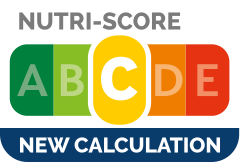 Average nutritional quality
Nutri-Score data warning
Nutrient levels
Fat in low quantity (1.18%)
Saturated fat in low quantity (0%)
Sugars in moderate quantity (8.24%)
Salt in moderate quantity (1.15%)
Nutrition facts
| Nutrition facts | As sold for 100 g / 100 ml | Compared to: Breads |
|---|---|---|
| Energy | ~ 1182.82 kJ (282 kcal) | 1,245.587 kJ (294 kcal) (-5%) |
| Fat | 1.18 g | 5.131 g (-77%) |
| Saturated fat | 0 g | 0.904 g (-100%) |
| Trans fat | 0 g | 0 g |
| Cholesterol | 0 g | 1.3 mg (-100%) |
| Carbohydrates | 56.47 g | 50.54 g (+12%) |
| Sugars | 8.24 g | 3.589 g (+130%) |
| Dietary fiber | 2.4 g | ? |
| Proteins | 9.41 g | 9.282 g (+1%) |
| Salt | 1.1475 g | 1.224 g (-6%) |
| Sodium | 0.459 g | 0.489 g (-6%) |
| Vitamin A | 0 g | 2.524 µg (-100%) |
| Vitamin C | 0 g | ? |
| Calcium | 0.071 g | 54.614 mg (+30%) |
| Iron | 0.00318 g | 2.196 mg (+45%) |
| Fruits, vegetables and legumes | ~ 0.860625 % | ? |
Nutrition facts (Detailed data)
| Nutrition facts | As sold for 100 g / 100 ml | As sold Per 100 g (packaging) | As sold Per 100 g (estimate) |
|---|---|---|---|
| Energy | ~ 1182.82 kJ (282 kcal) | ? (282 kcal) | ? |
| Fat | 1.18 g | 1.18 g | ? |
| Saturated fat | 0 g | 0 g | ? |
| Trans fat | 0 g | 0 g | ? |
| Cholesterol | 0 g | 0 g | ? |
| Carbohydrates | 56.47 g | 56.47 g | ? |
| Sugars | 8.24 g | 8.24 g | ? |
| Dietary fiber | 2.4 g | 2.4 g | ? |
| Proteins | 9.41 g | 9.41 g | ? |
| Salt | 1.1475 g | 1.1475 g | ? |
| Sodium | 0.459 g | 0.459 g | ? |
| Vitamin A | 0 g | 0 g | ? |
| Vitamin C | 0 g | 0 g | ? |
| Calcium | 0.071 g | 0.071 g | ? |
| Iron | 0.00318 g | 0.00318 g | ? |
| Fruits, vegetables and legumes | ~ 0.860625 % | ? | ~ 0.860625 % |
Serving size
Ingredients
Ingredients list
Ingredient information
Added sugars
Allergens
Ingredients analysis
No ingredients containing palm oil.
Unrecognized: en:contains-2-and-less-of, en:cottonseed-fiber, en:monodiglycerides, en:fd-c-red-40-lake, en:fd-c-blue-2-lake, en:fd-c-blue-1-lake
Vegan status unknown
Unrecognized: en:reduced-iron, en:cottonseed-fiber, en:monodiglycerides, en:fd-c-red-40-lake, en:fd-c-blue-2-lake, en:fd-c-blue-1-lake
Vegetarian status unknown
Unrecognized: en:reduced-iron, en:cottonseed-fiber, en:monodiglycerides, en:fd-c-red-40-lake, en:fd-c-blue-2-lake, en:fd-c-blue-1-lake
Food Processing
NOVA group
 Ultra-processed food and drink products
Elements that indicate the product is in NOVA group 4
How NOVA works
Additives
E129 - Allura red EFSA overexposure risk: noColour
Allura Red AC is a red azo dye that goes by several names, including FD&C Red 40. It is used as a food dye and has the E number E129. It is usually supplied as its red sodium salt, but can also be used as the calcium and potassium salts. These salts are soluble in water. In solution, its maximum absorbance lies at about 504 nm.
E132 - Indigotine EFSA overexposure risk: noColour
Indigo carmine, or 5,5′-indigodisulfonic acid sodium salt, is an organic salt derived from indigo by sulfonation, which renders the compound soluble in water. It is approved for use as a food colorant in the U.S and E.U., It has the E number E132. It is also a pH indicator.
E133 - Brilliant blue FCF EFSA overexposure risk: moderateColour
BRILLIANT BLUE FCF (Blue 1) is an organic compound classified as a blue triarylmethane dye, reflecting its chemical structure. Known under various commercial names, it is a colorant for foods and other substances.
E200 - Sorbic acid EFSA overexposure risk: highPreservative
SORBIC ACID, or 2,4-hexadienoic acid, is a natural organic compound used as a food preservative. It has the chemical formula CH3(CH)4CO2H.
E282 - calcium propionatePreservative
CALCIUM PROPIONATE has the formula Ca(C2H5COO)2. Calcium propionate is used as a preservative in a wide variety of products, including but not limited to:bread, other baked goods, processed meat, whey, and other dairy products.
E330 - Citric acidAntioxidantSequestrant
Citric acid is a natural organic acid found in citrus fruits such as lemons, oranges, and limes.
It is widely used in the food industry as a flavor enhancer, acidulant, and preservative due to its tart and refreshing taste.
Citric acid is safe for consumption when used in moderation and is considered a generally recognized as safe (GRAS) food additive by regulatory agencies worldwide.
E412 - Guar gumEmulsifierStabiliserThickener
Guar gum (E412) is a natural food additive derived from guar beans.
This white, odorless powder is valued for its remarkable thickening and stabilizing properties, making it a common ingredient in various food products, including sauces, dressings, and ice creams.
When used in moderation, guar gum is considered safe for consumption, with no known adverse health effects.
Environment
Green-Score, origins bonus, and transportation impact are shown for Worldwide .
Green Score
Overall grade
 Unknown environmental impact
About Green-Score
Current scope
Green-Score availability
Bonuses and maluses
Declared origins
Packaging impact
Packaging
Packaging impact
Data precision
Transportation
Declared origins
Data Source
Product data comes from Open Food Facts. Food Benchmark also adds translations, category comparisons and explanatory calculations.
The database is licensed under ODbL 1.0, individual contents under DbCL 1.0, and product photos under CC BY-SA 3.0.
Product added on March 9, 2017 at 3:02:11 PM UTC by usda-ndb-import .
Last edit on February 26, 2026 at 6:23:03 PM UTC by new-nutrition-bot .
Product page also edited by new-nutrition-bot, org-database-usda, usda-ndb-import.
Source List
- usda-ndb
- database-usda