

Garden - Malkist Crackers
Health
Nutrition
Nutri-Score
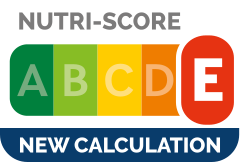 Lower nutritional quality
Nutri-Score data warning
Nutrient levels
Fat in high quantity (32%)
Saturated fat in high quantity (18%)
Sugars in high quantity (20%)
Salt in moderate quantity (0.3%)
Nutrition label

Nutrition facts
| Nutrition facts | As sold for 100 g / 100 ml | Compared to: Crackers (Appetizers) |
|---|---|---|
| Energy | ~ 2272 kJ (544 kcal) | 1,900.52 kJ (453 kcal) (+20%) |
| Fat | 32 g | 17.328 g (+85%) |
| Saturated fat | 18 g | 4.338 g (+315%) |
| Carbohydrates | 60 g | 61.72 g (-3%) |
| Sugars | 20 g | 3.877 g (+416%) |
| Dietary fiber | ? | ? |
| Proteins | 4 g | 9.733 g (-59%) |
| Salt | 0.3 g | 1.851 g (-84%) |
| Sodium | 0.12 g | 0.738 g (-84%) |
| Fruits, vegetables and legumes | ~ 0 % | ? |
Nutrition facts (Detailed data)
| Nutrition facts | As sold for 100 g / 100 ml | As sold Per 100 g (packaging) | As sold Per 100 g (estimate) |
|---|---|---|---|
| Energy | ~ 2272 kJ (544 kcal) | ? (544 kcal) | ? |
| Fat | 32 g | 32 g | ? |
| Saturated fat | 18 g | 18 g | ? |
| Carbohydrates | 60 g | 60 g | ? |
| Sugars | 20 g | 20 g | ? |
| Dietary fiber | ? | ? | ? |
| Proteins | 4 g | 4 g | ? |
| Salt | 0.3 g | 0.3 g | ? |
| Sodium | 0.12 g | 0.12 g | ? |
| Fruits, vegetables and legumes | ~ 0 % | ? | ~ 0 % |
Ingredients
Ingredients image

Ingredients list
Ingredient information
Allergens
Traces
Ingredients analysis
Palm oil content unknown
Vegan status unknown
Unrecognized: en:chine, en:huile-de-palme, en:graisse-de-palme, en:lecithine-de-soja, en:sucre, en:sucre, en:eau, en:huile-de-palme, en:graisse-de-palme, en:lecithine-de-soja, en:sel, en:extrait-de-malt, en:levure, en:e106a, en:ceuf, en:lait, en:arachide, en:fruits-a-coque
Vegetarian status unknown
Unrecognized: en:chine, en:huile-de-palme, en:graisse-de-palme, en:lecithine-de-soja, en:sucre, en:sucre, en:eau, en:huile-de-palme, en:graisse-de-palme, en:lecithine-de-soja, en:sel, en:extrait-de-malt, en:levure, en:e106a, en:ceuf, en:lait, en:arachide, en:fruits-a-coque
Food Processing
NOVA group
 Ultra-processed food and drink products
Elements that indicate the product is in NOVA group 4
How NOVA works
Additives
E1100 - Alpha-Amylase
An amylase () is an enzyme that catalyses the hydrolysis of starch into sugars. Amylase is present in the saliva of humans and some other mammals, where it begins the chemical process of digestion. Foods that contain large amounts of starch but little sugar, such as rice and potatoes, may acquire a slightly sweet taste as they are chewed because amylase degrades some of their starch into sugar. The pancreas and salivary gland make amylase (alpha amylase) to hydrolyse dietary starch into disaccharides and trisaccharides which are converted by other enzymes to glucose to supply the body with energy. Plants and some bacteria also produce amylase. As diastase, amylase was the first enzyme to be discovered and isolated (by Anselme Payen in 1833). Specific amylase proteins are designated by different Greek letters. All amylases are glycoside hydrolases and act on α-1,4-glycosidic bonds.
E1101 - ProteaseStabiliser
A protease (also called a peptidase or proteinase) is an enzyme that performs proteolysis: protein catabolism by hydrolysis of peptide bonds. Proteases have evolved multiple times, and different classes of protease can perform the same reaction by completely different catalytic mechanisms. Proteases can be found in Animalia, Plantae, Fungi, Bacteria, Archaea and viruses.
E304 - Fatty acid esters of ascorbic acidAntioxidant
ASCORBYL PALMITATE is an ester formed from ascorbic acid and palmitic acid creating a fat-soluble form of vitamin C.
E307 - Alpha-tocopherol
α-Tocopherol is a type of vitamin E. It has E number "E307". Vitamin E exists in eight different forms, four tocopherols and four tocotrienols. All feature a chromane ring, with a hydroxyl group that can donate a hydrogen atom to reduce free radicals and a hydrophobic side chain which allows for penetration into biological membranes. Compared to the others, α-tocopherol is preferentially absorbed and accumulated in humans.
E330 - Citric acidAntioxidantSequestrant
Citric acid is a natural organic acid found in citrus fruits such as lemons, oranges, and limes.
It is widely used in the food industry as a flavor enhancer, acidulant, and preservative due to its tart and refreshing taste.
Citric acid is safe for consumption when used in moderation and is considered a generally recognized as safe (GRAS) food additive by regulatory agencies worldwide.
E385 - Calcium disodium ethylenediaminetetraacetateAntioxidantPreservativeSequestrant
No additive description is available yet.
E471 - Mono- and diglycerides of fatty acidsEmulsifierStabiliser
Mono- and diglycerides of fatty acids (E471), are food additives commonly used as emulsifiers in various processed foods.
These compounds consist of glycerol molecules linked to one or two fatty acid chains, which help stabilize and blend water and oil-based ingredients. E471 enhances the texture and shelf life of products like margarine, baked goods, and ice cream, ensuring a smooth and consistent texture.
It is generally considered safe for consumption within established regulatory limits.
E500 - Sodium carbonatesStabiliserThickener
Sodium carbonates (E500) are compounds commonly used in food preparation as leavening agents, helping baked goods rise by releasing carbon dioxide when they interact with acids.
Often found in baking soda, they regulate the pH of food, preventing it from becoming too acidic or too alkaline. In the culinary world, sodium carbonates can also enhance the texture and structure of foods, such as noodles, by modifying the gluten network.
Generally recognized as safe, sodium carbonates are non-toxic when consumed in typical amounts found in food.
E507 - Hydrochloric acid EFSA overexposure risk: moderate
Hydrochloric acid is a colorless inorganic chemical system with the formula H2O:HCl. Hydrochloric acid has a distinctive pungent smell. It is mainly produced as a precursor to vinyl chloride for PVC. It is classified as strongly acidic and can attack the skin over a wide composition range, since the hydrogen chloride practically dissociates completely in solution. Hydrochloric acid is the simplest chlorine-based acid system containing water. It consists of hydrogen chloride and water, and a variety of other chemical species, including hydronium and chloride ions. It is an important chemical reagent and industrial chemical, used primarily in the production of polyvinyl chloride for plastic. In households, diluted hydrochloric acid is often used as a descaling agent. In the food industry, hydrochloric acid used as a food additive and in the production of gelatin. Hydrochloric acid is also used in leather processing. Hydrochloric acid was discovered by the alchemist Jabir ibn Hayyan around the year 800 AD. Hydrochloric acid was historically called acidum salis, muriatic acid, and spirits of salt because it was produced from rock salt and "green vitriol" (Iron(II) sulfate) (by Basilius Valentinus in the 15th century) and later from the chemically similar common salt and sulfuric acid (by Johann Rudolph Glauber in the 17th century). Free hydrochloric acid was first formally described in the 16th century by Libavius. Later, it was used by chemists such as Glauber, Priestley, and Davy in their scientific research. Unless pressurized or cooled, hydrochloric acid will turn into a gas if there is around 60% or less of water. Hydrochloric acid is also known as hydronium chloride.
E510 - Ammonium chloride
AMMONIUM CHLORIDE is an inorganic compound with the formula NH4Cl and a white crystalline salt that is highly soluble in water.
E516 - Calcium sulphateSequestrantStabiliser
Calcium sulfate (or calcium sulphate) is the inorganic compound with the formula CaSO4 and related hydrates. In the form of γ-anhydrite (the anhydrous form), it is used as a desiccant. One particular hydrate is better known as plaster of Paris, and another occurs naturally as the mineral gypsum. It has many uses in industry. All forms are white solids that are poorly soluble in water. Calcium sulfate causes permanent hardness in water.
E535 - Sodium ferrocyanide
Sodium ferrocyanide is the sodium salt of the coordination compound of formula [Fe(CN)6]4−. In its hydrous form, Na4Fe(CN)6 · 10 H2O (sodium ferrocyanide decahydrate), it is sometimes known as yellow prussiate of soda. It is a yellow crystalline solid that is soluble in water and insoluble in alcohol. The yellow color is the color of ferrocyanide anion. Despite the presence of the cyanide ligands, sodium ferrocyanide has low toxicity (acceptable daily intake 0–0.025 mg/kg body weight). The ferrocyanides are less toxic than many salts of cyanide, because they tend not to release free cyanide. However, like all ferrocyanide salt solutions, addition of an acid can result in the production of hydrogen cyanide gas, which is toxic.
Environment
Green-Score, origins bonus, and transportation impact are shown for Worldwide .
Green Score
Overall grade
 Very low environmental impact
About Green-Score
Current scope
Life cycle analysis
Average impact of the category
Salty snacks, crackers, plain • Score: 89/100Life-cycle reference
Overall environmental impact by stage (PEF)
The overall environmental impact figure (PEF) comes from ADEME's Agribalyse database, for the category: Salty snacks, crackers, plain. Source: ADEME Agribalyse Database.
| Stage | Impact |
|---|---|
| Agriculture | 66.3 % |
| Processing | 18.6 % |
| Packaging | 5.7 % |
| Transportation | 7.0 % |
| Distribution | 2.6 % |
| Consumption | 0.0 % |
Bonuses and maluses
Origins of ingredients
Packaging impact
Green-Score for this product
Green-Score for this product
Final score: 79/100Final score breakdown
Carbon footprint
Carbon footprint
Climate impact by stage (CO2e)
The carbon emission figure comes from ADEME's Agribalyse database, for the category: Salty snacks, crackers, plain. Source: ADEME Agribalyse Database.
| Stage | Impact |
|---|---|
| Agriculture | 59.5 % |
| Processing | 14.8 % |
| Packaging | 11.9 % |
| Transportation | 11.8 % |
| Distribution | 1.7 % |
| Consumption | 0.0 % |
Packaging
Packaging impact
Packaging components
| Shape | Material | Recycling | Impact |
|---|---|---|---|
| BAG | Plastic | Unknown | High |
Declared packaging
Transportation
Origins of ingredients
Origins breakdown
| Origin | Percent of ingredients | Impact |
|---|---|---|
| Hong Kong | 100 % | Medium |
Forest footprint
Forest footprint
Deforestation risk details
Data Source
Product data comes from Open Food Facts. Food Benchmark also adds translations, category comparisons and explanatory calculations.
The database is licensed under ODbL 1.0, individual contents under DbCL 1.0, and product photos under CC BY-SA 3.0.
Product added on November 29, 2017 at 3:39:21 PM UTC by kiliweb .
Last edit on March 14, 2026 at 3:40:08 PM UTC by new-nutrition-bot .
Product page also edited by anonymous-h4fe4z22fq, bot-tags-and-languages, inf, kiliweb, new-nutrition-bot, openfoodfacts-contributors, packbot, scholes8, teolemon, yuka.SFo0TU5LVUlnc3Nua2NNMXB5L3AwKzljMXNhSERVbTdLTEVUSWc9PQ, yuka.sY2b0xO6T85zoF3NwEKvllFHf-D8pGv-MzDSwWKx-9S3D77Qeewr_9mlN6s, yuka.sY2b0xO6T85zoF3NwEKvlldBCejlg2icDQbnwlzW_YaXfrbBQt5fyZLnGKs.