

Sandwich Buns Multi Grain
Health
Nutrition
Nutri-Score
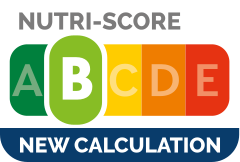 Good nutritional quality
Nutri-Score data warning
Nutrient levels
Fat in moderate quantity (4%)
Saturated fat in low quantity (0%)
Sugars in low quantity (2.67%)
Salt in moderate quantity (0.933%)
Nutrition label

Nutrition facts
| Nutrition facts | As sold for 100 g / 100 ml | Compared to: Breads |
|---|---|---|
| Energy | ~ 1097.33333333333 kJ (240 kcal) | 1,245.584 kJ (294 kcal) (-12%) |
| Fat | 4 g | 5.131 g (-22%) |
| Saturated fat | 0 g | 0.904 g (-100%) |
| Monounsaturated fat | 0.666666666666667 g | 1.201 g (-44%) |
| Polyunsaturated fat | 0.666666666666667 g | 1.393 g (-52%) |
| Trans fat | 0 g | 0 g |
| Cholesterol | 0 g | 1.297 mg (-100%) |
| Carbohydrates | 44 g | 50.537 g (-13%) |
| Sugars | 2.66666666666667 g | 3.588 g (-26%) |
| Added sugars | 2.66666666666667 g | 1.655 g (+61%) |
| Dietary fiber | 5.33333333333333 g | ? |
| Proteins | 9.33333333333333 g | 9.282 g (+1%) |
| Salt | 0.933333333333333 g | 1.224 g (-24%) |
| Sodium | 0.373333333333333 g | 0.489 g (-24%) |
| Vitamin PP | 0.003556 g | ? |
| Folates | 0.0000573333333333333 g | ? |
| Potassium | 0.044 g | 216.101 mg (-80%) |
| Calcium | 0.032 g | 54.609 mg (-41%) |
| Iron | 0.00133333333333333 g | 2.196 mg (-39%) |
| Fruits, vegetables and legumes | ~ 0 % | ? |
Nutrition facts (Detailed data)
| Nutrition facts | As sold for 100 g / 100 ml | As sold Per 100 g (packaging) | As sold Per serving (75 g) (packaging) | As sold Per 100 g (estimate) |
|---|---|---|---|---|
| Energy | ~ 1097.33333333333 kJ (240 kcal) | ? (240 kcal) | ? (180 kcal) | ? |
| Fat | 4 g | ? | 3 g | ? |
| Saturated fat | 0 g | ? | 0 g | ? |
| Monounsaturated fat | 0.666666666666667 g | ? | 0.5 g | ? |
| Polyunsaturated fat | 0.666666666666667 g | ? | 0.5 g | ? |
| Trans fat | 0 g | ? | 0 g | ? |
| Cholesterol | 0 g | ? | 0 g | ? |
| Carbohydrates | 44 g | ? | 33 g | ? |
| Sugars | 2.66666666666667 g | ? | 2 g | ? |
| Added sugars | 2.66666666666667 g | 2.66666666666667 g | 2 g | ~ 0 g |
| Dietary fiber | 5.33333333333333 g | ? | 4 g | ? |
| Proteins | 9.33333333333333 g | ? | 7 g | ? |
| Salt | 0.933333333333333 g | ? | 0.7 g | ? |
| Sodium | 0.373333333333333 g | ? | 0.28 g | ? |
| Vitamin PP | 0.003556 g | ? | 0.002667 g | ? |
| Folates | 0.0000573333333333333 g | ? | 0.000043 g | ? |
| Potassium | 0.044 g | ? | 0.033 g | ? |
| Calcium | 0.032 g | ? | 0.024 g | ? |
| Iron | 0.00133333333333333 g | 1.33333333333333 mg | 0.002 g | ? |
| Fruits, vegetables and legumes | ~ 0 % | ? | ? | ~ 0 % |
Serving size
Ingredients
Ingredients list
Ingredient information
Allergens
Ingredients analysis
No ingredients containing palm oil.
Unrecognized: en:multigrain-mix, en:cracked-wheat, en:cracked-rye, en:millet-meal, en:cracked-triticale, en:natural-honey, en:sour-dough, en:vitamin-b-3, en:vitamin-b-1, en:natural-honey, en:sea-salt-sunflower-oil
No non-vegan ingredients.
Unrecognized: en:cracked-wheat, en:cracked-rye, en:millet-meal, en:cracked-triticale, en:natural-honey, en:vitamin-b-3, en:vitamin-b-1, en:natural-honey, en:flax, en:sea-salt-sunflower-oil
No non-vegetarian ingredients.
Unrecognized: en:cracked-wheat, en:cracked-rye, en:millet-meal, en:cracked-triticale, en:natural-honey, en:vitamin-b-3, en:vitamin-b-1, en:natural-honey, en:flax, en:sea-salt-sunflower-oil
Food Processing
NOVA group
 Ultra-processed food and drink products
Elements that indicate the product is in NOVA group 4
How NOVA works
Additives
E101 - RiboflavinColour
Riboflavin, also known as vitamin B2, is a vitamin found in food and used as a dietary supplement. Food sources include eggs, green vegetables, milk and other dairy product, meat, mushrooms, and almonds. Some countries require its addition to grains. As a supplement it is used to prevent and treat riboflavin deficiency and prevent migraines. It may be given by mouth or injection.It is nearly always well tolerated. Normal doses are safe during pregnancy. Riboflavin is in the vitamin B group. It is required by the body for cellular respiration.Riboflavin was discovered in 1920, isolated in 1933, and first made in 1935. It is on the World Health Organization's List of Essential Medicines, the most effective and safe medicines needed in a health system. Riboflavin is available as a generic medication and over the counter. In the United States a month of supplements costs less than 25 USD.
E1100 - Alpha-Amylase
An amylase () is an enzyme that catalyses the hydrolysis of starch into sugars. Amylase is present in the saliva of humans and some other mammals, where it begins the chemical process of digestion. Foods that contain large amounts of starch but little sugar, such as rice and potatoes, may acquire a slightly sweet taste as they are chewed because amylase degrades some of their starch into sugar. The pancreas and salivary gland make amylase (alpha amylase) to hydrolyse dietary starch into disaccharides and trisaccharides which are converted by other enzymes to glucose to supply the body with energy. Plants and some bacteria also produce amylase. As diastase, amylase was the first enzyme to be discovered and isolated (by Anselme Payen in 1833). Specific amylase proteins are designated by different Greek letters. All amylases are glycoside hydrolases and act on α-1,4-glycosidic bonds.
Environment
Green-Score, origins bonus, and transportation impact are shown for Worldwide .
Green Score
Overall grade
 Unknown environmental impact
About Green-Score
Current scope
Green-Score availability
Bonuses and maluses
Declared origins
Packaging impact
Packaging
Packaging impact
Data precision
Transportation
Declared origins
Data Source
Product data comes from Open Food Facts. Food Benchmark also adds translations, category comparisons and explanatory calculations.
The database is licensed under ODbL 1.0, individual contents under DbCL 1.0, and product photos under CC BY-SA 3.0.
Product added on March 9, 2017 at 9:50:46 AM UTC by usda-ndb-import .
Last edit on March 10, 2026 at 6:24:11 PM UTC by municorn-calorie-counter-app .
Product page also edited by foodless, foodvisor, kiliweb, macrofactor, municorn-calorie-counter-app, naruyoko, new-nutrition-bot, org-database-usda, org-label-non-gmo-project, roboto-app, usda-ndb-import, yuka.sY2b0xO6T85zoF3NwEKvlm5cT_vH-jbiC036l2Gan4a-AYTzc85r_JbEY6o.
Source List
- usda-ndb
- database-usda
- label-non-gmo-project