

Multigrain with flax flatbread, multigrain with flax
Health
Nutrition
Nutri-Score
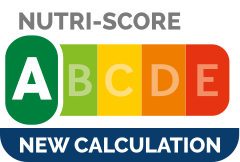 Very good nutritional quality
Nutri-Score data warning
Nutrient levels
Fat in moderate quantity (3.77%)
Saturated fat in low quantity (0%)
Sugars in low quantity (1.89%)
Salt in moderate quantity (1.13%)
Nutrition label

Nutrition facts
| Nutrition facts | As sold for 100 g / 100 ml | Compared to: Breads |
|---|---|---|
| Energy | ~ 1030.05 kJ (189 kcal) | 1,245.581 kJ (294 kcal) (-17%) |
| Fat | 3.77 g | 5.131 g (-27%) |
| Saturated fat | 0 g | 0.904 g (-100%) |
| Trans fat | 0 g | 0 g |
| Cholesterol | 0 g | 1.3 mg (-100%) |
| Carbohydrates | 28.3 g | 50.538 g (-44%) |
| Sugars | 1.89 g | 3.589 g (-47%) |
| Dietary fiber | 15.1 g | ? |
| Proteins | 16.98 g | 9.282 g (+83%) |
| Salt | 1.1325 g | 1.224 g (-7%) |
| Sodium | 0.453 g | 0.489 g (-7%) |
| Vitamin A | 0 g | 2.523 µg (-100%) |
| Vitamin C | 0 g | ? |
| Calcium | 0 g | 54.606 mg (-100%) |
| Iron | 0.00272 g | 2.196 mg (+24%) |
| Fruits, vegetables and legumes | ~ 0 % | ? |
Nutrition facts (Detailed data)
| Nutrition facts | As sold for 100 g / 100 ml | As sold Per 100 g (packaging) | As sold Per 100 g (estimate) |
|---|---|---|---|
| Energy | ~ 1030.05 kJ (189 kcal) | ? (189 kcal) | ? |
| Fat | 3.77 g | 3.77 g | ? |
| Saturated fat | 0 g | 0 g | ? |
| Trans fat | 0 g | 0 g | ? |
| Cholesterol | 0 g | 0 g | ? |
| Carbohydrates | 28.3 g | 28.3 g | ? |
| Sugars | 1.89 g | 1.89 g | ? |
| Dietary fiber | 15.1 g | 15.1 g | ? |
| Proteins | 16.98 g | 16.98 g | ? |
| Salt | 1.1325 g | 1.1325 g | ? |
| Sodium | 0.453 g | 0.453 g | ? |
| Vitamin A | 0 g | 0 g | ? |
| Vitamin C | 0 g | 0 g | ? |
| Calcium | 0 g | 0 g | ? |
| Iron | 0.00272 g | 0.00272 g | ? |
| Fruits, vegetables and legumes | ~ 0 % | ? | ~ 0 % |
Serving size
Ingredients
Ingredients image

Ingredients list
Ingredient information
Allergens
Ingredients analysis
No ingredients containing palm oil.
Vegan status unknown
Unrecognized: en:vital-wheat-gluten, en:reduced-iron, en:red-wheat, en:contains-2-and-less-of-liquid-brown-sugar
Vegetarian status unknown
Unrecognized: en:vital-wheat-gluten, en:reduced-iron, en:red-wheat, en:contains-2-and-less-of-liquid-brown-sugar
Food Processing
NOVA group
 Ultra-processed food and drink products
Elements that indicate the product is in NOVA group 4
How NOVA works
Additives
E202 - Potassium sorbate EFSA overexposure risk: highPreservative
Potassium sorbate (E202) is a synthetic food preservative commonly used to extend the shelf life of various food products.
It works by inhibiting the growth of molds, yeast, and some bacteria, preventing spoilage. When added to foods, it helps maintain their freshness and quality.
Some studies have shown that when combined with nitrites, potassium sorbate have genotoxic activity in vitro. However, potassium sorbate is generally recognized as safe (GRAS) by regulatory authorities.
E281 - Sodium propionatePreservative
Sodium propanoate or SODIUM PROPIONATE is the sodium salt of propionic acid.
E297 - Fumaric acid
Fumaric acid or trans-butenedioic acid is the chemical compound with the formula HO2CCH=CHCO2H. It is produced in eukaryotic organisms from succinate in complex 2 of the electron transport chain via the enzyme succinate dehydrogenase. It is one of two isomeric unsaturated dicarboxylic acids, the other being maleic acid. In fumaric acid the carboxylic acid groups are trans (E) and in maleic acid they are cis (Z). Fumaric acid has a fruit-like taste. The salts and esters are known as fumarates. Fumarate can also refer to the C4H2O2−4 ion (in solution).
E412 - Guar gumEmulsifierStabiliserThickener
Guar gum (E412) is a natural food additive derived from guar beans.
This white, odorless powder is valued for its remarkable thickening and stabilizing properties, making it a common ingredient in various food products, including sauces, dressings, and ice creams.
When used in moderation, guar gum is considered safe for consumption, with no known adverse health effects.
E415 - Xanthan gumEmulsifierStabiliserThickener
Xanthan gum (E415) is a natural polysaccharide derived from fermented sugars, often used in the food industry as a thickening and stabilizing agent.
This versatile food additive enhances texture and prevents ingredient separation in a wide range of products, including salad dressings, sauces, and gluten-free baked goods.
It is considered safe for consumption even at high intake amounts.
E450 - Diphosphates EFSA overexposure risk: highEmulsifierHumectantSequestrantStabiliserThickener
Diphosphates (E450) are food additives often utilized to modify the texture of products, acting as leavening agents in baking and preventing the coagulation of canned food.
These salts can stabilize whipped cream and are also found in powdered products to maintain their flow properties. They are commonly present in baked goods, processed meats, and soft drinks.
Derived from phosphoric acid, they're part of our daily phosphate intake, which often surpasses recommended levels due to the prevalence of phosphates in processed foods and drinks.
Excessive phosphate consumption is linked to health issues, such as impaired kidney function and weakened bone health. Though diphosphates are generally regarded as safe when consumed within established acceptable daily intakes, it's imperative to monitor overall phosphate consumption to maintain optimal health.
E450i - Disodium diphosphateEmulsifierHumectantSequestrantStabiliserThickener
No additive description is available yet.
E466 - Sodium carboxy methyl celluloseEmulsifierHumectantStabiliserThickener
Carboxymethyl cellulose (CMC) or cellulose gum or tylose powder is a cellulose derivative with carboxymethyl groups (-CH2-COOH) bound to some of the hydroxyl groups of the glucopyranose monomers that make up the cellulose backbone. It is often used as its sodium salt, sodium carboxymethyl cellulose.
E500 - Sodium carbonatesStabiliserThickener
Sodium carbonates (E500) are compounds commonly used in food preparation as leavening agents, helping baked goods rise by releasing carbon dioxide when they interact with acids.
Often found in baking soda, they regulate the pH of food, preventing it from becoming too acidic or too alkaline. In the culinary world, sodium carbonates can also enhance the texture and structure of foods, such as noodles, by modifying the gluten network.
Generally recognized as safe, sodium carbonates are non-toxic when consumed in typical amounts found in food.
E500ii - Sodium hydrogen carbonateStabiliserThickener
Sodium hydrogen carbonate, also known as E500ii, is a food additive commonly used as a leavening agent.
When added to recipes, it releases carbon dioxide gas upon exposure to heat or acids, causing dough to rise and resulting in a light, fluffy texture in baked goods.
It is generally recognized as safe (GRAS) by regulatory authorities when used in appropriate quantities and poses no significant health risks when consumed in typical food applications.
E930 - calcium peroxide
Calcium peroxide or calcium dioxide is the inorganic compound with the formula CaO2. It is the peroxide (O22−) salt of Ca2+. Commercial samples can be yellowish, but the pure compound is white. It is almost insoluble in water.
E965 - maltitolEmulsifierHumectantStabiliserSweetenerThickener
MALTITOL is a sugar alcohol (a polyol) used as a sugar substitute. It has 75–90% of the sweetness of sucrose (table sugar) and nearly identical properties, except for browning. Maltitol's high sweetness allows it to be used without being mixed with other sweeteners. It is used in candy manufacture, particularly sugar-free hard candy, chewing gum, chocolates, baked goods, and ice cream.
Environment
Green-Score, origins bonus, and transportation impact are shown for Worldwide .
Green Score
Overall grade
 Unknown environmental impact
About Green-Score
Current scope
Green-Score availability
Bonuses and maluses
Declared origins
Packaging impact
Packaging
Packaging impact
Data precision
Transportation
Declared origins
Data Source
Product data comes from Open Food Facts. Food Benchmark also adds translations, category comparisons and explanatory calculations.
The database is licensed under ODbL 1.0, individual contents under DbCL 1.0, and product photos under CC BY-SA 3.0.
Product added on March 9, 2017 at 2:28:46 PM UTC by usda-ndb-import .
Last edit on February 26, 2026 at 3:38:02 PM UTC by new-nutrition-bot .
Product page also edited by bassgrrl72, inf, new-nutrition-bot, openfoodfacts-contributors, org-database-usda, roboto-app, usda-ndb-import.
Source List
- usda-ndb
- database-usda