
Meijer, fruit drink, blue raspberry
Health
Nutrition
Nutri-Score
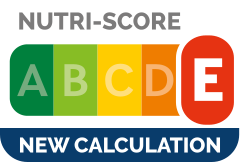 Lower nutritional quality
Nutri-Score data warning
Nutrient levels
Fat in low quantity (0%)
Sugars in moderate quantity (5.83%)
Salt in low quantity (0.005%)
Nutrition facts
| Nutrition facts | As sold for 100 g / 100 ml | Compared to: Beverages and beverages preparations |
|---|---|---|
| Energy | 105 kcal (25 kcal) | 216.029 kJ (51 kcal) |
| Fat | 0 g | 0.48 g (-100%) |
| Saturated fat | ? | 0.164 g |
| Carbohydrates | 6.25 g | 8.166 g (-23%) |
| Sugars | 5.83 g | 5.989 g (-3%) |
| Dietary fiber | ? | ? |
| Proteins | 0 g | 0.737 g (-100%) |
| Salt | 0.005 mg | 0.049 g (-100%) |
| Sodium | 0.002 mg | 0.02 g (-100%) |
| Fruits, vegetables and legumes | ? | ? |
Nutrition facts (Detailed data)
| Nutrition facts | As sold for 100 g / 100 ml | As sold Per serving (legacy) |
|---|---|---|
| Energy | 105 kcal (25 kcal) | 252 kcal (60 kcal) |
| Fat | 0 g | 0 g |
| Saturated fat | ? | ? |
| Carbohydrates | 6.25 g | 15 g |
| Sugars | 5.83 g | 14 g |
| Dietary fiber | ? | ? |
| Proteins | 0 g | 0 g |
| Salt | 0.005 mg | 0.012 mg |
| Sodium | 0.002 mg | 0.0048 mg |
| Fruits, vegetables and legumes | ? | ? |
Serving size
Ingredients
Ingredients list
Ingredient information
Added sugars
Ingredients analysis
No ingredients containing palm oil.
Vegan status unknown
Vegetarian status unknown
Food Processing
NOVA group
 Ultra-processed food and drink products
Elements that indicate the product is in NOVA group 4
How NOVA works
Additives
E133 - Brilliant blue FCF EFSA overexposure risk: moderateColour
BRILLIANT BLUE FCF (Blue 1) is an organic compound classified as a blue triarylmethane dye, reflecting its chemical structure. Known under various commercial names, it is a colorant for foods and other substances.
E202 - Potassium sorbate EFSA overexposure risk: highPreservative
Potassium sorbate (E202) is a synthetic food preservative commonly used to extend the shelf life of various food products.
It works by inhibiting the growth of molds, yeast, and some bacteria, preventing spoilage. When added to foods, it helps maintain their freshness and quality.
Some studies have shown that when combined with nitrites, potassium sorbate have genotoxic activity in vitro. However, potassium sorbate is generally recognized as safe (GRAS) by regulatory authorities.
E211 - Sodium benzoate EFSA overexposure risk: highPreservative
SODIUM BENZOATE is a substance which has the chemical formula NaC7H5O2
E330 - Citric acidAntioxidantSequestrant
Citric acid is a natural organic acid found in citrus fruits such as lemons, oranges, and limes.
It is widely used in the food industry as a flavor enhancer, acidulant, and preservative due to its tart and refreshing taste.
Citric acid is safe for consumption when used in moderation and is considered a generally recognized as safe (GRAS) food additive by regulatory agencies worldwide.
E950 - Acesulfame kSweetener
Acesulfame potassium ( AY-see-SUL-faym), also known as acesulfame K (K is the symbol for potassium) or Ace K, is a calorie-free sugar substitute (artificial sweetener) often marketed under the trade names Sunett and Sweet One. In the European Union, it is known under the E number (additive code) E950. It was discovered accidentally in 1967 by German chemist Karl Clauss at Hoechst AG (now Nutrinova). In chemical structure, acesulfame potassium is the potassium salt of 6-methyl-1,2,3-oxathiazine-4(3H)-one 2,2-dioxide. It is a white crystalline powder with molecular formula C4H4KNO4S and a molecular weight of 201.24 g/mol.
E961 - NeotameSweetener
Neotame is an artificial sweetener made by NutraSweet that is between 7,000 and 13,000 times sweeter than sucrose (table sugar). In the European Union, it is known by the E number E961. It is moderately heat-stable, extremely potent, rapidly metabolized, completely eliminated, and does not appear to accumulate in the body.The major metabolic pathway is hydrolysis of the methyl ester by esterases that are present throughout the body, which yields de-esterified neotame and methanol. Because only trace amounts of neotame are needed to sweeten foods, the amount of methanol derived from neotame is much lower than that found in common foods.The product is attractive to food manufacturers, as its use greatly lowers the cost of production compared to using sugar or high fructose corn syrup (due to the lower quantities needed to achieve the same sweetening), while also benefitting the consumer by providing fewer "empty" sugar calories and a lower impact on blood sugar.
Environment
Green-Score, origins bonus, and transportation impact are shown for Worldwide .
Green Score
Overall grade
 Unknown environmental impact
About Green-Score
Current scope
Green-Score availability
Bonuses and maluses
Declared origins
Packaging impact
Packaging
Packaging impact
Data precision
Transportation
Declared origins
Data Source
Product data comes from Open Food Facts. Food Benchmark also adds translations, category comparisons and explanatory calculations.
The database is licensed under ODbL 1.0, individual contents under DbCL 1.0, and product photos under CC BY-SA 3.0.
Product added on March 9, 2017 at 3:06:06 PM UTC by usda-ndb-import .
Last edit on April 22, 2020 at 7:53:58 PM UTC by org-database-usda .
Product page also edited by usda-ndb-import, org-database-usda, teolemon.
Source List
- usda-ndb
- database-usda