
Shred Style Crab Deluxe Imitation Crabmeat
Health
Nutrition
Nutri-Score
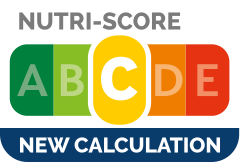 Average nutritional quality
Nutri-Score data warning
Nutrient levels
Fat in low quantity (0%)
Saturated fat in low quantity (0%)
Sugars in low quantity (4.71%)
Salt in moderate quantity (1.34%)
Nutrition facts
| Nutrition facts | As sold for 100 g / 100 ml | Compared to: Seafood |
|---|---|---|
| Energy | 394 kcal (94 kcal) | 745.384 kJ (180 kcal) |
| Fat | 0 g | 10.072 g (-100%) |
| Saturated fat | 0 g | 1.92 g (-100%) |
| Trans fat | 0 g | 0.004 g (-100%) |
| Cholesterol | 0.006 mg | 48.081 mg (-100%) |
| Carbohydrates | 15.29 g | 2.517 g (+507%) |
| Sugars | 4.71 g | 0.534 g (+782%) |
| Dietary fiber | 0 g | ? |
| Proteins | 7.06 g | 17.613 g (-60%) |
| Salt | 1.3447 g | 1.378 g (-2%) |
| Sodium | 0.53788 g | 0.551 g (-2%) |
| Vitamin D | 0 IU | 3.305 µg |
| Potassium | 0.294 mg | 319.829 mg (-100%) |
| Calcium | 0.014 mg | 27.445 mg (-100%) |
| Iron | 0 mg | 0.983 mg (-100%) |
| Fruits, vegetables and legumes | ? | ? |
Nutrition facts (Detailed data)
| Nutrition facts | As sold for 100 g / 100 ml | As sold Per serving (legacy) |
|---|---|---|
| Energy | 394 kcal (94 kcal) | 335 kcal (80 kcal) |
| Fat | 0 g | 0 g |
| Saturated fat | 0 g | 0 g |
| Trans fat | 0 g | 0 g |
| Cholesterol | 0.006 mg | 0.0051 mg |
| Carbohydrates | 15.29 g | 13 g |
| Sugars | 4.71 g | 4 g |
| Dietary fiber | 0 g | 0 g |
| Proteins | 7.06 g | 6 g |
| Salt | 1.3447 g | 1.14 g |
| Sodium | 0.53788 g | 0.457 g |
| Vitamin D | 0 IU | 0 IU |
| Potassium | 0.294 mg | 0.25 mg |
| Calcium | 0.014 mg | 0.0119 mg |
| Iron | 0 mg | 0 mg |
| Fruits, vegetables and legumes | ? | ? |
Serving size
Ingredients
Ingredients list
Ingredient information
Added sugars
Allergens
Ingredients analysis
No ingredients containing palm oil.
Unrecognized: en:contains-2-and-less-of, en:king-crab-meat, en:extracts-of-blue-crab, en:snow-crab
Contains non-vegan ingredients.
Unrecognized: en:contains-2-and-less-of, en:king-crab-meat, en:extracts-of-blue-crab, en:snow-crab, en:koji
Contains non-vegetarian ingredients.
Unrecognized: en:contains-2-and-less-of, en:king-crab-meat, en:extracts-of-blue-crab, en:snow-crab, en:koji
Food Processing
NOVA group
 Ultra-processed food and drink products
Elements that indicate the product is in NOVA group 4
How NOVA works
Additives
E322 - LecithinsAntioxidantEmulsifier
Lecithins are natural compounds commonly used in the food industry as emulsifiers and stabilizers.
Extracted from sources like soybeans and eggs, lecithins consist of phospholipids that enhance the mixing of oil and water, ensuring smooth textures in various products like chocolates, dressings, and baked goods.
They do not present any known health risks.
E322i - LecithinAntioxidantEmulsifier
Lecithins are natural compounds commonly used in the food industry as emulsifiers and stabilizers.
Extracted from sources like soybeans and eggs, lecithins consist of phospholipids that enhance the mixing of oil and water, ensuring smooth textures in various products like chocolates, dressings, and baked goods.
They do not present any known health risks.
E407 - Carrageenan EFSA overexposure risk: highCarrierEmulsifierHumectantStabiliserThickener
Carrageenan (E407), derived from red seaweed, is widely employed in the food industry as a gelling, thickening, and stabilizing agent, notably in dairy and meat products.
It can exist in various forms, each imparting distinct textural properties to food.
However, its degraded form, often referred to as poligeenan, has raised health concerns due to its potential inflammatory effects and its classification as a possible human carcinogen (Group 2B) by the International Agency for Research on Cancer (IARC).
Nevertheless, food-grade carrageenan has been deemed safe by various regulatory bodies when consumed in amounts typically found in food.
E420 - SorbitolHumectantSequestrantStabiliserSweetenerThickener
Sorbitol (), less commonly known as glucitol (), is a sugar alcohol with a sweet taste which the human body metabolizes slowly. It can be obtained by reduction of glucose, which changes the aldehyde group to a hydroxyl group. Most sorbitol is made from corn syrup, but it is also found in nature, for example in apples, pears, peaches, and prunes. It is converted to fructose by sorbitol-6-phosphate 2-dehydrogenase. Sorbitol is an isomer of mannitol, another sugar alcohol; the two differ only in the orientation of the hydroxyl group on carbon 2. While similar, the two sugar alcohols have very different sources in nature, melting points, and uses.
E450 - Diphosphates EFSA overexposure risk: highEmulsifierHumectantSequestrantStabiliserThickener
Diphosphates (E450) are food additives often utilized to modify the texture of products, acting as leavening agents in baking and preventing the coagulation of canned food.
These salts can stabilize whipped cream and are also found in powdered products to maintain their flow properties. They are commonly present in baked goods, processed meats, and soft drinks.
Derived from phosphoric acid, they're part of our daily phosphate intake, which often surpasses recommended levels due to the prevalence of phosphates in processed foods and drinks.
Excessive phosphate consumption is linked to health issues, such as impaired kidney function and weakened bone health. Though diphosphates are generally regarded as safe when consumed within established acceptable daily intakes, it's imperative to monitor overall phosphate consumption to maintain optimal health.
E631 - Disodium inosinate
Disodium inosinate (E631) is the disodium salt of inosinic acid with the chemical formula C10H11N4Na2O8P. It is used as a food additive and often found in instant noodles, potato chips, and a variety of other snacks. Although it can be obtained from bacterial fermentation of sugars, it is often commercially prepared from animal sources.
Environment
Green-Score, origins bonus, and transportation impact are shown for Worldwide .
Green Score
Overall grade
 Unknown environmental impact
About Green-Score
Current scope
Green-Score availability
Bonuses and maluses
Declared origins
Packaging impact
Packaging
Packaging impact
Data precision
Transportation
Declared origins
Forest footprint
Forest footprint
Ingredients linked to forest pressure
| Ingredient | Type | Percent in product | Forest footprint |
|---|---|---|---|
| EGG White | Oeufs Importés | 11.90 % | 0.01 |
Data Source
Product data comes from Open Food Facts. Food Benchmark also adds translations, category comparisons and explanatory calculations.
The database is licensed under ODbL 1.0, individual contents under DbCL 1.0, and product photos under CC BY-SA 3.0.
Product added on March 9, 2017 at 2:27:15 PM UTC by usda-ndb-import .
Last edit on September 19, 2022 at 11:03:58 PM UTC by kiliweb .
Product page also edited by org-database-usda, yuka.sY2b0xO6T85zoF3NwEKvlhNOddjhphPKazHlx1KP-9uRJcfLcPde-ZXAHqo, ecoscore-impact-estimator, yuka.sY2b0xO6T85zoF3NwEKvlmJrTOfbohz4MyfTuBGL2NmgdZDSa40twZTGOKs, usda-ndb-import, teolemon.
Source List
- usda-ndb
- database-usda