
Red Beans & Rice With Smoked Sausage
Health
Nutrition
Nutri-Score
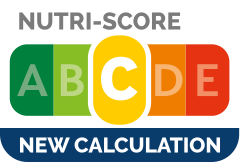 Average nutritional quality
Nutri-Score data warning
Nutrient levels
Fat in moderate quantity (7.42%)
Saturated fat in low quantity (0.53%)
Sugars in low quantity (0.35%)
Salt in moderate quantity (1.04%)
Nutrition facts
| Nutrition facts | As sold for 100 g / 100 ml | Compared to: Frozen foods |
|---|---|---|
| Energy | 665 kcal (159 kcal) | 768.044 kJ (184 kcal) |
| Fat | 7.42 g | 7.714 g (-4%) |
| Saturated fat | 0.53 g | 3.855 g (-86%) |
| Trans fat | 0 g | 0.032 g (-100%) |
| Cholesterol | 0.014 mg | 17.676 mg (-100%) |
| Carbohydrates | 15.19 g | 21.013 g (-28%) |
| Sugars | 0.35 g | 11.75 g (-97%) |
| Dietary fiber | 2.1 g | ? |
| Proteins | 7.07 g | 4.898 g (+44%) |
| Salt | 1.0425 mg | 0.409 g (-100%) |
| Sodium | 0.417 mg | 0.163 g (-100%) |
| Vitamin A | 0.0000318 IU | 18.164 µg |
| Vitamin C | 0.0021 mg | ? |
| Calcium | 0.014 mg | 49.551 mg (-100%) |
| Iron | 0.00095 mg | 0.837 mg (-100%) |
| Fruits, vegetables and legumes | ? | ? |
Nutrition facts (Detailed data)
| Nutrition facts | As sold for 100 g / 100 ml | As sold Per serving (legacy) |
|---|---|---|
| Energy | 665 kcal (159 kcal) | 1880 kcal (450 kcal) |
| Fat | 7.42 g | 21 g |
| Saturated fat | 0.53 g | 1.5 g |
| Trans fat | 0 g | 0 g |
| Cholesterol | 0.014 mg | 0.0396 mg |
| Carbohydrates | 15.19 g | 43 g |
| Sugars | 0.35 g | 0.99 g |
| Dietary fiber | 2.1 g | 5.94 g |
| Proteins | 7.07 g | 20 g |
| Salt | 1.0425 mg | 2.95 mg |
| Sodium | 0.417 mg | 1.18 mg |
| Vitamin A | 0.0000318 IU | 0.00009 IU |
| Vitamin C | 0.0021 mg | 0.00594 mg |
| Calcium | 0.014 mg | 0.0396 mg |
| Iron | 0.00095 mg | 0.00269 mg |
| Fruits, vegetables and legumes | ? | ? |
Serving size
Ingredients
Ingredients list
Ingredient information
Added sugars
Allergens
Ingredients analysis
Palm oil content unknown
Unrecognized: en:hydrolyzed-whey-protein, en:made-from-soybean-oil, en:monoglycerides, en:artificial-butter-flavor, en:cultured-dextrose, en:rendered-chicken-fat, en:nisin-preparation
Contains non-vegan ingredients.
Unrecognized: en:hydrolyzed-whey-protein, en:margarine, en:made-from-soybean-oil, en:monoglycerides, en:artificial-butter-flavor, en:cultured-dextrose, en:rendered-chicken-fat, en:nisin-preparation
Contains non-vegetarian ingredients.
Unrecognized: en:hydrolyzed-whey-protein, en:margarine, en:made-from-soybean-oil, en:monoglycerides, en:artificial-butter-flavor, en:cultured-dextrose, en:rendered-chicken-fat, en:nisin-preparation
Food Processing
NOVA group
 Ultra-processed food and drink products
Elements that indicate the product is in NOVA group 4
How NOVA works
Additives
E160a - caroteneColour
β-Carotene is an organic, strongly colored red-orange pigment abundant in plants and fruits. It is a member of the carotenes, which are terpenoids (isoprenoids), synthesized biochemically from eight isoprene units and thus having 40 carbons. Among the carotenes, β-carotene is distinguished by having beta-rings at both ends of the molecule. β-Carotene is biosynthesized from geranylgeranyl pyrophosphate.β-Carotene is the most common form of carotene in plants. When used as a food coloring, it has the E number E160a. The structure was deduced by Karrer et al. in 1930. In nature, β-carotene is a precursor (inactive form) to vitamin A via the action of beta-carotene 15,15'-monooxygenase.Isolation of β-carotene from fruits abundant in carotenoids is commonly done using column chromatography. It can also be extracted from the beta-carotene rich algae, Dunaliella salina. The separation of β-carotene from the mixture of other carotenoids is based on the polarity of a compound. β-Carotene is a non-polar compound, so it is separated with a non-polar solvent such as hexane. Being highly conjugated, it is deeply colored, and as a hydrocarbon lacking functional groups, it is very lipophilic.
E160ai - Beta-caroteneColour
No additive description is available yet.
E211 - Sodium benzoate EFSA overexposure risk: highPreservative
SODIUM BENZOATE is a substance which has the chemical formula NaC7H5O2
E250 - Sodium nitrite EFSA overexposure risk: highPreservative
Sodium nitrite (E250) is a salt used for curing and preserving meat products.
It plays a critical role in preventing the growth of Clostridium botulinum, the bacterium responsible for botulism, in cured meats like bacon, ham, and sausages. It also provides the characteristic pink color and flavor.
However, nitrites can react with amines in the stomach to form nitrosamines, which are potent carcinogens. High intake of processed meats containing nitrites is associated with an increased risk of colorectal cancer. Regulatory bodies have set strict limits on its use in food.
E270 - Lactic acid
LACTIC ACID is an organic compound with the formula CH3CH(OH)CO2H. In the form of its conjugate base called lactate (this is thus different and kept as a separate ingredient). Lactic acid is chiral, consisting of two optical isomers. One is known as L-(+)-lactic acid or (S)-lactic acid and the other, its mirror image, is D-(−)-lactic acid or (R)-lactic acid in food the L-variant is used
E316 - sodium erythorbate EFSA overexposure risk: noAntioxidant
SODIUM ERYTHORBATE is the sodium salt of erythorbic acid. Sodium erythorbate is produced from sugars derived from different sources, such as beets, sugar cane, and corn. It is used predominantly in meats, poultry, and soft drinks.
E322 - LecithinsAntioxidantEmulsifier
Lecithins are natural compounds commonly used in the food industry as emulsifiers and stabilizers.
Extracted from sources like soybeans and eggs, lecithins consist of phospholipids that enhance the mixing of oil and water, ensuring smooth textures in various products like chocolates, dressings, and baked goods.
They do not present any known health risks.
E322i - LecithinAntioxidantEmulsifier
Lecithins are natural compounds commonly used in the food industry as emulsifiers and stabilizers.
Extracted from sources like soybeans and eggs, lecithins consist of phospholipids that enhance the mixing of oil and water, ensuring smooth textures in various products like chocolates, dressings, and baked goods.
They do not present any known health risks.
E385 - Calcium disodium ethylenediaminetetraacetateAntioxidantPreservativeSequestrant
No additive description is available yet.
E621 - Monosodium glutamate EFSA overexposure risk: highFlavour Enhancer
Monosodium glutamate (MSG), or E621, is the sodium salt of glutamic acid, an amino acid found naturally in many foods.
It is widely used as a flavor enhancer to provide an "umami" or savory taste to a variety of processed foods, including soups, snack chips, and frozen meals.
MSG is generally recognized as safe (GRAS) by food authorities. However, some people report sensitivity to MSG, experiencing short-term symptoms like headaches and flushing, though scientific studies have not shown a consistent link.
Environment
Green-Score, origins bonus, and transportation impact are shown for Worldwide .
Green Score
Overall grade
 Unknown environmental impact
About Green-Score
Current scope
Green-Score availability
Bonuses and maluses
Declared origins
Packaging impact
Packaging
Packaging impact
Data precision
Transportation
Declared origins
Data Source
Product data comes from Open Food Facts. Food Benchmark also adds translations, category comparisons and explanatory calculations.
The database is licensed under ODbL 1.0, individual contents under DbCL 1.0, and product photos under CC BY-SA 3.0.
Product added on March 9, 2017 at 9:52:45 PM UTC by usda-ndb-import .
Last edit on April 22, 2020 at 10:36:57 PM UTC by org-database-usda .
Product page also edited by usda-ndb-import, org-database-usda.
Source List
- usda-ndb
- database-usda