
Market pantry, sweet potato pie
Health
Nutrition
Nutri-Score
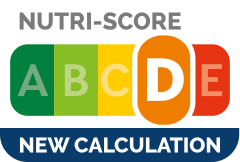 Lower nutritional quality
Nutri-Score data warning
Nutrient levels
Fat in moderate quantity (12.8%)
Saturated fat in high quantity (5.6%)
Sugars in high quantity (23.2%)
Salt in moderate quantity (0.86%)
Nutrition facts
| Nutrition facts | As sold for 100 g / 100 ml | Compared to: Cakes |
|---|---|---|
| Energy | 1272 kcal (304 kcal) | 1,676.953 kJ (400 kcal) |
| Fat | 12.8 g | 19.139 g (-33%) |
| Saturated fat | 5.6 g | 7.077 g (-21%) |
| Trans fat | 0 g | 0.036 g (-100%) |
| Cholesterol | 0.04 mg | 53.829 mg (-100%) |
| Carbohydrates | 42.4 g | 50.107 g (-15%) |
| Sugars | 23.2 g | 27.769 g (-16%) |
| Dietary fiber | 0.8 g | ? |
| Proteins | 4 g | 5.453 g (-27%) |
| Salt | 0.86 mg | 0.582 g (-100%) |
| Sodium | 0.344 mg | 0.233 g (-100%) |
| Vitamin A | 0.00018 IU | 62.718 µg |
| Vitamin C | 0.0019 mg | ? |
| Calcium | 0.08 mg | 44.975 mg (-100%) |
| Iron | 0.00115 mg | 1.509 mg (-100%) |
| Fruits, vegetables and legumes | ? | ? |
Nutrition facts (Detailed data)
| Nutrition facts | As sold for 100 g / 100 ml | As sold Per serving (legacy) |
|---|---|---|
| Energy | 1272 kcal (304 kcal) | 1590 kcal (380 kcal) |
| Fat | 12.8 g | 16 g |
| Saturated fat | 5.6 g | 7 g |
| Trans fat | 0 g | 0 g |
| Cholesterol | 0.04 mg | 0.05 mg |
| Carbohydrates | 42.4 g | 53 g |
| Sugars | 23.2 g | 29 g |
| Dietary fiber | 0.8 g | 1 g |
| Proteins | 4 g | 5 g |
| Salt | 0.86 mg | 1.07 mg |
| Sodium | 0.344 mg | 0.43 mg |
| Vitamin A | 0.00018 IU | 0.000225 IU |
| Vitamin C | 0.0019 mg | 0.00237 mg |
| Calcium | 0.08 mg | 0.1 mg |
| Iron | 0.00115 mg | 0.00144 mg |
| Fruits, vegetables and legumes | ? | ? |
Serving size
Ingredients
Ingredients list
Ingredient information
Added sugars
Allergens
Ingredients analysis
Contains ingredients containing palm oil.
Contains non-vegan ingredients.
Unrecognized: en:wheat-flour-with-niacin, en:reduced-iron, en:invert-sugar, en:nonfat-dry-milk-fortified-with-vitamins, en:vitamin-d, en:guar, en:calcium-propionate-to-retard-spoilage
Vegetarian status unknown
Unrecognized: en:wheat-flour-with-niacin, en:reduced-iron, en:invert-sugar, en:nonfat-dry-milk-fortified-with-vitamins, en:vitamin-d, en:guar, en:calcium-propionate-to-retard-spoilage
Food Processing
NOVA group
 Ultra-processed food and drink products
Elements that indicate the product is in NOVA group 4
How NOVA works
Additives
E150c - Ammonia caramel EFSA overexposure risk: moderateColour
No additive description is available yet.
E200 - Sorbic acid EFSA overexposure risk: highPreservative
SORBIC ACID, or 2,4-hexadienoic acid, is a natural organic compound used as a food preservative. It has the chemical formula CH3(CH)4CO2H.
E406 - AgarCarrierEmulsifierHumectantStabiliserThickener
Agar (pronounced , sometimes ) or agar-agar is a jelly-like substance, obtained from red algae.Agar is a mixture of two components: the linear polysaccharide agarose, and a heterogeneous mixture of smaller molecules called agaropectin. It forms the supporting structure in the cell walls of certain species of algae, and is released on boiling. These algae are known as agarophytes, and belong to the Rhodophyta (red algae) phylum.Agar has been used as an ingredient in desserts throughout Asia, and also as a solid substrate to contain culture media for microbiological work. Agar can be used as a laxative, an appetite suppressant, a vegetarian substitute for gelatin, a thickener for soups, in fruit preserves, ice cream, and other desserts, as a clarifying agent in brewing, and for sizing paper and fabrics.The gelling agent in agar is an unbranched polysaccharide obtained from the cell walls of some species of red algae, primarily from tengusa (Gelidiaceae) and ogonori (Gracilaria). For commercial purposes, it is derived primarily from ogonori. In chemical terms, agar is a polymer made up of subunits of the sugar galactose.
E415 - Xanthan gumEmulsifierStabiliserThickener
Xanthan gum (E415) is a natural polysaccharide derived from fermented sugars, often used in the food industry as a thickening and stabilizing agent.
This versatile food additive enhances texture and prevents ingredient separation in a wide range of products, including salad dressings, sauces, and gluten-free baked goods.
It is considered safe for consumption even at high intake amounts.
E466 - Sodium carboxy methyl celluloseEmulsifierHumectantStabiliserThickener
Carboxymethyl cellulose (CMC) or cellulose gum or tylose powder is a cellulose derivative with carboxymethyl groups (-CH2-COOH) bound to some of the hydroxyl groups of the glucopyranose monomers that make up the cellulose backbone. It is often used as its sodium salt, sodium carboxymethyl cellulose.
E575 - Glucono-delta-lactoneSequestrant
Glucono delta-lactone (GDL), also known as gluconolactone, is a food additive with the E number E575 used as a sequestrant, an acidifier, or a curing, pickling, or leavening agent. It is a lactone of D-gluconic acid. Pure GDL is a white odorless crystalline powder. GDL has been marketed for use in feta cheese. GDL is neutral, but hydrolyses in water to gluconic acid which is acidic, adding a tangy taste to foods, though it has roughly a third of the sourness of citric acid. It is metabolized to 6-phospho-D-gluconate; one gram of GDL yields roughly the same amount of metabolic energy as one gram of sugar. Upon addition to water, GDL is partially hydrolysed to gluconic acid, with the balance between the lactone form and the acid form established as a chemical equilibrium. The rate of hydrolysis of GDL is increased by heat and high pH.The yeast Saccharomyces bulderi can be used to ferment gluconolactone to ethanol and carbon dioxide. The pH value greatly affects culture growth. Gluconolactone at 1 or 2% in a mineral media solution causes the pH to drop below 3.It is also a complete inhibitor of the enzyme amygdalin beta-glucosidase at concentrations of 1 mM.
Environment
Green-Score, origins bonus, and transportation impact are shown for Worldwide .
Green Score
Overall grade
 Unknown environmental impact
About Green-Score
Current scope
Green-Score availability
Bonuses and maluses
Declared origins
Threatened species risk
Packaging impact
Packaging
Packaging impact
Data precision
Transportation
Declared origins
Forest footprint
Forest footprint
Ingredients linked to forest pressure
| Ingredient | Type | Percent in product | Forest footprint |
|---|---|---|---|
| EGG | Oeufs Importés | 6.03 % | 0.00 |
Data Source
Product data comes from Open Food Facts. Food Benchmark also adds translations, category comparisons and explanatory calculations.
The database is licensed under ODbL 1.0, individual contents under DbCL 1.0, and product photos under CC BY-SA 3.0.
Product added on March 10, 2017 at 9:50:30 AM UTC by usda-ndb-import .
Last edit on April 23, 2020 at 8:52:20 AM UTC by org-database-usda .
Product page also edited by usda-ndb-import, org-database-usda.
Source List
- usda-ndb
- database-usda