
Sam Mills, Tortilla Chips, Chili
Health
Nutrition
Nutri-Score
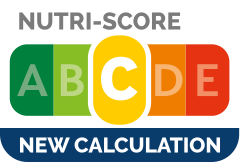 Average nutritional quality
Nutrient levels
Fat in moderate quantity (12.5%)
Saturated fat in moderate quantity (1.79%)
Sugars in low quantity (0%)
Salt in moderate quantity (1.07%)
Nutrition facts
| Nutrition facts | As sold for 100 g / 100 ml | Compared to: Corn chips |
|---|---|---|
| Energy | 1941 kcal (464 kcal) | 2,045.794 kJ (488 kcal) |
| Fat | 12.5 g | 23.082 g (-46%) |
| Saturated fat | 1.79 g | 3.252 g (-45%) |
| Monounsaturated fat | 3.57 g | 9.897 g (-64%) |
| Polyunsaturated fat | 5.36 g | 6.988 g (-23%) |
| Trans fat | 0 g | 0.01 g (-100%) |
| Cholesterol | 0 mg | 0.108 mg (-100%) |
| Carbohydrates | 78.57 g | 61.305 g (+28%) |
| Sugars | 0 g | 2.129 g (-100%) |
| Dietary fiber | 3.6 g | ? |
| Proteins | 7.14 g | 6.621 g (+8%) |
| Salt | 1.0725 mg | 1.216 g (-100%) |
| Sodium | 0.429 mg | 0.485 g (-100%) |
| Vitamin A | 0 IU | 0.149 µg |
| Vitamin C | 0 mg | ? |
| Calcium | 0.071 mg | 47.513 mg (-100%) |
| Iron | 0.00129 mg | 1.375 mg (-100%) |
| Fruits, vegetables and legumes | ? | ? |
Nutrition facts (Detailed data)
| Nutrition facts | As sold for 100 g / 100 ml | As sold Per serving (legacy) |
|---|---|---|
| Energy | 1941 kcal (464 kcal) | 543 kcal (130 kcal) |
| Fat | 12.5 g | 3.5 g |
| Saturated fat | 1.79 g | 0.501 g |
| Monounsaturated fat | 3.57 g | 1 g |
| Polyunsaturated fat | 5.36 g | 1.5 g |
| Trans fat | 0 g | 0 g |
| Cholesterol | 0 mg | 0 mg |
| Carbohydrates | 78.57 g | 22 g |
| Sugars | 0 g | 0 g |
| Dietary fiber | 3.6 g | 1.01 g |
| Proteins | 7.14 g | 2 g |
| Salt | 1.0725 mg | 0.3 mg |
| Sodium | 0.429 mg | 0.12 mg |
| Vitamin A | 0 IU | 0 IU |
| Vitamin C | 0 mg | 0 mg |
| Calcium | 0.071 mg | 0.0199 mg |
| Iron | 0.00129 mg | 0.000361 mg |
| Fruits, vegetables and legumes | ? | ? |
Serving size
Ingredients
Ingredients list
Ingredient information
Ingredients analysis
No ingredients containing palm oil.
Unrecognized: en:chili-flavor, en:it-contains-flow-agent-e535, en:flavor-potentiator-e621, en:acid-regulation-agent-e330
Vegan status unknown
Unrecognized: en:chili-flavor, en:it-contains-flow-agent-e535, en:flavor-potentiator-e621, en:acid-regulation-agent-e330
Vegetarian status unknown
Unrecognized: en:chili-flavor, en:it-contains-flow-agent-e535, en:flavor-potentiator-e621, en:acid-regulation-agent-e330
Food Processing
NOVA group
 Ultra-processed food and drink products
Elements that indicate the product is in NOVA group 4
How NOVA works
Additives
E160 - Carotenoids
No additive description is available yet.
E330 - Citric acidAntioxidantSequestrant
Citric acid is a natural organic acid found in citrus fruits such as lemons, oranges, and limes.
It is widely used in the food industry as a flavor enhancer, acidulant, and preservative due to its tart and refreshing taste.
Citric acid is safe for consumption when used in moderation and is considered a generally recognized as safe (GRAS) food additive by regulatory agencies worldwide.
E535 - Sodium ferrocyanide
Sodium ferrocyanide is the sodium salt of the coordination compound of formula [Fe(CN)6]4−. In its hydrous form, Na4Fe(CN)6 · 10 H2O (sodium ferrocyanide decahydrate), it is sometimes known as yellow prussiate of soda. It is a yellow crystalline solid that is soluble in water and insoluble in alcohol. The yellow color is the color of ferrocyanide anion. Despite the presence of the cyanide ligands, sodium ferrocyanide has low toxicity (acceptable daily intake 0–0.025 mg/kg body weight). The ferrocyanides are less toxic than many salts of cyanide, because they tend not to release free cyanide. However, like all ferrocyanide salt solutions, addition of an acid can result in the production of hydrogen cyanide gas, which is toxic.
E551 - Silicon dioxideCarrier
Silicon dioxide, also known as silica, silicic acid or silicic acid anydride is an oxide of silicon with the chemical formula SiO2, most commonly found in nature as quartz and in various living organisms. In many parts of the world, silica is the major constituent of sand. Silica is one of the most complex and most abundant families of materials, existing as a compound of several minerals and as synthetic product. Notable examples include fused quartz, fumed silica, silica gel, and aerogels. It is used in structural materials, microelectronics (as an electrical insulator), and as components in the food and pharmaceutical industries. Inhaling finely divided crystalline silica is toxic and can lead to severe inflammation of the lung tissue, silicosis, bronchitis, lung cancer, and systemic autoimmune diseases, such as lupus and rheumatoid arthritis. Uptake of amorphous silicon dioxide, in high doses, leads to non-permanent short-term inflammation, where all effects heal.
E621 - Monosodium glutamate EFSA overexposure risk: highFlavour Enhancer
Monosodium glutamate (MSG), or E621, is the sodium salt of glutamic acid, an amino acid found naturally in many foods.
It is widely used as a flavor enhancer to provide an "umami" or savory taste to a variety of processed foods, including soups, snack chips, and frozen meals.
MSG is generally recognized as safe (GRAS) by food authorities. However, some people report sensitivity to MSG, experiencing short-term symptoms like headaches and flushing, though scientific studies have not shown a consistent link.
Environment
Green-Score, origins bonus, and transportation impact are shown for Worldwide .
Green Score
Overall grade
 Low environmental impact
About Green-Score
Current scope
Life cycle analysis
Average impact of the category
 Corn chips or tortilla chips • Score: 88/100
Life-cycle reference
Overall environmental impact by stage (PEF)
The overall environmental impact figure (PEF) comes from ADEME's Agribalyse database, for the category: Corn chips or tortilla chips. Source: ADEME Agribalyse Database.
| Stage | Impact |
|---|---|
| Agriculture | 61.9 % |
| Processing | 17.8 % |
| Packaging | 10.9 % |
| Transportation | 7.2 % |
| Distribution | 2.2 % |
| Consumption | 0.0 % |
Bonuses and maluses
Declared origins
Packaging impact
Green-Score for this product
Green-Score for this product
Final score: 68/100Final score breakdown
Carbon footprint
Carbon footprint
Climate impact by stage (CO2e)
The carbon emission figure comes from ADEME's Agribalyse database, for the category: Corn chips or tortilla chips. Source: ADEME Agribalyse Database.
| Stage | Impact |
|---|---|
| Agriculture | 53.6 % |
| Processing | 15.0 % |
| Packaging | 18.2 % |
| Transportation | 11.9 % |
| Distribution | 1.3 % |
| Consumption | 0.0 % |
Packaging
Packaging impact
Data precision
Transportation
Declared origins
Data Source
Product data comes from Open Food Facts. Food Benchmark also adds translations, category comparisons and explanatory calculations.
The database is licensed under ODbL 1.0, individual contents under DbCL 1.0, and product photos under CC BY-SA 3.0.
Product added on March 9, 2017 at 3:56:11 PM UTC by usda-ndb-import .
Last edit on April 22, 2020 at 8:28:34 PM UTC by org-database-usda .
Product page also edited by teolemon, org-database-usda, usda-ndb-import.
Source List
- usda-ndb
- database-usda