

Aloe
Health
Nutrition
Nutri-Score
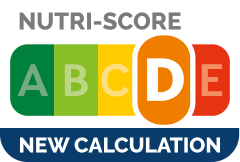 Lower nutritional quality
Nutri-Score data warning
Nutrient levels
Fat in low quantity (0%)
Sugars in high quantity (8%)
Salt in low quantity (0%)
Nutrition label

Nutrition facts
| Nutrition facts | As sold for 100 g / 100 ml | Compared to: Aloe Vera drinks |
|---|---|---|
| Energy | 151 kcal (36 kcal) | 110.993 kJ (26 kcal) |
| Fat | 0 g | 0.051 g (-100%) |
| Saturated fat | ? | 0.008 g |
| Carbohydrates | 9 g | 6.135 g (+47%) |
| Sugars | 8 g | 5.533 g (+45%) |
| Added sugars | 8 g | 5.986 g (+34%) |
| Dietary fiber | ? | ? |
| Proteins | 0 g | 0.05 g (-100%) |
| Salt | 0 g | 0.026 g (-100%) |
| Sodium | 0 g | 0.01 g (-100%) |
| Vitamin D | 0 µg | ? |
| Potassium | 0 mg | 0.547 mg (-100%) |
| Calcium | 0.015 mg | 16.021 mg (-100%) |
| Iron | 0 mg | 0.019 mg (-100%) |
| Fruits, vegetables and legumes | ? | ? |
Nutrition facts (Detailed data)
| Nutrition facts | As sold for 100 g / 100 ml | As sold Per serving (legacy) |
|---|---|---|
| Energy | 151 kcal (36 kcal) | 753 kcal (180 kcal) |
| Fat | 0 g | 0 g |
| Saturated fat | ? | ? |
| Carbohydrates | 9 g | 45 g |
| Sugars | 8 g | 40 g |
| Added sugars | 8 g | 40 g |
| Dietary fiber | ? | ? |
| Proteins | 0 g | 0 g |
| Salt | 0 g | 0 g |
| Sodium | 0 g | 0 g |
| Vitamin D | 0 µg | 0 µg |
| Potassium | 0 mg | 0 mg |
| Calcium | 0.015 mg | 0.075 mg |
| Iron | 0 mg | 0 mg |
| Fruits, vegetables and legumes | ? | ? |
Serving size
Ingredients
Ingredients image

Ingredients list
Ingredient information
Added sugars
Ingredients analysis
Palm oil content unknown
Contains non-vegan ingredients.
Unrecognized: fr:pulpe-de-gelee-d-aloe-vera, fr:saveur
Contains non-vegetarian ingredients.
Unrecognized: fr:pulpe-de-gelee-d-aloe-vera, fr:saveur
Food Processing
NOVA group
 Ultra-processed food and drink products
Elements that indicate the product is in NOVA group 4
How NOVA works
Additives
E120 - CochinealColour
Cochineal extract or carmine (E120) is a natural red colorant derived from the dried bodies of the female cochineal insect.
It is widely used to impart a pink, red, or purple hue to various food and beverage products, including yogurts, ice creams, confectionery, and fruit juices.
Although it is a natural additive, E120 is known to cause severe allergic reactions, including anaphylaxis, in some individuals. It is also not suitable for vegetarians or vegans due to its insect origin.
E160a - caroteneColour
β-Carotene is an organic, strongly colored red-orange pigment abundant in plants and fruits. It is a member of the carotenes, which are terpenoids (isoprenoids), synthesized biochemically from eight isoprene units and thus having 40 carbons. Among the carotenes, β-carotene is distinguished by having beta-rings at both ends of the molecule. β-Carotene is biosynthesized from geranylgeranyl pyrophosphate.β-Carotene is the most common form of carotene in plants. When used as a food coloring, it has the E number E160a. The structure was deduced by Karrer et al. in 1930. In nature, β-carotene is a precursor (inactive form) to vitamin A via the action of beta-carotene 15,15'-monooxygenase.Isolation of β-carotene from fruits abundant in carotenoids is commonly done using column chromatography. It can also be extracted from the beta-carotene rich algae, Dunaliella salina. The separation of β-carotene from the mixture of other carotenoids is based on the polarity of a compound. β-Carotene is a non-polar compound, so it is separated with a non-polar solvent such as hexane. Being highly conjugated, it is deeply colored, and as a hydrocarbon lacking functional groups, it is very lipophilic.
E160aii - Plant carotenesColour
No additive description is available yet.
E163 - AnthocyaninsColour
Anthocyanins (also anthocyans; from Greek: ἄνθος (anthos) "flower" and κυάνεος/κυανοῦς kyaneos/kyanous "dark blue") are water-soluble vacuolar pigments that, depending on their pH, may appear red, purple, or blue. Food plants rich in anthocyanins include the blueberry, raspberry, black rice, and black soybean, among many others that are red, blue, purple, or black. Some of the colors of autumn leaves are derived from anthocyanins.Anthocyanins belong to a parent class of molecules called flavonoids synthesized via the phenylpropanoid pathway. They occur in all tissues of higher plants, including leaves, stems, roots, flowers, and fruits. Anthocyanins are derived from anthocyanidins by adding sugars. They are odorless and moderately astringent. Although approved to color foods and beverages in the European Union, anthocyanins are not approved for use as a food additive because they have not been verified as safe when used as food or supplement ingredients. There is no conclusive evidence anthocyanins have any effect on human biology or diseases.
E327 - calcium lactateThickener
Calcium lactate is a white crystalline salt with formula C6H10CaO6, consisting of two lactate anions H3C(CHOH)CO−2 for each calcium cation Ca2+. It forms several hydrates, the most common being the pentahydrate C6H10CaO6·5H2O. Calcium lactate is used in medicine, mainly to treat calcium deficiencies; and as a food additive with E number of E327. Some cheese crystals consist of calcium lactate.
E330 - Citric acidAntioxidantSequestrant
Citric acid is a natural organic acid found in citrus fruits such as lemons, oranges, and limes.
It is widely used in the food industry as a flavor enhancer, acidulant, and preservative due to its tart and refreshing taste.
Citric acid is safe for consumption when used in moderation and is considered a generally recognized as safe (GRAS) food additive by regulatory agencies worldwide.
E331 - Sodium citratesEmulsifierSequestrantStabiliser
DISODIUM CITRATE, more properly, disodium hydrogen citrate, is an acid salt of citric acid with the chemical formula Na2C6H6O7. It is used as an antioxidant in food and to improve the effects of other antioxidants. It is also used as an acidity regulator and sequestrant. Typical products include gelatin, jam, sweets, ice cream, carbonated beverages, milk powder, wine, and processed cheeses.
E418 - Gellan gumStabiliserThickener
GELLAN GUM is a water-soluble anionic polysaccharide produced by the bacterium Sphingomonas elodea. It is used in plant-based milks to keep plant protein suspended in the milk.
Environment
Green-Score, origins bonus, and transportation impact are shown for Worldwide .
Green Score
Overall grade
 Moderate environmental impact
About Green-Score
Current scope
Life cycle analysis
Average impact of the category
 Fruit soft drink, still (fruit juice content unspecified), with sugar • Score: 64/100
Life-cycle reference
Overall environmental impact by stage (PEF)
The overall environmental impact figure (PEF) comes from ADEME's Agribalyse database, for the category: Fruit soft drink, still (fruit juice content unspecified), with sugar. Source: ADEME Agribalyse Database.
| Stage | Impact |
|---|---|
| Agriculture | 29.5 % |
| Processing | 4.9 % |
| Packaging | 39.1 % |
| Transportation | 15.0 % |
| Distribution | 9.0 % |
| Consumption | 2.5 % |
Bonuses and maluses
Origins of ingredients
Packaging impact
Green-Score for this product
Green-Score for this product
Final score: 49/100Final score breakdown
Carbon footprint
Carbon footprint
Climate impact by stage (CO2e)
The carbon emission figure comes from ADEME's Agribalyse database, for the category: Fruit soft drink, still (fruit juice content unspecified), with sugar. Source: ADEME Agribalyse Database.
| Stage | Impact |
|---|---|
| Agriculture | 16.2 % |
| Processing | 10.6 % |
| Packaging | 31.7 % |
| Transportation | 33.9 % |
| Distribution | 6.4 % |
| Consumption | 1.2 % |
Packaging
Packaging impact
Packaging components
| Shape | Material | Recycling | Impact |
|---|---|---|---|
| Bottle | Unknown | Unknown | High |
Declared packaging
Data precision
Transportation
Origins of ingredients
Origins breakdown
| Origin | Percent of ingredients | Impact |
|---|---|---|
| Unknown | 97 % | High |
| Grenada | 4 % | High |
Forest footprint
Forest footprint
Deforestation risk details
Data Source
Product data comes from Open Food Facts. Food Benchmark also adds translations, category comparisons and explanatory calculations.
The database is licensed under ODbL 1.0, individual contents under DbCL 1.0, and product photos under CC BY-SA 3.0.
Product added on March 12, 2019 at 4:54:34 PM UTC by kiliweb .
Last edit on September 20, 2025 at 10:21:01 AM UTC by hangy .
Product page also edited by 5m4u9, ggcremo, hangy, kiliweb, openfoodfacts-contributors, packbot, roboto-app, segundo, yuka.ZnZFTEtKNGwvZm9wbHZGbS96THQyOWQ4L0xpSlVYKzJBTWNESVE9PQ, yuka.sY2b0xO6T85zoF3NwEKvlnVHUcfnhivhMhLllGOH5PC1FIC0Sv5yvbrlbas.