
Smart sense, trail mix
Health
Nutrition
Nutri-Score
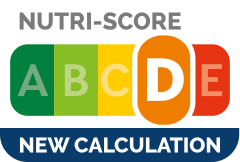 Lower nutritional quality
Nutri-Score data warning
Nutrient levels
Fat in moderate quantity (16.7%)
Saturated fat in high quantity (8.33%)
Sugars in high quantity (46.7%)
Salt in low quantity (0.168%)
Nutrition facts
| Nutrition facts | As sold for 100 g / 100 ml | Compared to: Snacks |
|---|---|---|
| Energy | 1812 kcal (433 kcal) | 1,864.084 kJ (445 kcal) |
| Fat | 16.67 g | 20.375 g (-18%) |
| Saturated fat | 8.33 g | 8.168 g (+2%) |
| Trans fat | 0 g | 0.02 g (-100%) |
| Cholesterol | 0 mg | 12.072 mg (-100%) |
| Carbohydrates | 63.33 g | 55.718 g (+14%) |
| Sugars | 46.67 g | 27.399 g (+70%) |
| Dietary fiber | 6.7 g | ? |
| Proteins | 6.67 g | 6.499 g (+3%) |
| Salt | 0.1675 mg | 0.557 g (-100%) |
| Sodium | 0.067 mg | 0.222 g (-100%) |
| Vitamin A | 0 IU | 22.814 µg |
| Vitamin C | 0 mg | ? |
| Potassium | 0.433 mg | 271.389 mg (-100%) |
| Calcium | 0.067 mg | 58.959 mg (-100%) |
| Iron | 0.0024 mg | 1.678 mg (-100%) |
| Fruits, vegetables and legumes | ? | ? |
Nutrition facts (Detailed data)
| Nutrition facts | As sold for 100 g / 100 ml | As sold Per serving (legacy) |
|---|---|---|
| Energy | 1812 kcal (433 kcal) | 544 kcal (130 kcal) |
| Fat | 16.67 g | 5 g |
| Saturated fat | 8.33 g | 2.5 g |
| Trans fat | 0 g | 0 g |
| Cholesterol | 0 mg | 0 mg |
| Carbohydrates | 63.33 g | 19 g |
| Sugars | 46.67 g | 14 g |
| Dietary fiber | 6.7 g | 2.01 g |
| Proteins | 6.67 g | 2 g |
| Salt | 0.1675 mg | 0.0503 mg |
| Sodium | 0.067 mg | 0.0201 mg |
| Vitamin A | 0 IU | 0 IU |
| Vitamin C | 0 mg | 0 mg |
| Potassium | 0.433 mg | 0.13 mg |
| Calcium | 0.067 mg | 0.0201 mg |
| Iron | 0.0024 mg | 0.00072 mg |
| Fruits, vegetables and legumes | ? | ? |
Serving size
Ingredients
Ingredients list
Ingredient information
Added sugars
Allergens
Ingredients analysis
Palm oil content unknown
Unrecognized: en:to-preserve-color, en:to-preserve-color, en:to-preserve-color, en:to-preserve-color
Vegan status unknown
Unrecognized: en:to-preserve-color, en:to-preserve-color, en:vanillin, en:to-preserve-color, en:to-preserve-color
Vegetarian status unknown
Unrecognized: en:to-preserve-color, en:to-preserve-color, en:vanillin, en:to-preserve-color, en:to-preserve-color
Food Processing
NOVA group
 Ultra-processed food and drink products
Elements that indicate the product is in NOVA group 4
How NOVA works
Additives
E102 - TartrazineColour
Tartrazine (E102) is a synthetic lemon-yellow azo dye used as a food coloring.
It is found in a wide range of products such as soft drinks, desserts, candies, and snack foods to give them a vibrant yellow appearance.
While approved by many regulatory agencies, tartrazine has been linked to allergic reactions, such as hives, in a small portion of the population. Some studies have also suggested a link to increased hyperactivity in children, particularly when consumed with other additives like benzoates.
E110 - Sunset yellow FCFColour
Sunset Yellow FCF (also known as Orange Yellow S, or C.I. 15985) is a petroleum-derived orange azo dye with a pH dependent maximum absorption at about 480 nm at pH 1 and 443 nm at pH 13 with a shoulder at 500 nm. When added to foods sold in the US it is known as FD&C Yellow 6; when sold in Europe, it is denoted by E Number E110.
E220 - Sulphur dioxide EFSA overexposure risk: highAntioxidantPreservative
SULPHUR DIOXIDE is the chemical compound with the formula SO2.
E223 - Sodium metabisulphite EFSA overexposure risk: highAntioxidantPreservative
SODIUM METABISULFITE or sodium pyrosulfite (IUPAC spelling; Br. E. sodium metabisulphite or sodium pyrosulphite) is an inorganic compound of chemical formula Na2S2O5.
E322 - LecithinsAntioxidantEmulsifier
Lecithins are natural compounds commonly used in the food industry as emulsifiers and stabilizers.
Extracted from sources like soybeans and eggs, lecithins consist of phospholipids that enhance the mixing of oil and water, ensuring smooth textures in various products like chocolates, dressings, and baked goods.
They do not present any known health risks.
E322i - LecithinAntioxidantEmulsifier
Lecithins are natural compounds commonly used in the food industry as emulsifiers and stabilizers.
Extracted from sources like soybeans and eggs, lecithins consist of phospholipids that enhance the mixing of oil and water, ensuring smooth textures in various products like chocolates, dressings, and baked goods.
They do not present any known health risks.
E330 - Citric acidAntioxidantSequestrant
Citric acid is a natural organic acid found in citrus fruits such as lemons, oranges, and limes.
It is widely used in the food industry as a flavor enhancer, acidulant, and preservative due to its tart and refreshing taste.
Citric acid is safe for consumption when used in moderation and is considered a generally recognized as safe (GRAS) food additive by regulatory agencies worldwide.
Environment
Green-Score, origins bonus, and transportation impact are shown for Worldwide .
Green Score
Overall grade
 Unknown environmental impact
About Green-Score
Current scope
Green-Score availability
Bonuses and maluses
Declared origins
Packaging impact
Packaging
Packaging impact
Data precision
Transportation
Declared origins
Data Source
Product data comes from Open Food Facts. Food Benchmark also adds translations, category comparisons and explanatory calculations.
The database is licensed under ODbL 1.0, individual contents under DbCL 1.0, and product photos under CC BY-SA 3.0.
Product added on March 9, 2017 at 4:01:15 PM UTC by usda-ndb-import .
Last edit on April 22, 2020 at 8:31:32 PM UTC by org-database-usda .
Product page also edited by org-database-usda, usda-ndb-import.
Source List
- usda-ndb
- database-usda