ProductsPostPowdered mini donuts cereal, powdered
Powdered mini donuts cereal, powdered
Barcode 0884912307682
Post

Powdered mini donuts cereal, powdered

311g
BARCODE:0884912307682
BRAND OWNER:HOSTESS
CATEGORIES:Plant Based Foods And Beverages, Plant Based Foods, Cereals And Potatoes, Cereals And Their Products
LABELS:Kosher, Orthodox Union Kosher
COUNTRIES:United States

Health

Nutrition

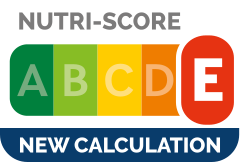
Nutri-Score

ELower nutritional quality

Nutri-Score data warning

Warning: the amount of fruits, vegetables and nuts is not specified on the label, it was estimated from the list of ingredients: 0

Nutrient levels

Fat in moderate quantity (18.2%)
What you need to know • A high consumption of fat, especially saturated fats, can raise cholesterol, which increases the risk of heart diseases. Recommendation: Limit the consumption of fat and saturated fat • Choose products with lower fat and saturated fat content. Source: National Health Service UK (NHS) - Fat: the facts
Saturated fat in high quantity (15.2%)
What you need to know • A high consumption of fat, especially saturated fats, can raise cholesterol, which increases the risk of heart diseases. Recommendation: Limit the consumption of fat and saturated fat • Choose products with lower fat and saturated fat content. Source: National Health Service UK (NHS) - Fat: the facts
Sugars in high quantity (39.4%)
What you need to know • A high consumption of sugar can cause weight gain and tooth decay. It also augments the risk of type 2 diabetes and cardio-vascular diseases. Recommendation: Limit the consumption of sugar and sugary drinks • Sugary drinks (such as sodas, fruit beverages, and fruit juices and nectars) should be limited as much as possible (no more than 1 glass a day). • Choose products with lower sugar content and reduce the consumption of products with added sugars. Source: National Health Service UK (NHS) - Sugar: the facts
Salt in moderate quantity (0.87%)
What you need to know • A high consumption of salt (or sodium) can cause raised blood pressure, which can increase the risk of heart disease and stroke. • Many people who have high blood pressure do not know it, as there are often no symptoms. • Most people consume too much salt (on average 9 to 12 grams per day), around twice the recommended maximum level of intake. Recommendation: Limit the consumption of salt and salted food • Reduce the quantity of salt used when cooking, and don't salt again at the table. • Limit the consumption of salty snacks and choose products with lower salt content. Source: World Health Organization (WHO) - Fact sheet - Salt reduction Source: National Health Service UK (NHS) - Salt: the facts

Nutrition facts

Nutrition factsAs sold for 100 g / 100 mlCompared to: Cereals and their products
Energy1904 kcal (455 kcal)1,410.217 kJ (334 kcal)
Fat18.18 g5.482 g (+232%)
Saturated fat15.15 g1.228 g (+1134%)
Trans fat0 g0 g
Cholesterol0 mg0.874 mg (-100%)
Carbohydrates72.73 g56.948 g (+28%)
Sugars39.39 g5.227 g (+654%)
Dietary fiber0 g?
Proteins0 g9.359 g (-100%)
Salt0.87 mg0.545 g (-100%)
Sodium0.348 mg0.218 g (-100%)
Vitamin A0 IU2.996 µg
Vitamin C0 mg?
Vitamin B10.002 mg?
Vitamin PP0.004848 mg?
Vitamin B60.000606 mg?
Pantothenic acid0.001212 mg?
Potassium0.076 mg235.892 mg (-100%)
Calcium0.242 mg42.272 mg (-99%)
Phosphorus0.061 mg178.226 mg (-100%)
Iron0.01364 mg2.453 mg (-99%)
Zinc0.00364 mg1.714 mg (-100%)
Fruits, vegetables and legumes??

Nutrition facts (Detailed data)

Nutrition factsAs sold for 100 g / 100 mlAs sold Per serving (legacy)
Energy1904 kcal (455 kcal)628 kcal (150 kcal)
Fat18.18 g6 g
Saturated fat15.15 g5 g
Trans fat0 g0 g
Cholesterol0 mg0 mg
Carbohydrates72.73 g24 g
Sugars39.39 g13 g
Dietary fiber0 g0 g
Proteins0 g0 g
Salt0.87 mg0.287 mg
Sodium0.348 mg0.115 mg
Vitamin A0 IU0 IU
Vitamin C0 mg0 mg
Vitamin B10.002 mg0.00066 mg
Vitamin PP0.004848 mg0.0016 mg
Vitamin B60.000606 mg0.0002 mg
Pantothenic acid0.001212 mg0.0004 mg
Potassium0.076 mg0.0251 mg
Calcium0.242 mg0.0799 mg
Phosphorus0.061 mg0.0201 mg
Iron0.01364 mg0.0045 mg
Zinc0.00364 mg0.0012 mg
Fruits, vegetables and legumes??

Serving size

1 cup (33 g)

Ingredients

Ingredients image

Powdered mini donuts cereal, powdered ingredients image

Ingredients list

Dextrose, sugar, corn flour, hydrogenated vegetable oil (coconut and palm kernel oils), wheat flour, whole grain oat flour, corn syrup, salt, canola oil, calcium carbonate, titanium dioxide (color), natural and artificial flavor, bht added to preserve freshness. vitamins and minerals: ferric orthophosphate (source of iron), niacinamide (vitamin b3), zinc oxide, thiamin mononitrate (vitamin b1), calcium pantothenate (vitamin b5), pyridoxine hydrochloride (vitamin b6), folic acid.

Ingredient information

Dextrose
52.27% (estimate)
Sugar
19.7% (estimate)
Corn Flour
14.02% (estimate)
Hydrogenated Vegetable Oil
7.01% (estimate)
Coconut Oil
3.5% (estimate)
Palm Oil
3.5% (estimate)
Kernel Oils
3.5% (estimate)
Wheat Flour
1.75% (estimate)
Oat Flour
0.88% (estimate)
Corn Syrup
0.44% (estimate)
Salt
0.22% (estimate)
Canola Oil
0.11% (estimate)
E170i
0.05% (estimate)
E171
0.03% (estimate)
Colour
0.03% (estimate)
Natural And Artificial Flavouring
0.01% (estimate)
E321
0.01% (estimate)
Vitamins
0% (estimate)
Minerals
0% (estimate)
Ferric Orthophosphate
0% (estimate)
E375
0% (estimate)
E375
0% (estimate)
Zinc Oxide
0% (estimate)
Thiamin Mononitrate
0% (estimate)
Thiamin
0% (estimate)
Calcium Pantothenate
0% (estimate)
Pantothenic Acid
0% (estimate)
Pyridoxine Hydrochloride
0% (estimate)
Vitamin B6
0% (estimate)
Folic Acid
0% (estimate)

Added sugars

Contains added sugars (~ 72%) Added sugars: dextrose, sugar, corn syrup Estimated quantity of added sugars in ingredients: 72%

Allergens

Gluten

Ingredients analysis

Palm oil free
No

Contains ingredients containing palm oil.

Vegan
Unknown

Vegan status unknown

Unrecognized: en:kernel-oils, en:zinc-oxide

Vegetarian
Unknown

Vegetarian status unknown

Unrecognized: en:kernel-oils, en:zinc-oxide


Food Processing

NOVA group

4Ultra-processed food and drink products

Elements that indicate the product is in NOVA group 4

Additives
E171 - Titanium dioxide
Ingredients
Colour
Ingredients
Dextrose
Ingredients
Flavouring
Ingredients
Glucose
Ingredients
Hydrogenated Oil

How NOVA works

The NOVA classification assigns food products into 4 groups based on their degree of processing: 1. Unprocessed or minimally processed foods 2. Processed culinary ingredients 3. Processed foods 4. Ultra-processed food and drink products

Additives

E171 - Titanium dioxideColour

Titanium dioxide, also known as titanium(IV) oxide or titania, is the naturally occurring oxide of titanium, chemical formula TiO2. When used as a pigment, it is called titanium white, Pigment White 6 (PW6), or CI 77891. Generally, it is sourced from ilmenite, rutile and anatase. It has a wide range of applications, including paint, sunscreen and food coloring. When used as a food coloring, it has E number E171. World production in 2014 exceeded 9 million metric tons. It has been estimated that titanium dioxide is used in two-thirds of all pigments, and the oxide has been valued at $13.2 billion.

E321 - Butylated hydroxytolueneAntioxidant

Butylated hydroxytoluene (BHT), also known as dibutylhydroxytoluene, is a lipophilic organic compound, chemically a derivative of phenol, that is useful for its antioxidant properties. European and U.S. regulations allow small amounts to be used as a food additive. In addition to this use, BHT is widely used to prevent oxidation in fluids (e.g. fuel, oil) and other materials where free radicals must be controlled.

Environment

Green-Score, origins bonus, and transportation impact are shown for Worldwide .

Green Score

Overall grade

UnknownUnknown environmental impact

About Green-Score

The Green-Score is an experimental score that summarizes the environmental impacts of food products.

Current scope

The Green-Score was initially developed for France and it is being extended to other European countries. The Green-Score formula is subject to change as it is regularly improved to make it more precise and better suited to each country. Select a country to include the full impact of transportation in the final score.

Green-Score availability

We could not compute the Green-Score of this product because some data is missing. A more precise category, ingredients list, origins or packaging data can unlock the computation.

Bonuses and maluses

Declared origins

Origins of ingredients are missing for this product. Ingredients need to be completed before the transportation bonus can be computed precisely.

Threatened species risk

Contains ingredients that may threaten species or ecosystems, such as palm oil.

Packaging impact

Packaging with a high impact Malus: -15 The information about the packaging of this product is not filled in.

Packaging

Packaging impact

Packaging with a high impact Malus: -15 The information about the packaging of this product is not filled in.

Data precision

The packaging information is not sufficiently precise to compute the most accurate packaging impact. Exact shapes and materials of all packaging components help improve the Green-Score.

Transportation

Declared origins

Origins of ingredients are missing for this product. Ingredients need to be completed before the transportation bonus can be computed precisely.

Data Source

Product data comes from Open Food Facts. Food Benchmark also adds translations, category comparisons and explanatory calculations.

The database is licensed under ODbL 1.0, individual contents under DbCL 1.0, and product photos under CC BY-SA 3.0.

Product added on September 20, 2019 at 8:25:14 AM UTC by elcoco .

Last edit on July 22, 2025 at 4:13:58 AM UTC by cupcakes .

Product page also edited by acuario, charlesnepote, cupcakes, elcoco, elcoco.bb122a253135c7c5fed903ad9e51a718, halal-app-chakib, openfoodfacts-contributors, org-database-usda.

Source List

  • database-usda