ProductsLégerFol Epi Tranches
Fol Epi Tranches
Barcode 3090291396361
Léger,Migros,Fol Epi,Savencia

Fol Epi Tranches

150 g
BARCODE:3090291396361
PACKAGER CODE:FR 23.001.001 EC,FR 53.014.001 EC,EMB 53014B
CATEGORIES:Dairies, Fermented Foods, Fermented Milk Products, Cheeses, Cow Cheeses, French Cheeses, Sliced Cheeses
PACKAGING:Barquette Plastique
MANUFACTURING:France
COUNTRIES:Switzerland
STORES:Migros

Health

Nutrition

Nutri-Score

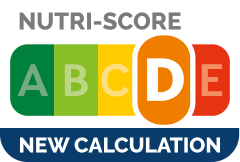
DLower nutritional quality

Nutri-Score data warning

Warning: the amount of fruits, vegetables and nuts is not specified on the label, it was estimated from the list of ingredients: 0

Nutrient levels

Fat in moderate quantity (16%)
What you need to know • A high consumption of fat, especially saturated fats, can raise cholesterol, which increases the risk of heart diseases. Recommendation: Limit the consumption of fat and saturated fat • Choose products with lower fat and saturated fat content. Source: National Health Service UK (NHS) - Fat: the facts
Saturated fat in high quantity (11%)
What you need to know • A high consumption of fat, especially saturated fats, can raise cholesterol, which increases the risk of heart diseases. Recommendation: Limit the consumption of fat and saturated fat • Choose products with lower fat and saturated fat content. Source: National Health Service UK (NHS) - Fat: the facts
Sugars in low quantity (0.5%)
What you need to know • A high consumption of sugar can cause weight gain and tooth decay. It also augments the risk of type 2 diabetes and cardio-vascular diseases. Recommendation: Limit the consumption of sugar and sugary drinks • Sugary drinks (such as sodas, fruit beverages, and fruit juices and nectars) should be limited as much as possible (no more than 1 glass a day). • Choose products with lower sugar content and reduce the consumption of products with added sugars. Source: National Health Service UK (NHS) - Sugar: the facts
Salt in moderate quantity (1.48%)
What you need to know • A high consumption of salt (or sodium) can cause raised blood pressure, which can increase the risk of heart disease and stroke. • Many people who have high blood pressure do not know it, as there are often no symptoms. • Most people consume too much salt (on average 9 to 12 grams per day), around twice the recommended maximum level of intake. Recommendation: Limit the consumption of salt and salted food • Reduce the quantity of salt used when cooking, and don't salt again at the table. • Limit the consumption of salty snacks and choose products with lower salt content. Source: World Health Organization (WHO) - Fact sheet - Salt reduction Source: National Health Service UK (NHS) - Salt: the facts

Nutrition facts

Nutrition factsAs sold for 100 g / 100 ml
Energy1060 kJ (253 kcal)
Fat16 g
Saturated fat11 g
Carbohydrates0.5 g
Sugars0.5 g
Dietary fiber0 g
Proteins27 g
Salt1.475 g
Sodium0.59 g
Alcohol0 % vol
Fruits, vegetables and legumes?

Nutrition facts (Detailed data)

Nutrition factsAs sold for 100 g / 100 mlAs sold Per serving (legacy)
Energy1060 kJ (253 kcal)223 kJ (53 kcal)
Fat16 g3.36 g
Saturated fat11 g2.31 g
Carbohydrates0.5 g0.105 g
Sugars0.5 g0.105 g
Dietary fiber0 g0 g
Proteins27 g5.67 g
Salt1.475 g0.31 g
Sodium0.59 g0.124 g
Alcohol0 % vol0 % vol
Fruits, vegetables and legumes??

Serving size

21 g

Ingredients

Ingredients list

lait, sel de cuisine, croûte avec colorants: E160b et caramel ordinaire

Ingredient information

Milk
97.79% (estimate)
Salt
0.74% (estimate)
Croute Avec Colorants
0.74% (estimate)
E160b
0.74% (estimate)
E150a
0.74% (estimate)

Allergens

Milk

Ingredients analysis

Palm oil free
Yes

No ingredients containing palm oil.

Unrecognized: fr:croute-avec-colorants

Vegan
No

Contains non-vegan ingredients.

Unrecognized: fr:croute-avec-colorants

Vegetarian
Unknown

Vegetarian status unknown

Unrecognized: fr:croute-avec-colorants


Food Processing

NOVA group

4Ultra-processed food and drink products

Elements that indicate the product is in NOVA group 4

Additives
E150a - Plain caramel
Additives
E160b - Annatto

How NOVA works

The NOVA classification assigns food products into 4 groups based on their degree of processing: 1. Unprocessed or minimally processed foods 2. Processed culinary ingredients 3. Processed foods 4. Ultra-processed food and drink products

Additives

E150a - Plain caramel EFSA overexposure risk: noColour

Caramel color or caramel coloring is a water-soluble food coloring.

E160b - AnnattoColour

No additive description is available yet.

Environment

Green-Score, origins bonus, and transportation impact are shown for Worldwide .

Green Score

Overall grade

DHigh environmental impact

About Green-Score

The Green-Score is an experimental score that summarizes the environmental impacts of food products.

Current scope

The Green-Score was initially developed for France and it is being extended to other European countries. The Green-Score formula is subject to change as it is regularly improved to make it more precise and better suited to each country. Select a country to include the full impact of transportation in the final score.

Life cycle analysis

Average impact of the category

CCamembert cheese, from cow's milk • Score: 55/100

Life-cycle reference

Category: Camembert cheese, from cow's milk PEF environmental score: 0.48 Climate change impact: 5.18 kg CO2 eq / kg product The overall environmental impact figure (PEF) comes from ADEME's Agribalyse database, for the category: Camembert cheese, from cow's milk. Source: ADEME Agribalyse Database.

Overall environmental impact by stage (PEF)

The overall environmental impact figure (PEF) comes from ADEME's Agribalyse database, for the category: Camembert cheese, from cow's milk. Source: ADEME Agribalyse Database.

StageImpact
Agriculture84.1 %
Processing5.7 %
Packaging4.5 %
Transportation3.4 %
Distribution1.8 %
Consumption0.5 %

Bonuses and maluses

Declared origins

Origins of ingredients are missing for this product. Ingredients need to be completed before the transportation bonus can be computed precisely.

Packaging impact

Packaging with a medium impact Malus: -10 Packaging score: 0

Green-Score for this product

Green-Score for this product

DFinal score: 40/100

Final score breakdown

Life cycle analysis score: 55 Sum of bonuses and maluses: -15 Final score: 40/100

Carbon footprint

Carbon footprint

Equivalent to driving 2.7 km in a petrol car. 518 g CO2e per 100g of product. Reference category: Camembert cheese, from cow's milk. The carbon emission figure comes from ADEME's Agribalyse database, for the category: Camembert cheese, from cow's milk. Source: ADEME Agribalyse Database.

Climate impact by stage (CO2e)

The carbon emission figure comes from ADEME's Agribalyse database, for the category: Camembert cheese, from cow's milk. Source: ADEME Agribalyse Database.

StageImpact
Agriculture85.0 %
Processing5.1 %
Packaging5.1 %
Transportation4.1 %
Distribution0.7 %
Consumption0.1 %

Packaging

Packaging impact

Packaging with a medium impact Malus: -10 Packaging score: 0

Packaging components

ShapeMaterialRecyclingImpact
TrayPlasticUnknownUnknown

Declared packaging

Barquette Plastique

Transportation

Manufacturing locations

France

Declared origins

Origins of ingredients are missing for this product. Ingredients need to be completed before the transportation bonus can be computed precisely.

Data Source

Product data comes from Open Food Facts. Food Benchmark also adds translations, category comparisons and explanatory calculations.

The database is licensed under ODbL 1.0, individual contents under DbCL 1.0, and product photos under CC BY-SA 3.0.

Product added on May 8, 2016 at 1:44:11 PM UTC by dovg .

Last edit on September 25, 2024 at 3:56:15 PM UTC by teolemon .

Product page also edited by dovg, foodrepo, geodata, michael-mathieu, openfood-ch-import, packbot, roboto-app, teolemon, yuka.UesbIeK0Hc8hQ8bLgJgQjACEFL3_GM1BGFEkog.