

Sodebo
Health
Nutrition
Nutri-Score
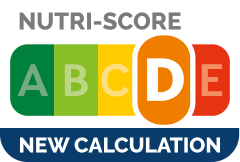 Lower nutritional quality
Nutri-Score data warning
Nutrient levels
Fat in moderate quantity (8.3%)
Saturated fat in moderate quantity (4.4%)
Sugars in low quantity (2.5%)
Salt in high quantity (1.6%)
Nutrition facts
| Nutrition facts | As sold for 100 g / 100 ml | Compared to: Bacon sandwiches |
|---|---|---|
| Energy | 941 kcal (225 kcal) | 1,023.178 kJ (245 kcal) |
| Fat | 8.3 g | 11.636 g (-29%) |
| Saturated fat | 4.4 g | 2.966 g (+48%) |
| Carbohydrates | 27 g | 22.814 g (+18%) |
| Sugars | 2.5 g | 2.615 g (-4%) |
| Dietary fiber | ? | ? |
| Proteins | 9.6 g | 11.279 g (-15%) |
| Salt | 1.6 g | 1.194 g (+34%) |
| Sodium | 0.64 g | 0.478 g (+34%) |
| Fruits, vegetables and legumes | ? | ? |
Nutrition facts (Detailed data)
| Nutrition facts | As sold for 100 g / 100 ml | As sold Per serving (legacy) |
|---|---|---|
| Energy | 941 kcal (225 kcal) | ? |
| Fat | 8.3 g | ? |
| Saturated fat | 4.4 g | ? |
| Carbohydrates | 27 g | ? |
| Sugars | 2.5 g | ? |
| Dietary fiber | ? | ? |
| Proteins | 9.6 g | ? |
| Salt | 1.6 g | ? |
| Sodium | 0.64 g | ? |
| Fruits, vegetables and legumes | ? | ? |
Ingredients
Ingredients list
Ingredient information
Added sugars
Allergens
Traces
Ingredients analysis
No ingredients containing palm oil.
Unrecognized: fr:bacon-cuit-fume-choix, fr:eau-sel, fr:antioxydan, fr:emmental-1, fr:pain-bretzel
Contains non-vegan ingredients.
Unrecognized: fr:bacon-cuit-fume-choix, fr:eau-sel, fr:antioxydan, fr:emmental-1, fr:pain-bretzel
Contains non-vegetarian ingredients.
Unrecognized: fr:bacon-cuit-fume-choix, fr:eau-sel, fr:antioxydan, fr:emmental-1, fr:pain-bretzel
Food Processing
NOVA group
 Ultra-processed food and drink products
Elements that indicate the product is in NOVA group 4
How NOVA works
Additives
E14XX - Modified StarchEmulsifierStabiliserThickener
No additive description is available yet.
E250 - Sodium nitrite EFSA overexposure risk: highPreservative
Sodium nitrite (E250) is a salt used for curing and preserving meat products.
It plays a critical role in preventing the growth of Clostridium botulinum, the bacterium responsible for botulism, in cured meats like bacon, ham, and sausages. It also provides the characteristic pink color and flavor.
However, nitrites can react with amines in the stomach to form nitrosamines, which are potent carcinogens. High intake of processed meats containing nitrites is associated with an increased risk of colorectal cancer. Regulatory bodies have set strict limits on its use in food.
E316 - sodium erythorbate EFSA overexposure risk: noAntioxidant
SODIUM ERYTHORBATE is the sodium salt of erythorbic acid. Sodium erythorbate is produced from sugars derived from different sources, such as beets, sugar cane, and corn. It is used predominantly in meats, poultry, and soft drinks.
E451 - Triphosphates EFSA overexposure risk: highEmulsifierHumectantSequestrantStabiliserThickener
Sodium triphosphate (STP), also sodium tripolyphosphate (STPP), or tripolyphosphate (TPP),) is an inorganic compound with formula Na5P3O10. It is the sodium salt of the polyphosphate penta-anion, which is the conjugate base of triphosphoric acid. It is produced on a large scale as a component of many domestic and industrial products, especially detergents. Environmental problems associated with eutrophication are attributed to its widespread use.
E524 - Sodium hydroxide
Sodium hydroxide, also known as lye and caustic soda, is an inorganic compound with the formula NaOH. It is a white solid ionic compound consisting of sodium cations Na+ and hydroxide anions OH−. Sodium hydroxide is a highly caustic base and alkali that decomposes proteins at ordinary ambient temperatures and may cause severe chemical burns. It is highly soluble in water, and readily absorbs moisture and carbon dioxide from the air. It forms a series of hydrates NaOH·nH2O. The monohydrate NaOH·H2O crystallizes from water solutions between 12.3 and 61.8 °C. The commercially available "sodium hydroxide" is often this monohydrate, and published data may refer to it instead of the anhydrous compound. As one of the simplest hydroxides, it is frequently utilized alongside neutral water and acidic hydrochloric acid to demonstrate the pH scale to chemistry students.Sodium hydroxide is used in many industries: in the manufacture of pulp and paper, textiles, drinking water, soaps and detergents, and as a drain cleaner. Worldwide production in 2004 was approximately 60 million tonnes, while demand was 51 million tonnes.
Environment
Green-Score, origins bonus, and transportation impact are shown for Worldwide .
Green Score
Overall grade
 Moderate environmental impact
About Green-Score
Current scope
Life cycle analysis
Average impact of the category
 Sandwich made with French bread, camembert cheese and butter • Score: 73/100
Life-cycle reference
Overall environmental impact by stage (PEF)
The overall environmental impact figure (PEF) comes from ADEME's Agribalyse database, for the category: Sandwich made with French bread, camembert cheese and butter. Source: ADEME Agribalyse Database.
| Stage | Impact |
|---|---|
| Agriculture | 71.4 % |
| Processing | 13.4 % |
| Packaging | 6.9 % |
| Transportation | 4.9 % |
| Distribution | 2.8 % |
| Consumption | 0.7 % |
Bonuses and maluses
Declared origins
Packaging impact
Green-Score for this product
Green-Score for this product
Final score: 53/100Final score breakdown
Carbon footprint
Carbon footprint
Climate impact by stage (CO2e)
The carbon emission figure comes from ADEME's Agribalyse database, for the category: Sandwich made with French bread, camembert cheese and butter. Source: ADEME Agribalyse Database.
| Stage | Impact |
|---|---|
| Agriculture | 75.6 % |
| Processing | 8.3 % |
| Packaging | 8.4 % |
| Transportation | 6.4 % |
| Distribution | 1.2 % |
| Consumption | 0.2 % |
Packaging
Packaging impact
Data precision
Transportation
Declared origins
Forest footprint
Forest footprint
Deforestation risk details
Data Source
Product data comes from Open Food Facts. Food Benchmark also adds translations, category comparisons and explanatory calculations.
The database is licensed under ODbL 1.0, individual contents under DbCL 1.0, and product photos under CC BY-SA 3.0.
Product added on August 8, 2017 at 11:20:08 AM UTC by kiliweb .
Last edit on July 21, 2019 at 11:52:47 AM UTC by desan .
Product page also edited by autorotate-bot, openfoodfacts-contributors, kiliweb, desan.