ProductsFranprixLa pizza lardons chèvre
La pizza lardons chèvre
Barcode 3263856483817
Franprix

La pizza lardons chèvre

450 g
BARCODE:3263856483817
COMMON NAME:Pizza au fromage de chèvre et aux lardons cuits fumés.
PACKAGER CODE:EMB 49331H
CATEGORIES:Meals, Pizzas Pies And Quiches, Pizzas, Goat Cheese And Bacon Pizzas
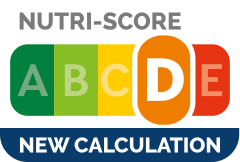
LABELS:Green Dot, Nutriscore, Nutriscore Grade D, Triman
PACKAGING:Plastic, Fresh, Protective Gas
MANUFACTURING:France
COUNTRIES:France
STORES:Franprix

Health

Nutrition

Nutri-Score

DLower nutritional quality

Nutri-Score data warning

Warning: the amount of fruits, vegetables and nuts is not specified on the label, it was estimated from the list of ingredients: 19

Nutrient levels

Fat in moderate quantity (9.4%)
What you need to know • A high consumption of fat, especially saturated fats, can raise cholesterol, which increases the risk of heart diseases. Recommendation: Limit the consumption of fat and saturated fat • Choose products with lower fat and saturated fat content. Source: National Health Service UK (NHS) - Fat: the facts
Saturated fat in high quantity (5.2%)
What you need to know • A high consumption of fat, especially saturated fats, can raise cholesterol, which increases the risk of heart diseases. Recommendation: Limit the consumption of fat and saturated fat • Choose products with lower fat and saturated fat content. Source: National Health Service UK (NHS) - Fat: the facts
Sugars in low quantity (3.1%)
What you need to know • A high consumption of sugar can cause weight gain and tooth decay. It also augments the risk of type 2 diabetes and cardio-vascular diseases. Recommendation: Limit the consumption of sugar and sugary drinks • Sugary drinks (such as sodas, fruit beverages, and fruit juices and nectars) should be limited as much as possible (no more than 1 glass a day). • Choose products with lower sugar content and reduce the consumption of products with added sugars. Source: National Health Service UK (NHS) - Sugar: the facts
Salt in moderate quantity (1.2%)
What you need to know • A high consumption of salt (or sodium) can cause raised blood pressure, which can increase the risk of heart disease and stroke. • Many people who have high blood pressure do not know it, as there are often no symptoms. • Most people consume too much salt (on average 9 to 12 grams per day), around twice the recommended maximum level of intake. Recommendation: Limit the consumption of salt and salted food • Reduce the quantity of salt used when cooking, and don't salt again at the table. • Limit the consumption of salty snacks and choose products with lower salt content. Source: World Health Organization (WHO) - Fact sheet - Salt reduction Source: National Health Service UK (NHS) - Salt: the facts

Nutrition label

La pizza lardons chèvre nutrition label

Nutrition facts

Nutrition factsAs sold for 100 g / 100 mlCompared to: Goat cheese and bacon pizzas
Energy949 kJ (241 kcal)989.741 kJ (236 kcal) (-4%)
Fat9.4 g8.775 g (+7%)
Saturated fat5.2 g4.571 g (+14%)
Carbohydrates27 g27.649 g (-2%)
Sugars3.1 g3.04 g (+2%)
Dietary fiber2 g?
Proteins11 g10.586 g (+4%)
Salt1.2 g1.261 g (-5%)
Sodium0.48 g0.504 g (-5%)
Fruits, vegetables and legumes~ 14.5877976190476 %?

Nutrition facts (Detailed data)

Nutrition factsAs sold for 100 g / 100 mlAs sold Per 100 g (packaging)As sold Per 100 g (estimate)
Energy949 kJ (241 kcal)949 kJ (241 kcal)~ 524.475026785714 kJ (126 kcal)
Fat9.4 g9.4 g~ 9.47827090773809 g
Saturated fat5.2 g5.2 g~ 5.07716086011905 g
Carbohydrates27 g27 g~ 29.2304369940476 g
Sugars3.1 g3.1 g~ 1.53022351190476 g
Dietary fiber2 g2 g~ 1.73795422619047 g
Proteins11 g11 g~ 12.0797075892857 g
Salt1.2 g1.2 g~ 0.806830926190479 g
Sodium0.48 g0.48 g~ 0.330448997023811 g
Fruits, vegetables and legumes~ 14.5877976190476 %?~ 14.5877976190476 %

Serving size

150 g

Ingredients

Ingredients image

La pizza lardons chèvre ingredients image

Ingredients list

Pâte cuite 39% [farine de blé - eau - huile de colza - sel - levure - poudre à lever : carbonates de sodium (contient blé)] - purée de tomates mi-réduite 14% - fromage de chèvre 12% - lardons cuit fumés 9,8% [poitrine de porc (origine : UE) - eau - sel - dextrose - antioxydant : érythorbate de sodium - conservateur : nitrite de sodium] - eau - emmental 6,6% - mozzarella 6,6% - farine de blé - fécule de pomme de terre - purée d'ail - sel - huile d'olive vierge - basilic déshydraté - origan déshydraté.

Ingredient information

Cooked Pasta
39.0%
Wheat Flour
22.75% (estimate)
Water
8.13% (estimate)
Colza Oil
4.06% (estimate)
Salt
0.6% (estimate)
Yeast
0.6% (estimate)
Raising Agent
2.86% (estimate)
E500
2.86% (estimate)
Puree De Tomate Mi Reduite
14.0%
Goat Cheese
12.0%
Smoked Cooked Lardoons
9.8%
Pork Breast
5.72% (estimate)
Water
2.04% (estimate)
Salt
0.6% (estimate)
Dextrose
0.6% (estimate)
Antioxidant
0.42% (estimate)
E316
0.42% (estimate)
Preservative
0.42% (estimate)
E250
0.42% (estimate)
Water
8.2% (estimate)
Emmental
6.6%
Mozzarella
6.6%
Wheat Flour
1.74% (estimate)
Potato Starch
1.12% (estimate)
Garlic Puree
0.47% (estimate)
Salt
0.24% (estimate)
Virgin Olive Oil
0.12% (estimate)
Dried Basil
0.06% (estimate)
Dried Oregano
0.06% (estimate)

Added sugars

Contains added sugars (0%) Added sugars: dextrose Quantity of added sugars: 0%

Allergens

GlutenMilk

Traces

EggsFishMolluscsNuts

Ingredients analysis

Palm oil free
Yes

No ingredients containing palm oil.

Vegan
No

Contains non-vegan ingredients.

Vegetarian
No

Contains non-vegetarian ingredients.


Food Processing

NOVA group

4Ultra-processed food and drink products

Elements that indicate the product is in NOVA group 4

Ingredients
Dextrose
Ingredients
Glucose

How NOVA works

The NOVA classification assigns food products into 4 groups based on their degree of processing: 1. Unprocessed or minimally processed foods 2. Processed culinary ingredients 3. Processed foods 4. Ultra-processed food and drink products

Additives

E250 - Sodium nitrite EFSA overexposure risk: highPreservative

Sodium nitrite (E250) is a salt used for curing and preserving meat products.

It plays a critical role in preventing the growth of Clostridium botulinum, the bacterium responsible for botulism, in cured meats like bacon, ham, and sausages. It also provides the characteristic pink color and flavor.

However, nitrites can react with amines in the stomach to form nitrosamines, which are potent carcinogens. High intake of processed meats containing nitrites is associated with an increased risk of colorectal cancer. Regulatory bodies have set strict limits on its use in food.

E316 - sodium erythorbate EFSA overexposure risk: noAntioxidant

SODIUM ERYTHORBATE is the sodium salt of erythorbic acid. Sodium erythorbate is produced from sugars derived from different sources, such as beets, sugar cane, and corn. It is used predominantly in meats, poultry, and soft drinks.

E500 - Sodium carbonatesStabiliserThickener

Sodium carbonates (E500) are compounds commonly used in food preparation as leavening agents, helping baked goods rise by releasing carbon dioxide when they interact with acids.

Often found in baking soda, they regulate the pH of food, preventing it from becoming too acidic or too alkaline. In the culinary world, sodium carbonates can also enhance the texture and structure of foods, such as noodles, by modifying the gluten network.

Generally recognized as safe, sodium carbonates are non-toxic when consumed in typical amounts found in food.

Environment

Green-Score, origins bonus, and transportation impact are shown for Worldwide .

Green Score

Overall grade

DHigh environmental impact

About Green-Score

The Green-Score is an experimental score that summarizes the environmental impacts of food products.

Current scope

The Green-Score was initially developed for France and it is being extended to other European countries. The Green-Score formula is subject to change as it is regularly improved to make it more precise and better suited to each country. Select a country to include the full impact of transportation in the final score.

Life cycle analysis

Average impact of the category

CPizza, goat cheese and lardoons • Score: 51/100

Life-cycle reference

Category: Pizza, goat cheese and lardoons PEF environmental score: 0.53 Climate change impact: 3.91 kg CO2 eq / kg product The overall environmental impact figure (PEF) comes from ADEME's Agribalyse database, for the category: Pizza, goat cheese and lardoons. Source: ADEME Agribalyse Database.

Overall environmental impact by stage (PEF)

The overall environmental impact figure (PEF) comes from ADEME's Agribalyse database, for the category: Pizza, goat cheese and lardoons. Source: ADEME Agribalyse Database.

StageImpact
Agriculture76.6 %
Processing6.9 %
Packaging4.1 %
Transportation3.8 %
Distribution1.8 %
Consumption6.7 %

Bonuses and maluses

Origins of ingredients

Declared origins are missing for this product. Origins malus: -5 Transportation (Worldwide): 0 Environmental policy adjustment: -5 Select a country to include the full impact of transportation.

Packaging impact

Packaging with a medium impact Malus: -10 Packaging score: 0

Green-Score for this product

Green-Score for this product

DFinal score: 36/100

Final score breakdown

Life cycle analysis score: 51 Sum of bonuses and maluses: -15 Final score: 36/100

Carbon footprint

Carbon footprint

Equivalent to driving 2.0 km in a petrol car. 391 g CO2e per 100g of product. Reference category: Pizza, goat cheese and lardoons. The carbon emission figure comes from ADEME's Agribalyse database, for the category: Pizza, goat cheese and lardoons. Source: ADEME Agribalyse Database.

Climate impact by stage (CO2e)

The carbon emission figure comes from ADEME's Agribalyse database, for the category: Pizza, goat cheese and lardoons. Source: ADEME Agribalyse Database.

StageImpact
Agriculture77.7 %
Processing5.4 %
Packaging6.5 %
Transportation6.8 %
Distribution1.1 %
Consumption2.4 %

Packaging

Packaging impact

Packaging with a medium impact Malus: -10 Packaging score: 0

Packaging components

ShapeMaterialRecyclingImpact
UnknownPlasticUnknownHigh

Declared packaging

Plastic, Fresh, Protective Gas

Data precision

The packaging information is not sufficiently precise to compute the most accurate packaging impact. Exact shapes and materials of all packaging components help improve the Green-Score.

Transportation

Manufacturing locations

France

Origins of ingredients

Declared origins are missing for this product. Origins malus: -5 Transportation (Worldwide): 0 Environmental policy adjustment: -5 Select a country to include the full impact of transportation.

Origins breakdown

OriginPercent of ingredientsImpact
Unknown94 %High
European Union6 %High

Forest footprint

Forest footprint

Forest Footprint not computed Potential deforestation risk but not yet computed. Forest Footprint The Forest Footprint is a methodology developed by the association Envol Vert to estimate the risk of deforestation related to our consumption. → More information on the methodology Forest Footprint not computed Potential deforestation risk but not yet computed.

Deforestation risk details

Other risky ingredients These ingredients are not yet assessed for deforestation risk: goat cheese smoked cooked lardoons emmental mozzarella pork breast

Data Source

Product data comes from Open Food Facts. Food Benchmark also adds translations, category comparisons and explanatory calculations.

The database is licensed under ODbL 1.0, individual contents under DbCL 1.0, and product photos under CC BY-SA 3.0.

Product added on May 31, 2016 at 6:40:07 PM UTC by teolemon .

Last edit on March 16, 2026 at 8:03:58 PM UTC by new-nutrition-bot .

Product page also edited by beniben, new-nutrition-bot, openfoodfacts-contributors, packbot, quechoisir, scanparty-franprix-05-2016, sebleouf, tacite, teolemon, yuka.NLVeDuzQG8EdBfXP_98k4RPhJMn_JNlaRiUcog.