ProductsGuyader2X60G Terrine Bretonne Noix Saint Jacque Guyader
2X60G Terrine Bretonne Noix Saint Jacque Guyader
Barcode 3276770020600
Guyader

2X60G Terrine Bretonne Noix Saint Jacque Guyader

2 x 60 g
BARCODE:3276770020600
PACKAGER CODE:FR 56.094.012 EC
CATEGORIES:Terrines, Terrines From Brittany, Terrines De Saint Jacques
COUNTRIES:France

Health

Nutrition

Nutri-Score

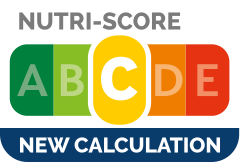
CAverage nutritional quality

Nutri-Score data warning

Warning: the amount of fruits, vegetables and nuts is not specified on the label, it was estimated from the list of ingredients: 18

Nutrient levels

Fat in moderate quantity (14.6%)
What you need to know • A high consumption of fat, especially saturated fats, can raise cholesterol, which increases the risk of heart diseases. Recommendation: Limit the consumption of fat and saturated fat • Choose products with lower fat and saturated fat content. Source: National Health Service UK (NHS) - Fat: the facts
Saturated fat in moderate quantity (3%)
What you need to know • A high consumption of fat, especially saturated fats, can raise cholesterol, which increases the risk of heart diseases. Recommendation: Limit the consumption of fat and saturated fat • Choose products with lower fat and saturated fat content. Source: National Health Service UK (NHS) - Fat: the facts
Sugars in low quantity (1.9%)
What you need to know • A high consumption of sugar can cause weight gain and tooth decay. It also augments the risk of type 2 diabetes and cardio-vascular diseases. Recommendation: Limit the consumption of sugar and sugary drinks • Sugary drinks (such as sodas, fruit beverages, and fruit juices and nectars) should be limited as much as possible (no more than 1 glass a day). • Choose products with lower sugar content and reduce the consumption of products with added sugars. Source: National Health Service UK (NHS) - Sugar: the facts
Salt in moderate quantity (0.9%)
What you need to know • A high consumption of salt (or sodium) can cause raised blood pressure, which can increase the risk of heart disease and stroke. • Many people who have high blood pressure do not know it, as there are often no symptoms. • Most people consume too much salt (on average 9 to 12 grams per day), around twice the recommended maximum level of intake. Recommendation: Limit the consumption of salt and salted food • Reduce the quantity of salt used when cooking, and don't salt again at the table. • Limit the consumption of salty snacks and choose products with lower salt content. Source: World Health Organization (WHO) - Fact sheet - Salt reduction Source: National Health Service UK (NHS) - Salt: the facts

Nutrition label

2X60G Terrine Bretonne Noix Saint Jacque Guyader nutrition label

Nutrition facts

Nutrition factsAs sold for 100 g / 100 mlCompared to: fr:Terrines de Saint-Jacques
Energy766 kcal (183 kcal)728.059 kJ (173 kcal)
Fat14.6 g12.92 g (+13%)
Saturated fat3 g2.463 g (+22%)
Carbohydrates4.1 g4.461 g (-8%)
Sugars1.9 g1.474 g (+29%)
Dietary fiber??
Proteins7.5 g9.618 g (-22%)
Salt0.9 g1.161 g (-22%)
Sodium0.36 g0.464 g (-22%)
Fruits, vegetables and legumes??

Nutrition facts (Detailed data)

Nutrition factsAs sold for 100 g / 100 mlAs sold Per serving (legacy)
Energy766 kcal (183 kcal)?
Fat14.6 g?
Saturated fat3 g?
Carbohydrates4.1 g?
Sugars1.9 g?
Dietary fiber??
Proteins7.5 g?
Salt0.9 g?
Sodium0.36 g?
Fruits, vegetables and legumes??

Ingredients

Ingredients image

2X60G Terrine Bretonne Noix Saint Jacque Guyader ingredients image

Ingredients list

COLIN </span>d'Alaska, Noix de SAINT-JACQUES* (21%), eau, huile de colza, CREME </span>fraîche (7%), carotte (3,6%), blanc d'OEUF, tapioca, vin blanc (1,8%), ciboulette, fécule de pommes de terre, épaississant: carraghénanes, échalote (0,7%), sel, sucre, extrait naturel de SAINT-JACQUES (Chlamys opercularis), wakamé, poivre. *Zygochlamys patagonica. Origine : Argentine. Traces éventuelles de: céleri, céréales contenant du gluten, crustacés, fruits à coques, lupin, moutarde, graines de sésame, soja, sulfites.

Ingredient information

Alaska Pollock
33.6% (estimate)
Scallop
21.0%
Water
14% (estimate)
Colza Oil
13.65% (estimate)
Fresh Cream
7.0%
Carrot
3.6%
Egg White
2.7% (estimate)
Tapioca
2.7% (estimate)
White Wine
1.8%
Chives
0.35% (estimate)
Potato Starch
0.18% (estimate)
Thickener
0.09% (estimate)
E407
0.09% (estimate)
Shallot
0.7%
Salt
< 0.7% (estimate)
Sugar
< 0.7% (estimate)
Scallop
< 0.7% (estimate)
Queen Scallop
< 0.7% (estimate)
Wakame
< 0.7% (estimate)
Pepper
< 0.7% (estimate)
Patagonian Scallop
< 0.7% (estimate)

Added sugars

Contains added sugars (0%) Added sugars: sugar Quantity of added sugars: 0%

Allergens

EggsFishMilkMolluscs

Traces

CeleryCrustaceansGlutenLupinMustardNutsSesame SeedsSoybeansSulphur Dioxide And Sulphites

Ingredients analysis

Palm oil free
Yes

No ingredients containing palm oil.

Vegan
No

Contains non-vegan ingredients.

Vegetarian
No

Contains non-vegetarian ingredients.


Food Processing

NOVA group

4Ultra-processed food and drink products

Elements that indicate the product is in NOVA group 4

Additives
E407 - Carrageenan
Ingredients
Thickener

How NOVA works

The NOVA classification assigns food products into 4 groups based on their degree of processing: 1. Unprocessed or minimally processed foods 2. Processed culinary ingredients 3. Processed foods 4. Ultra-processed food and drink products

Additives

E407 - Carrageenan EFSA overexposure risk: highCarrierEmulsifierHumectantStabiliserThickener

Carrageenan (E407), derived from red seaweed, is widely employed in the food industry as a gelling, thickening, and stabilizing agent, notably in dairy and meat products.

It can exist in various forms, each imparting distinct textural properties to food.

However, its degraded form, often referred to as poligeenan, has raised health concerns due to its potential inflammatory effects and its classification as a possible human carcinogen (Group 2B) by the International Agency for Research on Cancer (IARC).

Nevertheless, food-grade carrageenan has been deemed safe by various regulatory bodies when consumed in amounts typically found in food.

Environment

Green-Score, origins bonus, and transportation impact are shown for Worldwide .

Green Score

Overall grade

UnknownUnknown environmental impact

About Green-Score

The Green-Score is an experimental score that summarizes the environmental impacts of food products.

Current scope

The Green-Score was initially developed for France and it is being extended to other European countries. The Green-Score formula is subject to change as it is regularly improved to make it more precise and better suited to each country. Select a country to include the full impact of transportation in the final score.

Green-Score availability

We could not compute the Green-Score of this product because some data is missing. A more precise category, ingredients list, origins or packaging data can unlock the computation.

Bonuses and maluses

Declared origins

Origins of ingredients are missing for this product. Ingredients need to be completed before the transportation bonus can be computed precisely.

Packaging impact

Packaging with a high impact Malus: -15 The information about the packaging of this product is not filled in.

Packaging

Packaging impact

Packaging with a high impact Malus: -15 The information about the packaging of this product is not filled in.

Data precision

The packaging information is not sufficiently precise to compute the most accurate packaging impact. Exact shapes and materials of all packaging components help improve the Green-Score.

Transportation

Declared origins

Origins of ingredients are missing for this product. Ingredients need to be completed before the transportation bonus can be computed precisely.

Forest footprint

Forest footprint

Total forest footprint: 0.00 m2 per kg of food This estimate highlights ingredients that depend on soy-linked animal feed and deforestation risk.

Ingredients linked to forest pressure

IngredientTypePercent in productForest footprint
EGG WhiteOeufs Importés2.70 %0.00

Data Source

Product data comes from Open Food Facts. Food Benchmark also adds translations, category comparisons and explanatory calculations.

The database is licensed under ODbL 1.0, individual contents under DbCL 1.0, and product photos under CC BY-SA 3.0.

Product added on February 23, 2018 at 9:57:56 PM UTC by openfoodfacts-contributors .

Last edit on April 29, 2023 at 7:44:18 AM UTC by roboto-app .

Product page also edited by kiliweb, openfoodfacts-contributors, pv94, roboto-app, sebleouf, teolemon, wolfgang8741, yuka.UktFeUxvSS8vdklLd2NVTXpFTHkvdFVyM3NlS1cxdm9GTWs4SVE9PQ.