

Sapresti traiteur, Bagel poulet cheddar micro ondable, 150 gr
Health
Nutrition
Nutri-Score
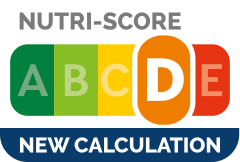 Lower nutritional quality
Nutri-Score data warning
Nutrient levels
Fat in moderate quantity (12%)
Saturated fat in moderate quantity (4.4%)
Sugars in moderate quantity (5%)
Salt in high quantity (1.8%)
Nutrition label

Nutrition facts
| Nutrition facts | As sold for 100 g / 100 ml | Compared to: Bagel sandwiches |
|---|---|---|
| Energy | 1124 kJ (268 kcal) | 917.18 kJ (221 kcal) (+23%) |
| Fat | 12 g | 7.778 g (+54%) |
| Saturated fat | 4.4 g | 1.861 g (+136%) |
| Carbohydrates | 29 g | 27.073 g (+7%) |
| Sugars | 5 g | 4.041 g (+24%) |
| Dietary fiber | 2.1 g | ? |
| Proteins | 10 g | 9.327 g (+7%) |
| Salt | 1.8 g | 1.34 g (+34%) |
| Sodium | 0.72 g | 0.536 g (+34%) |
| Fruits, vegetables and legumes | ~ 738.02388 % | ? |
Nutrition facts (Detailed data)
| Nutrition facts | As sold for 100 g / 100 ml | As sold Per 100 g (packaging) | As sold Per 100 g (estimate) |
|---|---|---|---|
| Energy | 1124 kJ (268 kcal) | 1124 kJ (268 kcal) | ? |
| Fat | 12 g | 12 g | ? |
| Saturated fat | 4.4 g | 4.4 g | ? |
| Carbohydrates | 29 g | 29 g | ? |
| Sugars | 5 g | 5 g | ? |
| Dietary fiber | 2.1 g | 2.1 g | ? |
| Proteins | 10 g | 10 g | ? |
| Salt | 1.8 g | 1.8 g | ? |
| Sodium | 0.72 g | 0.72 g | ? |
| Fruits, vegetables and legumes | ~ 738.02388 % | ? | ~ 738.02388 % |
Serving size
Ingredients
Ingredients image

Ingredients list
Ingredient information
Added sugars
Allergens
Traces
Ingredients analysis
Palm oil content unknown
Contains non-vegan ingredients.
Unrecognized: fr:huile-4e-colza, fr:acide-ascorb-ique, fr:vlande-de-poulet-marinee-a-la-mexicaine, fr:cuite, fr:amtdon-de-pomme-de-terre, fr:amidon-de-bte, fr:acorne-de-tumee, fr:protetnes-de-lait, fr:jaune-d-uf, fr:so-a, fr:f-coque, en:mustard, en:sulfite, fr:m-ues, fr:sans
Contains non-vegetarian ingredients.
Unrecognized: fr:huile-4e-colza, fr:acide-ascorb-ique, fr:vlande-de-poulet-marinee-a-la-mexicaine, fr:cuite, fr:amtdon-de-pomme-de-terre, fr:amidon-de-bte, fr:acorne-de-tumee, fr:protetnes-de-lait, fr:jaune-d-uf, fr:so-a, fr:f-coque, en:mustard, en:sulfite, fr:m-ues, fr:sans
Food Processing
NOVA group
 Ultra-processed food and drink products
Elements that indicate the product is in NOVA group 4
How NOVA works
Additives
E14XX - Modified StarchEmulsifierStabiliserThickener
No additive description is available yet.
E160b - AnnattoColour
No additive description is available yet.
E202 - Potassium sorbate EFSA overexposure risk: highPreservative
Potassium sorbate (E202) is a synthetic food preservative commonly used to extend the shelf life of various food products.
It works by inhibiting the growth of molds, yeast, and some bacteria, preventing spoilage. When added to foods, it helps maintain their freshness and quality.
Some studies have shown that when combined with nitrites, potassium sorbate have genotoxic activity in vitro. However, potassium sorbate is generally recognized as safe (GRAS) by regulatory authorities.
E270 - Lactic acid
LACTIC ACID is an organic compound with the formula CH3CH(OH)CO2H. In the form of its conjugate base called lactate (this is thus different and kept as a separate ingredient). Lactic acid is chiral, consisting of two optical isomers. One is known as L-(+)-lactic acid or (S)-lactic acid and the other, its mirror image, is D-(−)-lactic acid or (R)-lactic acid in food the L-variant is used
E330 - Citric acidAntioxidantSequestrant
Citric acid is a natural organic acid found in citrus fruits such as lemons, oranges, and limes.
It is widely used in the food industry as a flavor enhancer, acidulant, and preservative due to its tart and refreshing taste.
Citric acid is safe for consumption when used in moderation and is considered a generally recognized as safe (GRAS) food additive by regulatory agencies worldwide.
E331 - Sodium citratesEmulsifierSequestrantStabiliser
DISODIUM CITRATE, more properly, disodium hydrogen citrate, is an acid salt of citric acid with the chemical formula Na2C6H6O7. It is used as an antioxidant in food and to improve the effects of other antioxidants. It is also used as an acidity regulator and sequestrant. Typical products include gelatin, jam, sweets, ice cream, carbonated beverages, milk powder, wine, and processed cheeses.
E334 - L(+)-tartaric acidAntioxidantSequestrant
TARTARIC ACID is a white, crystalline organic acid that occurs naturally in many fruits, most notably in grapes, but also in bananas, tamarinds, and citrus
E401 - sodium alginateCarrierEmulsifierHumectantSequestrantStabiliserThickener
No additive description is available yet.
E407 - Carrageenan EFSA overexposure risk: highCarrierEmulsifierHumectantStabiliserThickener
Carrageenan (E407), derived from red seaweed, is widely employed in the food industry as a gelling, thickening, and stabilizing agent, notably in dairy and meat products.
It can exist in various forms, each imparting distinct textural properties to food.
However, its degraded form, often referred to as poligeenan, has raised health concerns due to its potential inflammatory effects and its classification as a possible human carcinogen (Group 2B) by the International Agency for Research on Cancer (IARC).
Nevertheless, food-grade carrageenan has been deemed safe by various regulatory bodies when consumed in amounts typically found in food.
E415 - Xanthan gumEmulsifierStabiliserThickener
Xanthan gum (E415) is a natural polysaccharide derived from fermented sugars, often used in the food industry as a thickening and stabilizing agent.
This versatile food additive enhances texture and prevents ingredient separation in a wide range of products, including salad dressings, sauces, and gluten-free baked goods.
It is considered safe for consumption even at high intake amounts.
E472e - Mono- and diacetyltartaric acid esters of mono- and diglycerides of fatty acidsEmulsifierSequestrantStabiliser
No additive description is available yet.
Environment
Green-Score, origins bonus, and transportation impact are shown for Worldwide .
Green Score
Overall grade
 High environmental impact
About Green-Score
Current scope
Life cycle analysis
Average impact of the category
 Sandwich made with wholemeal loaf bread, chicken, raw vegetables and mayonnaise • Score: 53/100
Life-cycle reference
Overall environmental impact by stage (PEF)
The overall environmental impact figure (PEF) comes from ADEME's Agribalyse database, for the category: Sandwich made with wholemeal loaf bread, chicken, raw vegetables and mayonnaise. Source: ADEME Agribalyse Database.
| Stage | Impact |
|---|---|
| Agriculture | 68.9 % |
| Processing | 14.0 % |
| Packaging | 10.5 % |
| Transportation | 4.3 % |
| Distribution | 1.9 % |
| Consumption | 0.5 % |
Bonuses and maluses
Origins of ingredients
Packaging impact
Green-Score for this product
Green-Score for this product
Final score: 33/100Final score breakdown
Carbon footprint
Carbon footprint
Climate impact by stage (CO2e)
The carbon emission figure comes from ADEME's Agribalyse database, for the category: Sandwich made with wholemeal loaf bread, chicken, raw vegetables and mayonnaise. Source: ADEME Agribalyse Database.
| Stage | Impact |
|---|---|
| Agriculture | 59.1 % |
| Processing | 19.2 % |
| Packaging | 10.7 % |
| Transportation | 9.3 % |
| Distribution | 1.4 % |
| Consumption | 0.2 % |
Packaging
Packaging impact
Data precision
Transportation
Origins of ingredients
Origins breakdown
| Origin | Percent of ingredients | Impact |
|---|---|---|
| Unknown | 89 % | High |
| European Union | 11 % | High |
Forest footprint
Forest footprint
Ingredients linked to forest pressure
| Ingredient | Type | Percent in product | Forest footprint |
|---|---|---|---|
| Chicken | Poulet Importé | 11.00 % | 0.24 |
Data Source
Product data comes from Open Food Facts. Food Benchmark also adds translations, category comparisons and explanatory calculations.
The database is licensed under ODbL 1.0, individual contents under DbCL 1.0, and product photos under CC BY-SA 3.0.
Product added on July 2, 2017 at 10:29:35 AM UTC by kiliweb .
Last edit on March 3, 2026 at 11:15:02 PM UTC by moon-rabbit .
Product page also edited by aquilax, autorotate-bot, kiliweb, moon-rabbit, openfoodfacts-contributors, roboto-app, rviswana, segundo.