ProductsBliniTarama au Corail d'Oursin
Tarama au Corail d'Oursin
Barcode 3292070007400
Blini

Tarama au Corail d'Oursin

154 g
BARCODE:3292070007400
COMMON NAME:Tarama aux oeufs de cabillauds (20%) et au corail d'oursins. Tarama au Corail d'Oursin
PACKAGER CODE:FR 14.712.042 EC
CATEGORIES:Seafood, Spreads, Salted Spreads, Taramasalata, Taramas Au Cabillaud, Tarama Au Corail D Oursin
LABELS:Green Dot
PACKAGING:Plastic, Pot, Fresh, Protective Gas
COUNTRIES:France
STORES:Carrefour

Health

Nutrition

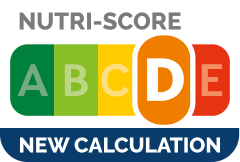
Nutri-Score

DLower nutritional quality

Nutri-Score data warning

Warning: the amount of fruits, vegetables and nuts is not specified on the label, it was estimated from the list of ingredients: 43

Nutrient levels

Fat in high quantity (52.4%)
What you need to know • A high consumption of fat, especially saturated fats, can raise cholesterol, which increases the risk of heart diseases. Recommendation: Limit the consumption of fat and saturated fat • Choose products with lower fat and saturated fat content. Source: National Health Service UK (NHS) - Fat: the facts
Saturated fat in moderate quantity (3.8%)
What you need to know • A high consumption of fat, especially saturated fats, can raise cholesterol, which increases the risk of heart diseases. Recommendation: Limit the consumption of fat and saturated fat • Choose products with lower fat and saturated fat content. Source: National Health Service UK (NHS) - Fat: the facts
Sugars in low quantity (0%)
What you need to know • A high consumption of sugar can cause weight gain and tooth decay. It also augments the risk of type 2 diabetes and cardio-vascular diseases. Recommendation: Limit the consumption of sugar and sugary drinks • Sugary drinks (such as sodas, fruit beverages, and fruit juices and nectars) should be limited as much as possible (no more than 1 glass a day). • Choose products with lower sugar content and reduce the consumption of products with added sugars. Source: National Health Service UK (NHS) - Sugar: the facts
Salt in moderate quantity (1.47%)
What you need to know • A high consumption of salt (or sodium) can cause raised blood pressure, which can increase the risk of heart disease and stroke. • Many people who have high blood pressure do not know it, as there are often no symptoms. • Most people consume too much salt (on average 9 to 12 grams per day), around twice the recommended maximum level of intake. Recommendation: Limit the consumption of salt and salted food • Reduce the quantity of salt used when cooking, and don't salt again at the table. • Limit the consumption of salty snacks and choose products with lower salt content. Source: World Health Organization (WHO) - Fact sheet - Salt reduction Source: National Health Service UK (NHS) - Salt: the facts

Nutrition facts

Nutrition factsAs sold for 100 g / 100 mlCompared to: fr:Taramas au cabillaud
Energy2189 kJ (523 kcal)2,169.171 kJ (526 kcal) (+1%)
Fat52.4 g53.499 g (-2%)
Saturated fat3.8 g4.096 g (-7%)
Carbohydrates8.6 g4.284 g (+101%)
Sugars0 g0.498 g (-100%)
Dietary fiber??
Proteins6.1 g6.521 g (-6%)
Salt1.47 g1.482 g (-1%)
Sodium0.588 g0.594 g (-1%)
Fruits, vegetables and legumes??

Nutrition facts (Detailed data)

Nutrition factsAs sold for 100 g / 100 mlAs sold Per serving (legacy)
Energy2189 kJ (523 kcal)?
Fat52.4 g?
Saturated fat3.8 g?
Carbohydrates8.6 g?
Sugars0 g?
Dietary fiber??
Proteins6.1 g?
Salt1.47 g?
Sodium0.588 g?
Fruits, vegetables and legumes??

Ingredients

Ingredients list

Huile de colza, œufs de cabillaud salés fumés 22 % (œufs de cabillaud 20 %, sel, conservateur : E211), eau, corail d'oursin 7 %, chapelure (farine de blé, eau, sel, levure), acidifiant : E270, conservateurs : E262 et E202, colorants : E110 et E102, sel, sirop de glucose déshydraté, extraits d'épices.

Ingredient information

Colza Oil
43% (estimate)
Cod Roe
22.0%
Cod Roe
20.0%
Salt
1.23% (estimate)
Preservative
0.77% (estimate)
E211
0.77% (estimate)
Water
14.5% (estimate)
Corail D Oursin
7.0%
Breadcrumbs
3.5% (estimate)
Wheat Flour
1.75% (estimate)
Water
0.88% (estimate)
Salt
0.44% (estimate)
Yeast
0.44% (estimate)
Acid
3.5% (estimate)
E270
3.5% (estimate)
Preservative
3.25% (estimate)
E262
3.25% (estimate)
E202
1.63% (estimate)
Colour
0.81% (estimate)
E110
0.81% (estimate)
E102
0.41% (estimate)
Salt
0.2% (estimate)
Dehydrated Glucose Syrup
0.1% (estimate)
Spice Extract
0.1% (estimate)

Added sugars

Contains added sugars (0%) Added sugars: dehydrated glucose syrup Quantity of added sugars: 0%

Allergens

FishGluten

Traces

CeleryCrustaceansEggsLupinMilkMolluscsMustardSesame SeedsSoybeans

Ingredients analysis

Palm oil free
Yes

No ingredients containing palm oil.

Unrecognized: fr:corail-d-oursin

Vegan
No

Contains non-vegan ingredients.

Unrecognized: fr:corail-d-oursin

Vegetarian
No

Contains non-vegetarian ingredients.

Unrecognized: fr:corail-d-oursin


Food Processing

NOVA group

4Ultra-processed food and drink products

Elements that indicate the product is in NOVA group 4

Additives
E102 - Tartrazine
Additives
E110 - Sunset yellow FCF
Ingredients
Colour
Ingredients
Glucose
Ingredients
Glucose Syrup

How NOVA works

The NOVA classification assigns food products into 4 groups based on their degree of processing: 1. Unprocessed or minimally processed foods 2. Processed culinary ingredients 3. Processed foods 4. Ultra-processed food and drink products

Additives

E102 - TartrazineColour

Tartrazine (E102) is a synthetic lemon-yellow azo dye used as a food coloring.

It is found in a wide range of products such as soft drinks, desserts, candies, and snack foods to give them a vibrant yellow appearance.

While approved by many regulatory agencies, tartrazine has been linked to allergic reactions, such as hives, in a small portion of the population. Some studies have also suggested a link to increased hyperactivity in children, particularly when consumed with other additives like benzoates.

E110 - Sunset yellow FCFColour

Sunset Yellow FCF (also known as Orange Yellow S, or C.I. 15985) is a petroleum-derived orange azo dye with a pH dependent maximum absorption at about 480 nm at pH 1 and 443 nm at pH 13 with a shoulder at 500 nm. When added to foods sold in the US it is known as FD&C Yellow 6; when sold in Europe, it is denoted by E Number E110.

E202 - Potassium sorbate EFSA overexposure risk: highPreservative

Potassium sorbate (E202) is a synthetic food preservative commonly used to extend the shelf life of various food products.

It works by inhibiting the growth of molds, yeast, and some bacteria, preventing spoilage. When added to foods, it helps maintain their freshness and quality.

Some studies have shown that when combined with nitrites, potassium sorbate have genotoxic activity in vitro. However, potassium sorbate is generally recognized as safe (GRAS) by regulatory authorities.

E211 - Sodium benzoate EFSA overexposure risk: highPreservative

SODIUM BENZOATE is a substance which has the chemical formula NaC7H5O2

E262 - Sodium acetatesPreservativeSequestrant

SODIUM ACETATE, also abbreviated NaOAc,[8] is the sodium salt of acetic acid.

E270 - Lactic acid

LACTIC ACID is an organic compound with the formula CH3CH(OH)CO2H. In the form of its conjugate base called lactate (this is thus different and kept as a separate ingredient). Lactic acid is chiral, consisting of two optical isomers. One is known as L-(+)-lactic acid or (S)-lactic acid and the other, its mirror image, is D-(−)-lactic acid or (R)-lactic acid in food the L-variant is used

Environment

Green-Score, origins bonus, and transportation impact are shown for Worldwide .

Green Score

Overall grade

AVery low environmental impact

About Green-Score

The Green-Score is an experimental score that summarizes the environmental impacts of food products.

Current scope

The Green-Score was initially developed for France and it is being extended to other European countries. The Green-Score formula is subject to change as it is regularly improved to make it more precise and better suited to each country. Select a country to include the full impact of transportation in the final score.

Life cycle analysis

Average impact of the category

A+Taramasalata, prepacked • Score: 90/100

Life-cycle reference

Category: Taramasalata, prepacked PEF environmental score: 0.19 Climate change impact: 1.51 kg CO2 eq / kg product The overall environmental impact figure (PEF) comes from ADEME's Agribalyse database, for the category: Taramasalata, prepacked. Source: ADEME Agribalyse Database.

Overall environmental impact by stage (PEF)

The overall environmental impact figure (PEF) comes from ADEME's Agribalyse database, for the category: Taramasalata, prepacked. Source: ADEME Agribalyse Database.

StageImpact
Agriculture4.3 %
Processing68.6 %
Packaging9.4 %
Transportation11.8 %
Distribution4.7 %
Consumption1.3 %

Bonuses and maluses

Declared origins

Origins of ingredients are missing for this product. Ingredients need to be completed before the transportation bonus can be computed precisely.

Packaging impact

Packaging with a medium impact Malus: -10 Packaging score: 0

Green-Score for this product

Green-Score for this product

AFinal score: 75/100

Final score breakdown

Life cycle analysis score: 90 Sum of bonuses and maluses: -15 Final score: 75/100

Carbon footprint

Carbon footprint

Equivalent to driving 0.8 km in a petrol car. 151 g CO2e per 100g of product. Reference category: Taramasalata, prepacked. The carbon emission figure comes from ADEME's Agribalyse database, for the category: Taramasalata, prepacked. Source: ADEME Agribalyse Database.

Climate impact by stage (CO2e)

The carbon emission figure comes from ADEME's Agribalyse database, for the category: Taramasalata, prepacked. Source: ADEME Agribalyse Database.

StageImpact
Agriculture5.2 %
Processing55.5 %
Packaging18.4 %
Transportation18.0 %
Distribution2.5 %
Consumption0.4 %

Packaging

Packaging impact

Packaging with a medium impact Malus: -10 Packaging score: 0

Packaging components

ShapeMaterialRecyclingImpact
POTPlasticUnknownHigh

Declared packaging

Plastic, Pot, Fresh, Protective Gas

Transportation

Declared origins

Origins of ingredients are missing for this product. Ingredients need to be completed before the transportation bonus can be computed precisely.

Forest footprint

Forest footprint

No deforestation risk No ingredient associated with a deforestation risk. Forest Footprint The Forest Footprint is a methodology developed by the association Envol Vert to estimate the risk of deforestation related to our consumption. → More information on the methodology Forest Footprint grade: A No ingredient associated with a deforestation risk. Total Forest Footprint: 0.000 m² per kg of food

Deforestation risk details

Labels The presence of certain labels can greatly help reduce the risk of deforestation, through the presence of environmental criteria and/or through better remuneration of producers.

Data Source

Product data comes from Open Food Facts. Food Benchmark also adds translations, category comparisons and explanatory calculations.

The database is licensed under ODbL 1.0, individual contents under DbCL 1.0, and product photos under CC BY-SA 3.0.

Product added on December 28, 2016 at 6:51:56 PM UTC by sebleouf .

Last edit on February 11, 2022 at 6:34:42 AM UTC by packbot .

Product page also edited by moon-rabbit, sebleouf, packbot, teolemon, beniben, segundo.