

Yaourt myrtille
Health
Nutrition
Nutri-Score
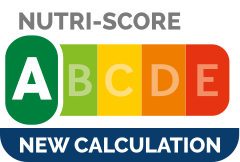 Very good nutritional quality
Nutri-Score data warning
Nutrient levels
Fat in low quantity (0.1%)
Saturated fat in low quantity (0%)
Sugars in low quantity (4.6%)
Salt in low quantity (0.1%)
Nutrition label

Nutrition facts
| Nutrition facts | As sold for 100 g / 100 ml | Compared to: Fermented dairy desserts with fruits |
|---|---|---|
| Energy | 177 kJ (42 kcal) | 391.635 kJ (93 kcal) (-55%) |
| Fat | 0.1 g | 2.836 g (-96%) |
| Saturated fat | 0 g | 1.817 g (-100%) |
| Carbohydrates | 6.2 g | 12.39 g (-50%) |
| Sugars | 4.6 g | 11.321 g (-59%) |
| Dietary fiber | 1.7 g | ? |
| Proteins | 3.2 g | 3.934 g (-19%) |
| Salt | 0.1 g | 0.112 g (-11%) |
| Sodium | 0.04 g | 0.045 g (-11%) |
| Fruits, vegetables and legumes | ~ 12 % | ? |
Nutrition facts (Detailed data)
| Nutrition facts | As sold for 100 g / 100 ml | As sold Per 100 g (packaging) | As sold Per 100 g (estimate) |
|---|---|---|---|
| Energy | 177 kJ (42 kcal) | 177 kJ (42 kcal) | ? |
| Fat | 0.1 g | 0.1 g | ? |
| Saturated fat | 0 g | 0 g | ? |
| Carbohydrates | 6.2 g | 6.2 g | ? |
| Sugars | 4.6 g | 4.6 g | ? |
| Dietary fiber | 1.7 g | 1.7 g | ? |
| Proteins | 3.2 g | 3.2 g | ? |
| Salt | 0.1 g | 0.1 g | ? |
| Sodium | 0.04 g | 0.04 g | ? |
| Fruits, vegetables and legumes | ~ 12 % | ? | ~ 12 % |
Serving size
Ingredients
Ingredients list
Ingredient information
Allergens
Traces
Ingredients analysis
No ingredients containing palm oil.
Contains non-vegan ingredients.
Unrecognized: fr:traite-thermiquement, fr:lait-ecreme-de-vache-fermente-traite-thermiquement, fr:arome-myrtille-artificiel
Vegetarian status unknown
Unrecognized: fr:traite-thermiquement, fr:lait-ecreme-de-vache-fermente-traite-thermiquement, fr:arome-myrtille-artificiel
Food Processing
NOVA group
 Ultra-processed food and drink products
Elements that indicate the product is in NOVA group 4
How NOVA works
Additives
E1422 - Acetylated distarch adipateEmulsifierStabiliserThickener
Acetylated distarch adipate (E1422), is a starch that is treated with acetic anhydride and adipic acid anhydride to resist high temperatures. It is used in foods as a bulking agent, stabilizer and a thickener. No acceptable daily intake for human consumption has been determined.
E14XX - Modified StarchEmulsifierStabiliserThickener
No additive description is available yet.
E163 - AnthocyaninsColour
Anthocyanins (also anthocyans; from Greek: ἄνθος (anthos) "flower" and κυάνεος/κυανοῦς kyaneos/kyanous "dark blue") are water-soluble vacuolar pigments that, depending on their pH, may appear red, purple, or blue. Food plants rich in anthocyanins include the blueberry, raspberry, black rice, and black soybean, among many others that are red, blue, purple, or black. Some of the colors of autumn leaves are derived from anthocyanins.Anthocyanins belong to a parent class of molecules called flavonoids synthesized via the phenylpropanoid pathway. They occur in all tissues of higher plants, including leaves, stems, roots, flowers, and fruits. Anthocyanins are derived from anthocyanidins by adding sugars. They are odorless and moderately astringent. Although approved to color foods and beverages in the European Union, anthocyanins are not approved for use as a food additive because they have not been verified as safe when used as food or supplement ingredients. There is no conclusive evidence anthocyanins have any effect on human biology or diseases.
E406 - AgarCarrierEmulsifierHumectantStabiliserThickener
Agar (pronounced , sometimes ) or agar-agar is a jelly-like substance, obtained from red algae.Agar is a mixture of two components: the linear polysaccharide agarose, and a heterogeneous mixture of smaller molecules called agaropectin. It forms the supporting structure in the cell walls of certain species of algae, and is released on boiling. These algae are known as agarophytes, and belong to the Rhodophyta (red algae) phylum.Agar has been used as an ingredient in desserts throughout Asia, and also as a solid substrate to contain culture media for microbiological work. Agar can be used as a laxative, an appetite suppressant, a vegetarian substitute for gelatin, a thickener for soups, in fruit preserves, ice cream, and other desserts, as a clarifying agent in brewing, and for sizing paper and fabrics.The gelling agent in agar is an unbranched polysaccharide obtained from the cell walls of some species of red algae, primarily from tengusa (Gelidiaceae) and ogonori (Gracilaria). For commercial purposes, it is derived primarily from ogonori. In chemical terms, agar is a polymer made up of subunits of the sugar galactose.
E440 - PectinsEmulsifierStabiliserThickener
Pectins (E440) are natural carbohydrates, predominantly found in fruits, that act as gelling agents in the food industry, creating the desirable jelly-like texture in jams, jellies, and marmalades.
Pectins stabilize and thicken various food products, such as desserts, confectioneries, and beverages, ensuring a uniform consistency and quality.
Recognized as safe by various health authorities, pectins have been widely used without notable adverse effects when consumed in typical dietary amounts.
E950 - Acesulfame kSweetener
Acesulfame potassium ( AY-see-SUL-faym), also known as acesulfame K (K is the symbol for potassium) or Ace K, is a calorie-free sugar substitute (artificial sweetener) often marketed under the trade names Sunett and Sweet One. In the European Union, it is known under the E number (additive code) E950. It was discovered accidentally in 1967 by German chemist Karl Clauss at Hoechst AG (now Nutrinova). In chemical structure, acesulfame potassium is the potassium salt of 6-methyl-1,2,3-oxathiazine-4(3H)-one 2,2-dioxide. It is a white crystalline powder with molecular formula C4H4KNO4S and a molecular weight of 201.24 g/mol.
E951 - Aspartame EFSA overexposure risk: noSweetener
Aspartame (E951) is a low-calorie artificial sweetener composed of two amino acids.
It is used as a sugar substitute in thousands of "sugar-free" or "diet" products, such as carbonated soft drinks, chewing gum, yogurts, and tabletop sweeteners, to provide sweetness without the calories of sugar.
Despite being one of the most rigorously tested food additives, its safety remains controversial. While major regulatory bodies like the FDA and EFSA deem it safe for the general public, the IARC has classified it as "possibly carcinogenic to humans" (Group 2B). It must also be avoided by individuals with the genetic condition phenylketonuria (PKU).
Environment
Green-Score, origins bonus, and transportation impact are shown for Worldwide .
Green Score
Overall grade
 Unknown environmental impact
About Green-Score
Current scope
Green-Score availability
Bonuses and maluses
Origins of ingredients
Packaging impact
Packaging
Packaging impact
Packaging components
| Shape | Material | Recycling | Impact |
|---|---|---|---|
| 4 POT (125g) | Plastic | Discard | High |
| 1 Seal | Unknown | Discard | High |
| Label | Paper | Unknown | Low |
Declared packaging
Data precision
Transportation
Manufacturing locations
Origins of ingredients
Origins breakdown
| Origin | Percent of ingredients | Impact |
|---|---|---|
| France | 100 % | Medium |
Forest footprint
Forest footprint
Deforestation risk details
Additional information
- Preparation
- Meilleur servi frais
- Conservation conditions
- Entre +2 et +25°C recommandé.
- Disposal instructions
- 4 pots plastique 125G à jeter, 1 opercule matériau composite à jeter
- Customer service
- 0969395409
Data Source
Product data comes from Open Food Facts. Food Benchmark also adds translations, category comparisons and explanatory calculations.
The database is licensed under ODbL 1.0, individual contents under DbCL 1.0, and product photos under CC BY-SA 3.0.
Product added on January 29, 2017 at 7:21:00 AM UTC by sophiecool62 .
Last edit on March 13, 2026 at 7:57:45 PM UTC by new-nutrition-bot .
Product page also edited by ecoscore-impact-estimator, fgouget, foodless, kiliweb, moon-rabbit, new-nutrition-bot, org-elle-vire, packbot, scanbot, sophiecool62, yuka.sY2b0xO6T85zoF3NwEKvlhBcY8ra-wP0PUHnlXWl4MWEccLzQepu7Zj8Lqg, yuka.sY2b0xO6T85zoF3NwEKvlhJYd8aCpBv0JTbUlmrVnMyXAq7yZe9L3tWmAas, yuka.sY2b0xO6T85zoF3NwEKvlhRadOX4_BL9M0DTtWm03u-QMr7tbPpX3YvQNqg, yuka.sY2b0xO6T85zoF3NwEKvlklVSPfdq2zYCkLiv2PQ__OkdrbqbvRX36HTI6s, yuka.sY2b0xO6T85zoF3NwEKvlmAZYebBgBn1bwLmmXWzwIyCfqLrS8xgu4_HLqg.
Source List
- elle-vire