

Lait entier bio
Health
Nutrition
Nutri-Score
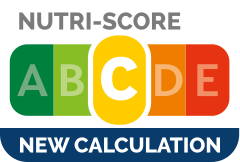 Average nutritional quality
Nutri-Score data warning
Nutrient levels
Fat in moderate quantity (3.6%)
Saturated fat in moderate quantity (2.2%)
Sugars in low quantity (4.8%)
Salt in low quantity (0.09%)
Nutrition label

Nutrition facts
| Nutrition facts | As sold for 100 g / 100 ml | Compared to: Whole milk UHT |
|---|---|---|
| Energy | 271 kJ (65 kcal) | 266.763 kJ (63 kcal) (+2%) |
| Fat | 3.6 g | 3.522 g (+2%) |
| Saturated fat | 2.2 g | 2.233 g (-1%) |
| Carbohydrates | 4.8 g | 4.775 g (+1%) |
| Sugars | 4.8 g | 4.741 g (+1%) |
| Dietary fiber | 0 g | ? |
| Proteins | 3.3 g | 3.234 g (+2%) |
| Salt | 0.09 g | 0.109 g (-17%) |
| Sodium | ~ 0.036 g | 0.043 g (-16%) |
| Calcium | 0.12 g | 119.709 mg (~0%) |
| Fruits, vegetables and legumes | ~ 0 % | ? |
Nutrition facts (Detailed data)
| Nutrition facts | As sold for 100 g / 100 ml | As sold Per 100 g (manufacturer) | As sold Per 100 ml (manufacturer) | As sold Per 100 ml (packaging) | As sold Per 100 g (estimate) |
|---|---|---|---|---|---|
| Energy | 271 kJ (65 kcal) | 271 kJ (65 kcal) | 271 kJ (65 kcal) | 271 kJ (65 kcal) | ~ 273 kJ (65 kcal) |
| Fat | 3.6 g | 3.6 g | 3.6 g | 3.6 g | ~ 3.63 g |
| Saturated fat | 2.2 g | 2.2 g | 2.2 g | 2.2 g | ~ 2.4 g |
| Carbohydrates | 4.8 g | 4.8 g | 4.8 g | 4.8 g | ~ 4.85 g |
| Sugars | 4.8 g | 4.8 g | 4.8 g | 4.8 g | ~ 4.2 g |
| Dietary fiber | 0 g | ? | ? | 0 g | ~ 0 g |
| Proteins | 3.3 g | 3.3 g | 3.3 g | 3.3 g | ~ 3.32 g |
| Salt | 0.09 g | 0.09 g | 0.09 g | 0.09 g | ~ 0.11 g |
| Sodium | ~ 0.036 g | ? | 0.036 g | 0.036 g | ~ 0.0442 g |
| Calcium | 0.12 g | ? | ? | 0.12 g | ~ 0.12 g |
| Fruits, vegetables and legumes | ~ 0 % | ? | ? | ? | ~ 0 % |
Serving size
Ingredients
Ingredients image

Ingredients list
Ingredient information
Allergens
Ingredients analysis
No ingredients containing palm oil.
Contains non-vegan ingredients.
No non-vegetarian ingredients.
Food Processing
NOVA group
 Unprocessed or minimally processed foods
How NOVA works
Additives
Environment
Green-Score, origins bonus, and transportation impact are shown for Worldwide .
Green Score
Overall grade
 Low environmental impact
About Green-Score
Current scope
Life cycle analysis
Average impact of the category
 Milk, whole, UHT • Score: 53/100
Life-cycle reference
Overall environmental impact by stage (PEF)
The overall environmental impact figure (PEF) comes from ADEME's Agribalyse database, for the category: Milk, whole, UHT. Source: ADEME Agribalyse Database.
| Stage | Impact |
|---|---|
| Agriculture | 77.4 % |
| Processing | 1.1 % |
| Packaging | 6.1 % |
| Transportation | 11.8 % |
| Distribution | 3.4 % |
| Consumption | 0.0 % |
Bonuses and maluses
Production system
Origins of ingredients
Packaging impact
Green-Score for this product
Green-Score for this product
Final score: 66/100Final score breakdown
Carbon footprint
Carbon footprint
Climate impact by stage (CO2e)
The carbon emission figure comes from ADEME's Agribalyse database, for the category: Milk, whole, UHT. Source: ADEME Agribalyse Database.
| Stage | Impact |
|---|---|
| Agriculture | 76.0 % |
| Processing | 0.8 % |
| Packaging | 6.6 % |
| Transportation | 15.1 % |
| Distribution | 1.1 % |
| Consumption | 0.0 % |
Packaging
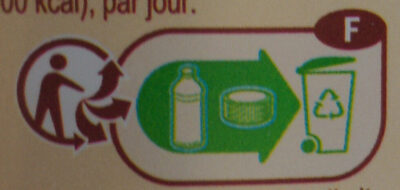
Packaging impact
Packaging materials
| Material | % | Packaging weight | Packaging weight per 100 g of product |
|---|---|---|---|
| Plastic | 100 % | 302 g | 30.2 g |
| Total | 100 % | 302 g | 30.2 g |
Packaging components
| Shape | Material | Recycling | Impact |
|---|---|---|---|
| 1 Bottle CAP | Hdpe 2 High Density Polyethylene | Recycle | Medium |
| 1 Bottle (1L) | Rpet Recycled Polyethylene Terephthalate | Recycle | Low |
| 1 Label | Plastic | Recycle | High |
Declared packaging
Transportation
Manufacturing locations
Origins of ingredients
Origins breakdown
| Origin | Percent of ingredients | Impact |
|---|---|---|
| France | 100 % | High |
Forest footprint
Forest footprint
Deforestation risk details
Additional information
- Other information
- Le lait Carrefour Bio provient de vaches élevées dans le respect des cycles naturels et du bien-être animal propre à l'agriculture biologique: accès privilégié aux pâturages et aux fourrages, priorité aux thérapies naturelles pour soigner les animaux, alimentation provenant principalement de l'exploitation ou de la région où les vaches vivent.
- Conservation conditions
- Avant ouverture, vous pouvez conserver ce lait à température ambiante, dans un endroit frais et sec. Après ouverture, conservez votre bouteille au réfrigérateur entre 0°C et +6°C et consommez-la dans les 5 jours. À consommer de préférence avant le : voir la date sur le haut de la bouteille.
- Customer service
- Interdis - TSA 91431 - 91343 MASSY Cedex - France
Data Source
Product data comes from Open Food Facts. Food Benchmark also adds translations, category comparisons and explanatory calculations.
The database is licensed under ODbL 1.0, individual contents under DbCL 1.0, and product photos under CC BY-SA 3.0.
Product added on September 15, 2012 at 1:33:10 PM UTC by openfoodfacts-contributors .
Last edit on March 18, 2026 at 4:25:53 AM UTC by org-carrefour .
Product page also edited by agataah, beniben, carrefour, corentinglh, date-limite-app, driveoff, ecoscore-impact-estimator, fabe56, jacob80, jeremy64, kiliweb, laura-chaud, manu1400, mcartier, morganesh, navig491, openfoodfacts-contributors, org-carrefour, packbot, pomme67, quechoisir, raphael0202, roboto-app, tacinte, tacite, teolemon.
Source List
- Carrefour
- carrefour