

6 toppings Multicolors
Health
Nutrition
Nutri-Score
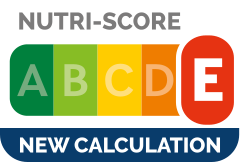 Lower nutritional quality
Nutri-Score data warning
Nutrient levels
Fat in moderate quantity (3.7%)
Saturated fat in moderate quantity (2.5%)
Sugars in high quantity (86%)
Salt in low quantity (0.07%)
Nutrition label

Nutrition facts
| Nutrition facts | As sold for 100 g / 100 ml |
|---|---|
| Energy | 1736 kJ (410 kcal) |
| Fat | 3.7 g |
| Saturated fat | 2.5 g |
| Carbohydrates | 92 g |
| Sugars | 86 g |
| Dietary fiber | 0.9 g |
| Proteins | 1.3 g |
| Salt | 0.07 g |
| Sodium | 0.028 g |
| Fruits, vegetables and legumes | ~ 0.0139883535879548 % |
Nutrition facts (Detailed data)
| Nutrition facts | As sold for 100 g / 100 ml | As sold Per 100 g (packaging) | As sold Per 100 g (estimate) |
|---|---|---|---|
| Energy | 1736 kJ (410 kcal) | 1736 kJ (410 kcal) | ~ 1669.67481113322 kJ (392 kcal) |
| Fat | 3.7 g | 3.7 g | ~ 1.95756827962189 g |
| Saturated fat | 2.5 g | 2.5 g | ~ 0.418741458445711 g |
| Carbohydrates | 92 g | 92 g | ~ 95.7202964847486 g |
| Sugars | 86 g | 86 g | ~ 87.6936451090707 g |
| Dietary fiber | 0.9 g | 0.9 g | ~ 0.231890340651406 g |
| Proteins | 1.3 g | 1.3 g | ~ 0.728107730247247 g |
| Salt | 0.07 g | 0.07 g | ~ 0.0255248844486241 g |
| Sodium | 0.028 g | 0.028 g | ~ 0.0104167226123562 g |
| Fruits, vegetables and legumes | ~ 0.0139883535879548 % | ? | ~ 0.0139883535879548 % |
Ingredients
Ingredients image

Ingredients list
Ingredient information
Added sugars
Allergens
Traces
Ingredients analysis
No ingredients containing palm oil.
Contains non-vegan ingredients.
Unrecognized: fr:jus-concentre-de-betterave-rouge
Contains non-vegetarian ingredients.
Unrecognized: fr:jus-concentre-de-betterave-rouge
Food Processing
NOVA group
 Ultra-processed food and drink products
Elements that indicate the product is in NOVA group 4
How NOVA works
Additives
E14XX - Modified StarchEmulsifierStabiliserThickener
No additive description is available yet.
E322 - LecithinsAntioxidantEmulsifier
Lecithins are natural compounds commonly used in the food industry as emulsifiers and stabilizers.
Extracted from sources like soybeans and eggs, lecithins consist of phospholipids that enhance the mixing of oil and water, ensuring smooth textures in various products like chocolates, dressings, and baked goods.
They do not present any known health risks.
E330 - Citric acidAntioxidantSequestrant
Citric acid is a natural organic acid found in citrus fruits such as lemons, oranges, and limes.
It is widely used in the food industry as a flavor enhancer, acidulant, and preservative due to its tart and refreshing taste.
Citric acid is safe for consumption when used in moderation and is considered a generally recognized as safe (GRAS) food additive by regulatory agencies worldwide.
E414 - Acacia gumCarrierEmulsifierStabiliserThickener
Gum arabic, also known as acacia gum, arabic gum, gum acacia, acacia, Senegal gum and Indian gum, and by other names, is a natural gum consisting of the hardened sap of various species of the acacia tree. Originally, gum arabic was collected from Acacia nilotica which was called the "gum arabic tree"; in the present day, gum arabic is collected from acacia species, predominantly Acacia senegal and Vachellia (Acacia) seyal; the term "gum arabic" does not indicate a particular botanical source. In a few cases so‐called "gum arabic" may not even have been collected from Acacia species, but may originate from Combretum, Albizia or some other genus. Producers harvest the gum commercially from wild trees, mostly in Sudan (80%) and throughout the Sahel, from Senegal to Somalia—though it is historically cultivated in Arabia and West Asia. Gum arabic is a complex mixture of glycoproteins and polysaccharides. It is the original source of the sugars arabinose and ribose, both of which were first discovered and isolated from it, and are named after it. Gum arabic is soluble in water. It is edible, and used primarily in the food industry as a stabilizer, with EU E number E414. Gum arabic is a key ingredient in traditional lithography and is used in printing, paint production, glue, cosmetics and various industrial applications, including viscosity control in inks and in textile industries, though less expensive materials compete with it for many of these roles. While gum arabic is now produced throughout the African Sahel, it is still harvested and used in the Middle East.
E901 - white and yellow beeswaxCarrierEmulsifierStabiliserThickener
Beeswax (cera alba) is a natural wax produced by honey bees of the genus Apis. The wax is formed into "scales" by eight wax-producing glands in the abdominal segments of worker bees, which discard it in or at the hive. The hive workers collect and use it to form cells for honey storage and larval and pupal protection within the beehive. Chemically, beeswax consists mainly of esters of fatty acids and various long-chain alcohols. Beeswax has long-standing applications in human food and flavoring. For example, it is used as a glazing agent or as a light/heat source. It is edible, in the sense of having similar negligible toxicity to plant waxes, and is approved for food use in most countries and the European Union under the E number E901. However, the wax monoesters in beeswax are poorly hydrolysed in the guts of humans and other mammals, so they have insignificant nutritional value. Some birds, such as honeyguides, can digest beeswax. Beeswax is the main diet of wax moth larvae.
E903 - Carnauba waxCarrier
Carnauba (; Portuguese: carnaúba [kaʁnɐˈubɐ]), also called Brazil wax and palm wax, is a wax of the leaves of the palm Copernicia prunifera (Synonym: Copernicia cerifera), a plant native to and grown only in the northeastern Brazilian states of Piauí, Ceará, Maranhão, Bahia, and Rio Grande do Norte. It is known as "queen of waxes" and in its pure state, usually comes in the form of hard yellow-brown flakes. It is obtained from the leaves of the carnauba palm by collecting and drying them, beating them to loosen the wax, then refining and bleaching the wax.
E904 - Shellac
Shellac is a resin secreted by the female lac bug, on trees in the forests of India and Thailand. It is processed and sold as dry flakes (pictured) and dissolved in alcohol to make liquid shellac, which is used as a brush-on colorant, food glaze and wood finish. Shellac functions as a tough natural primer, sanding sealant, tannin-blocker, odour-blocker, stain, and high-gloss varnish. Shellac was once used in electrical applications as it possesses good insulation qualities and it seals out moisture. Phonograph and 78 rpm gramophone records were made of it until they were replaced by vinyl long-playing records from the 1950s onwards. From the time it replaced oil and wax finishes in the 19th century, shellac was one of the dominant wood finishes in the western world until it was largely replaced by nitrocellulose lacquer in the 1920s and 1930s.
Environment
Green-Score, origins bonus, and transportation impact are shown for Worldwide .
Green Score
Overall grade
 Unknown environmental impact
About Green-Score
Current scope
Green-Score availability
Bonuses and maluses
Declared origins
Packaging impact
Packaging

Packaging impact
Packaging components
| Shape | Material | Recycling | Impact |
|---|---|---|---|
| 1 Sleeve | Cardboard | Recycle | Low |
| 6 Bottle CAP | Plastic | Discard | High |
| 6 Tube | Plastic | Discard | High |
Transportation
Declared origins
Forest footprint
Forest footprint
Deforestation risk details
Additional information
- Conservation conditions
- À conserver à l'abri de la chaleur et de l'humidité. Bien refermer les tubes après utilisation. Pour une dégustation optimale, à consommer de préférence avant le : voir sur le côté du pack.
- Customer service
- Interdis - TSA 91431 - 91343 MASSY Cedex - France
Data Source
Product data comes from Open Food Facts. Food Benchmark also adds translations, category comparisons and explanatory calculations.
The database is licensed under ODbL 1.0, individual contents under DbCL 1.0, and product photos under CC BY-SA 3.0.
Product added on January 9, 2019 at 1:53:01 PM UTC by kiliweb .
Last edit on March 14, 2026 at 3:12:11 AM UTC by new-nutrition-bot .
Product page also edited by alex102010, chevalstar, driveoff, foodless, kiliweb, leane, n0ub4x, new-nutrition-bot, openfoodfacts-contributors, org-carrefour, roboto-app, segundo, teolemon, yogoff, yuka.R28xYk5LTUVvZWdubFBjU29SemMzUEIxNnJHbmNreVNOOHNqSVE9PQ, yuka.sY2b0xO6T85zoF3NwEKvlkYWCPfmoynCBj_jkkPR3NCAP5PQTvh8w5b7Gqs.
Source List
- carrefour