

Cœurs de filets de Merlu Blanc du Cap
Health
Nutrition
Nutri-Score
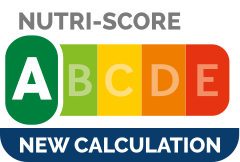 Very good nutritional quality
Nutri-Score data warning
Nutrient levels
Fat in low quantity (0.7%)
Saturated fat in low quantity (0.2%)
Sugars in low quantity (0.5%)
Salt in moderate quantity (0.5%)
Nutrition label

Nutrition facts
| Nutrition facts | As sold for 100 g / 100 ml | Compared to: Frozen hake fillet |
|---|---|---|
| Energy | 315 kJ (74 kcal) | 388.418 kJ (92 kcal) (-19%) |
| Fat | 0.7 g | 2.28 g (-69%) |
| Saturated fat | 0.2 g | 0.452 g (-56%) |
| Carbohydrates | 0.5 g | 2.102 g (-76%) |
| Sugars | 0.5 g | 0.297 g (+68%) |
| Dietary fiber | 0.5 g | ? |
| Proteins | 17 g | 15.486 g (+10%) |
| Salt | 0.5 g | 0.397 g (+26%) |
| Sodium | 0.2 g | 0.157 g (+27%) |
| Fruits, vegetables and legumes | ~ 0 % | ? |
Nutrition facts (Detailed data)
| Nutrition facts | As sold for 100 g / 100 ml | As sold Per 100 g (packaging) | As sold Per 100 g (estimate) |
|---|---|---|---|
| Energy | 315 kJ (74 kcal) | 315 kJ (74 kcal) | ~ 78 kJ (18 kcal) |
| Fat | 0.7 g | 0.7 g | ~ 1.52 g |
| Saturated fat | 0.2 g | 0.2 g | ? |
| Carbohydrates | 0.5 g | 0.5 g | ~ 0 g |
| Sugars | 0.5 g | 0.5 g | ~ 0 g |
| Dietary fiber | 0.5 g | 0.5 g | ~ 0 g |
| Proteins | 17 g | 17 g | ~ 16.1 g |
| Salt | 0.5 g | 0.5 g | ~ 0.28 g |
| Sodium | 0.2 g | 0.2 g | ~ 0.0875 g |
| Fruits, vegetables and legumes | ~ 0 % | ? | ~ 0 % |
Ingredients
Ingredients image

Ingredients list
Ingredient information
Allergens
Ingredients analysis
No ingredients containing palm oil.
Contains non-vegan ingredients.
Contains non-vegetarian ingredients.
Food Processing
NOVA group
 Processed foods
Elements that indicate the product is in NOVA group 3
How NOVA works
Additives
Environment
Green-Score, origins bonus, and transportation impact are shown for Worldwide .
Green Score
Overall grade
 Very high environmental impact
About Green-Score
Current scope
Life cycle analysis
Average impact of the category
Hake, fillet, frozen, raw • Score: 26/100Life-cycle reference
Overall environmental impact by stage (PEF)
The overall environmental impact figure (PEF) comes from ADEME's Agribalyse database, for the category: Hake, fillet, frozen, raw. Source: ADEME Agribalyse Database.
| Stage | Impact |
|---|---|
| Agriculture | 83.7 % |
| Processing | 4.5 % |
| Packaging | 1.2 % |
| Transportation | 7.8 % |
| Distribution | 1.4 % |
| Consumption | 0.8 % |
Bonuses and maluses
Origins of ingredients
Packaging impact
Green-Score for this product
Green-Score for this product
Final score: 20/100Final score breakdown
Carbon footprint
Carbon footprint
Climate impact by stage (CO2e)
The carbon emission figure comes from ADEME's Agribalyse database, for the category: Hake, fillet, frozen, raw. Source: ADEME Agribalyse Database.
| Stage | Impact |
|---|---|
| Agriculture | 75.2 % |
| Processing | 5.9 % |
| Packaging | 2.8 % |
| Transportation | 14.9 % |
| Distribution | 0.9 % |
| Consumption | 0.3 % |
Packaging
Packaging impact
Packaging components
| Shape | Material | Recycling | Impact |
|---|---|---|---|
| Unknown | Cardboard | Unknown | Low |
Declared packaging
Data precision
Transportation
Origins of ingredients
Origins breakdown
| Origin | Percent of ingredients | Impact |
|---|---|---|
| Namibia | 100 % | High |
Forest footprint
Forest footprint
Deforestation risk details
Additional information
- Preparation
- Ce produit est à consommer cuit. Sans décongélation préalable. Au four à micro-ondes : déposer les cœurs de filets de merlu dans un plat. Saler et poivrer. Laisser cuire 6 à 8 minutes à 900 Watts. Au court bouillon : plonger les cœurs de filets de merlu dans un court-bouillon froid. Porter à ébullition et laisser frémir 8 minutes environ. - À la poêle : dans un mélange de beurre et d'huile, faire dorer les cœurs de filets de merlu 8 à 10 minutes à feu vif, en les retournant régulièrement. Poivrer et saler. Puis prolonger la cuisson 2 à 3 minutes à feu doux en continuant de les retourner de temps en temps. Au four traditionnel: après préchauffage, faire cuire les cœurs de filets de merlu 25 minutes à 200 °C (th. 6-7) avec une noix de beurre ou de l'huile d'olive.
Data Source
Product data comes from Open Food Facts. Food Benchmark also adds translations, category comparisons and explanatory calculations.
The database is licensed under ODbL 1.0, individual contents under DbCL 1.0, and product photos under CC BY-SA 3.0.
Product added on March 3, 2017 at 11:37:09 AM UTC by kiliweb .
Last edit on March 14, 2026 at 10:11:44 PM UTC by new-nutrition-bot .
Product page also edited by aurelie03410, autorotate-bot, date-limite-app, foodvisor, kiliweb, macrofactor, new-nutrition-bot, openfoodfacts-contributors, org-scamark, packbot, quentinbrd, sasca, scamark, tacite-mass-editor, teolemon, yuka.KLtrFfCtNcgTPcD96b4d3geWDc28H6BDH1UGog, yuka.LuEfIYCMDe0xQffX668P-mW4NOzbIP9dGWQMog, yuka.UK5iIMK1R_IkJvbj04k6xzOjDOLgJP95SW8Bog, yuka.VzRBbVFLdGFxTlFCZ2M4aTJSZkk4UE5Kd0lHWWIwMlNCZWNLSWc9PQ, yuka.Zm9JY0ZZc3dtOVlKaXZRODBTM29vdDE0NlpHVkJXcVpMck13SVE9PQ.
Source List
- Scamark
- scamark