

Cancoillotte à l'ailIndication Géographique Protégée
Health
Nutrition
Nutri-Score
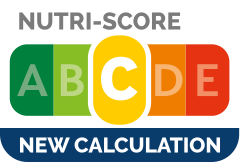 Average nutritional quality
Nutri-Score data warning
Nutrient levels
Fat in moderate quantity (11%)
Saturated fat in high quantity (7.7%)
Sugars in low quantity (0.5%)
Salt in moderate quantity (1.5%)
Nutrition label

Nutrition facts
| Nutrition facts | As sold for 100 g / 100 ml | Compared to: Cancoillottes |
|---|---|---|
| Energy | 663 kJ (159 kcal) | 634.774 kJ (152 kcal) (+4%) |
| Fat | 11 g | 10.096 g (+9%) |
| Saturated fat | 7.7 g | 6.645 g (+16%) |
| Carbohydrates | 0.8 g | 0.768 g (+4%) |
| Sugars | < 0.5 g | 0.382 g (+31%) |
| Dietary fiber | 0.5 g | ? |
| Proteins | 14 g | 14.562 g (-4%) |
| Salt | 1.5 g | 1.417 g (+6%) |
| Sodium | 0.6 g | 0.564 g (+6%) |
| Fruits, vegetables and legumes | ~ 2.5 % | ? |
Nutrition facts (Detailed data)
| Nutrition facts | As sold for 100 g / 100 ml | As sold Per 100 g (manufacturer) | As sold Per 100 g (packaging) | As sold Per 100 g (estimate) |
|---|---|---|---|---|
| Energy | 663 kJ (159 kcal) | 663 kJ (159 kcal) | 663 kJ (159 kcal) | ? |
| Fat | 11 g | 11 g | 11 g | ? |
| Saturated fat | 7.7 g | 7.7 g | 7.7 g | ? |
| Carbohydrates | 0.8 g | 0.8 g | 0.8 g | ? |
| Sugars | < 0.5 g | < 0.5 g | 0.5 g | ? |
| Dietary fiber | 0.5 g | 0.5 g | 0.5 g | ? |
| Proteins | 14 g | 14 g | 14 g | ? |
| Salt | 1.5 g | 1.5 g | 1.5 g | ? |
| Sodium | 0.6 g | 0.6 g | 0.6 g | ? |
| Fruits, vegetables and legumes | ~ 2.5 % | ? | ? | ~ 2.5 % |
Serving size
Ingredients
Ingredients image

Ingredients list
Ingredient information
Allergens
Ingredients analysis
No ingredients containing palm oil.
Unrecognized: fr:metton, fr:citrate-de-sodium-sel, fr:elabore-a-partir-de-lait, fr:conformement-au-cahier-des-charges-de-la-cancoillotte
Contains non-vegan ingredients.
Unrecognized: fr:citrate-de-sodium-sel, fr:elabore-a-partir-de-lait, fr:conformement-au-cahier-des-charges-de-la-cancoillotte
Vegetarian status unknown
Unrecognized: fr:citrate-de-sodium-sel, fr:elabore-a-partir-de-lait, fr:conformement-au-cahier-des-charges-de-la-cancoillotte
Food Processing
NOVA group
 Processed foods
Elements that indicate the product is in NOVA group 3
How NOVA works
Additives
E331 - Sodium citratesEmulsifierSequestrantStabiliser
DISODIUM CITRATE, more properly, disodium hydrogen citrate, is an acid salt of citric acid with the chemical formula Na2C6H6O7. It is used as an antioxidant in food and to improve the effects of other antioxidants. It is also used as an acidity regulator and sequestrant. Typical products include gelatin, jam, sweets, ice cream, carbonated beverages, milk powder, wine, and processed cheeses.
Environment
Green-Score, origins bonus, and transportation impact are shown for Worldwide .
Green Score
Overall grade
 High environmental impact
About Green-Score
Current scope
Life cycle analysis
Average impact of the category
 Camembert cheese, from cow's milk • Score: 54/100
Life-cycle reference
Overall environmental impact by stage (PEF)
The overall environmental impact figure (PEF) comes from ADEME's Agribalyse database, for the category: Camembert cheese, from cow's milk. Source: ADEME Agribalyse Database.
| Stage | Impact |
|---|---|
| Agriculture | 84.7 % |
| Processing | 5.0 % |
| Packaging | 4.0 % |
| Transportation | 3.7 % |
| Distribution | 1.9 % |
| Consumption | 0.5 % |
Bonuses and maluses
Origins of ingredients
Packaging impact
Green-Score for this product
Green-Score for this product
Final score: 39/100Final score breakdown
Carbon footprint
Carbon footprint
Climate impact by stage (CO2e)
The carbon emission figure comes from ADEME's Agribalyse database, for the category: Camembert cheese, from cow's milk. Source: ADEME Agribalyse Database.
| Stage | Impact |
|---|---|
| Agriculture | 86.0 % |
| Processing | 4.3 % |
| Packaging | 4.1 % |
| Transportation | 4.8 % |
| Distribution | 0.7 % |
| Consumption | 0.1 % |
Packaging
Packaging impact
Packaging components
| Shape | Material | Recycling | Impact |
|---|---|---|---|
| POT | Plastic | Unknown | High |
Declared packaging
Transportation
Manufacturing locations
Origins of ingredients
Origins breakdown
| Origin | Percent of ingredients | Impact |
|---|---|---|
| Unknown | 97 % | High |
| France | 3 % | High |
Forest footprint
Forest footprint
Deforestation risk details
Additional information
- Preparation
- Conseils de dégustation:Cette cancoillotte à l'ail se consomme froide ou chaude.Au micro-ondes : enlever le couvercle, retirer complètement l'opercule en aluminium et réchauffer à 800W, 30 secondes pour une texture onctueuse et 1 minute pour une texture fluide.
- Conservation conditions
- Conseils de conservation avant ouverture : à conserver entre +2°C et +8°C.Conseils de conservation après ouverture : à conserver entre +2°C et +8°C et à consommer rapidement.
Data Source
Product data comes from Open Food Facts. Food Benchmark also adds translations, category comparisons and explanatory calculations.
The database is licensed under ODbL 1.0, individual contents under DbCL 1.0, and product photos under CC BY-SA 3.0.
Product added on April 1, 2013 at 9:15:29 AM UTC by nathalie .
Last edit on February 19, 2026 at 9:01:30 AM UTC by org-auchan-apaw .
Product page also edited by autorotate-bot, date-limite-app, ecoscore-impact-estimator, kiliweb, loverock, nathalie, openfoodfacts-contributors, org-auchan-apaw, packbot, quechoisir, roboto-app, segundo, tulipe, youplaboum, yuka.U3FzZk9vdFEvUGN6bXNWbW8wM2wrY05VbjUyUGMzeWVKY2xCSVE9PQ, yuka.VksxYVBLQW1qTnNsblBGaC9qRFU4TWhPNHNLb1dWT3ZKcm9KSVE9PQ, yuka.sY2b0xO6T85zoF3NwEKvlkcWVeGHmT7PMwLStF2u-dOgcJ3nT8Mi7Kr8bao, yuka.sY2b0xO6T85zoF3NwEKvlkpqbvf-8xH1bjf6h2iC-e-NNZm0f-FCuYvzM6s, yuka.sY2b0xO6T85zoF3NwEKvlmlXTOCDq2rYFTLTkhyT-Py0A77zOeFTvtTdFas.
Source List
- auchan-apaw