ProductsAuchanQuiche lorraine
Quiche lorraine
Barcode 3596710444892
Auchan, Pouce

Quiche lorraine

0.4 kg
BARCODE:3596710444892
COMMON NAME:Quiche Lorraine
PACKAGER CODE:FR 01.451.003 EC,EMB 01451A
CATEGORIES:Meals, Pizzas Pies And Quiches, Refrigerated Foods, Refrigerated Meals, Quiches, Lorraine Quiche, Fresh Pizzas Pies And Quiches
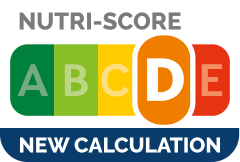
LABELS:Nutriscore, Nutriscore Grade D
PACKAGING:Plastic, Cardboard, Fresh, Protective Gas
ORIGIN:European Union, Switzerland
MANUFACTURING:France
COUNTRIES:France, World
STORES:Auchan

Health

Nutrition

Nutri-Score

DLower nutritional quality

Nutri-Score data warning

Warning: the amount of fruits, vegetables and nuts is not specified on the label, it was estimated from the list of ingredients: 0

Nutrient levels

Fat in moderate quantity (12%)
What you need to know • A high consumption of fat, especially saturated fats, can raise cholesterol, which increases the risk of heart diseases. Recommendation: Limit the consumption of fat and saturated fat • Choose products with lower fat and saturated fat content. Source: National Health Service UK (NHS) - Fat: the facts
Saturated fat in high quantity (5.8%)
What you need to know • A high consumption of fat, especially saturated fats, can raise cholesterol, which increases the risk of heart diseases. Recommendation: Limit the consumption of fat and saturated fat • Choose products with lower fat and saturated fat content. Source: National Health Service UK (NHS) - Fat: the facts
Sugars in low quantity (2.4%)
What you need to know • A high consumption of sugar can cause weight gain and tooth decay. It also augments the risk of type 2 diabetes and cardio-vascular diseases. Recommendation: Limit the consumption of sugar and sugary drinks • Sugary drinks (such as sodas, fruit beverages, and fruit juices and nectars) should be limited as much as possible (no more than 1 glass a day). • Choose products with lower sugar content and reduce the consumption of products with added sugars. Source: National Health Service UK (NHS) - Sugar: the facts
Salt in moderate quantity (1.1%)
What you need to know • A high consumption of salt (or sodium) can cause raised blood pressure, which can increase the risk of heart disease and stroke. • Many people who have high blood pressure do not know it, as there are often no symptoms. • Most people consume too much salt (on average 9 to 12 grams per day), around twice the recommended maximum level of intake. Recommendation: Limit the consumption of salt and salted food • Reduce the quantity of salt used when cooking, and don't salt again at the table. • Limit the consumption of salty snacks and choose products with lower salt content. Source: World Health Organization (WHO) - Fact sheet - Salt reduction Source: National Health Service UK (NHS) - Salt: the facts

Nutrition label

Quiche lorraine nutrition label

Nutrition facts

Nutrition factsAs sold for 100 g / 100 mlCompared to: Fresh pizzas pies and quiches
Energy889 kJ (213 kcal)1,053.703 kJ (251 kcal) (-16%)
Fat12 g11.474 g (+5%)
Saturated fat5.8 g6.011 g (-4%)
Carbohydrates19 g27.088 g (-30%)
Sugars2.4 g2.569 g (-7%)
Dietary fiber0.6 g?
Proteins6.9 g8.859 g (-22%)
Salt1.1 g1.095 g (~0%)
Sodium0.44 g0.442 g (~0%)
Fruits, vegetables and legumes~ 0.03125 %?

Nutrition facts (Detailed data)

Nutrition factsAs sold for 100 g / 100 mlAs sold Per 100 g (packaging)As sold Per 100 g (estimate)
Energy889 kJ (213 kcal)889 kJ (213 kcal)?
Fat12 g12 g?
Saturated fat5.8 g5.8 g?
Carbohydrates19 g19 g?
Sugars2.4 g2.4 g?
Dietary fiber0.6 g0.6 g?
Proteins6.9 g6.9 g?
Salt1.1 g1.1 g?
Sodium0.44 g0.44 g?
Fruits, vegetables and legumes~ 0.03125 %?~ 0.03125 %

Serving size

200 g (200 g)

Ingredients

Ingredients image

Quiche lorraine ingredients image

Ingredients list

Garniture 65.9% : eau, OEUFS </span>entiers 16,2%, lardons cuits fumés 5,9% [poitrine de porc 4,9%, eau, sirop de glucose,sel, arômes naturels, légumes déshydratés en poudre (blette, carotte), ferments], fromage blanc (LAIT) 4.4%, crème fraîche (LAIT) 3.4%, amidon de maïs, LAIT </span>écrémé en poudre, sel, poivre, muscade. Pâte feuilletée 34,1% : farine de BLÉ, eau, margarine végétale [huiles et graisses végétales (palme, colza), eau, émulsifiants : mono et diglycérides d'acides gras, sel, acidifiant : acide citrique], sel, levure désactivée. Pourcentages exprimes sur le total de la recette. Elaboré à partir de porc origine France et de lait origine UE. Traces éventuelles de poissons, crustacés, mollusques, moutarde et soja.

Ingredient information

Filling
65.9%
Water
65.9% (estimate)
Whole Egg
16.2%
Smoked Cooked Lardoons
5.9%
Pork Breast
4.9%
Water
0.5% (estimate)
Glucose Syrup
0.25% (estimate)
Salt
0.13% (estimate)
Natural Flavouring
0.06% (estimate)
Legume Deshydrate
0.03% (estimate)
Chard
0.02% (estimate)
Carrot
0.02% (estimate)
Ferment
0.03% (estimate)
Fromage Blanc
4.4%
Fresh Cream
3.4%
Corn Starch
2.1% (estimate)
Skimmed Milk Powder
1.05% (estimate)
Salt
0.52% (estimate)
Pepper
0.26% (estimate)
Nutmeg
0.13% (estimate)
Pate Feuilletee
34.1%
Wheat Flour
0.13% (estimate)

Added sugars

Contains added sugars (0%) Added sugars: glucose syrup Quantity of added sugars: 0%

Allergens

EggsGlutenMilk

Traces

CrustaceansFishMolluscsMustardSoybeans

Ingredients analysis

Palm oil free
No

Contains ingredients containing palm oil.

Vegan
No

Contains non-vegan ingredients.

Unrecognized: fr:elabore-a-partir-de-porc

Vegetarian
No

Contains non-vegetarian ingredients.

Unrecognized: fr:elabore-a-partir-de-porc


Food Processing

NOVA group

4Ultra-processed food and drink products

Elements that indicate the product is in NOVA group 4

Additives
E471 - Mono- and diglycerides of fatty acids
Ingredients
Emulsifier
Ingredients
Flavouring
Ingredients
Glucose
Ingredients
Glucose Syrup

How NOVA works

The NOVA classification assigns food products into 4 groups based on their degree of processing: 1. Unprocessed or minimally processed foods 2. Processed culinary ingredients 3. Processed foods 4. Ultra-processed food and drink products

Additives

E330 - Citric acidAntioxidantSequestrant

Citric acid is a natural organic acid found in citrus fruits such as lemons, oranges, and limes.

It is widely used in the food industry as a flavor enhancer, acidulant, and preservative due to its tart and refreshing taste.

Citric acid is safe for consumption when used in moderation and is considered a generally recognized as safe (GRAS) food additive by regulatory agencies worldwide.

E471 - Mono- and diglycerides of fatty acidsEmulsifierStabiliser

Mono- and diglycerides of fatty acids (E471), are food additives commonly used as emulsifiers in various processed foods.

These compounds consist of glycerol molecules linked to one or two fatty acid chains, which help stabilize and blend water and oil-based ingredients. E471 enhances the texture and shelf life of products like margarine, baked goods, and ice cream, ensuring a smooth and consistent texture.

It is generally considered safe for consumption within established regulatory limits.

Environment

Green-Score, origins bonus, and transportation impact are shown for Worldwide .

Green Score

Overall grade

EVery high environmental impact

About Green-Score

The Green-Score is an experimental score that summarizes the environmental impacts of food products.

Current scope

The Green-Score was initially developed for France and it is being extended to other European countries. The Green-Score formula is subject to change as it is regularly improved to make it more precise and better suited to each country. Select a country to include the full impact of transportation in the final score.

Life cycle analysis

Average impact of the category

CQuiche Lorraine (eggs and lardoons quiche) • Score: 50/100

Life-cycle reference

Category: Quiche Lorraine (eggs and lardoons quiche) PEF environmental score: 0.55 Climate change impact: 4.56 kg CO2 eq / kg product The overall environmental impact figure (PEF) comes from ADEME's Agribalyse database, for the category: Quiche Lorraine (eggs and lardoons quiche). Source: ADEME Agribalyse Database.

Overall environmental impact by stage (PEF)

The overall environmental impact figure (PEF) comes from ADEME's Agribalyse database, for the category: Quiche Lorraine (eggs and lardoons quiche). Source: ADEME Agribalyse Database.

StageImpact
Agriculture71.2 %
Processing8.3 %
Packaging8.4 %
Transportation3.9 %
Distribution1.8 %
Consumption6.5 %

Bonuses and maluses

Origins of ingredients

Declared origins: European Union, Switzerland Origins malus: 0 Transportation (Worldwide): 0 Environmental policy adjustment: 0 Select a country to include the full impact of transportation.

Threatened species risk

Contains ingredients that may threaten species or ecosystems, such as palm oil.

Packaging impact

Packaging with a medium impact Malus: -11 Packaging score: -8

Green-Score for this product

Green-Score for this product

EFinal score: 29/100

Final score breakdown

Life cycle analysis score: 50 Sum of bonuses and maluses: -21 Final score: 29/100

Carbon footprint

Carbon footprint

Equivalent to driving 2.4 km in a petrol car. 456 g CO2e per 100g of product. Reference category: Quiche Lorraine (eggs and lardoons quiche). The carbon emission figure comes from ADEME's Agribalyse database, for the category: Quiche Lorraine (eggs and lardoons quiche). Source: ADEME Agribalyse Database.

Climate impact by stage (CO2e)

The carbon emission figure comes from ADEME's Agribalyse database, for the category: Quiche Lorraine (eggs and lardoons quiche). Source: ADEME Agribalyse Database.

StageImpact
Agriculture75.2 %
Processing5.5 %
Packaging10.1 %
Transportation6.3 %
Distribution0.9 %
Consumption2.1 %

Packaging

Packaging impact

Packaging with a medium impact Malus: -11 Packaging score: -8

Packaging components

ShapeMaterialRecyclingImpact
UnknownPlasticUnknownHigh
UnknownCardboardUnknownLow

Declared packaging

Plastic, Cardboard, Fresh, Protective Gas

Data precision

The packaging information is not sufficiently precise to compute the most accurate packaging impact. Exact shapes and materials of all packaging components help improve the Green-Score.

Transportation

Manufacturing locations

France

Origins of ingredients

Declared origins: European Union, Switzerland Origins malus: 0 Transportation (Worldwide): 0 Environmental policy adjustment: 0 Select a country to include the full impact of transportation.

Origins breakdown

OriginPercent of ingredientsImpact
European Union50 %High
Switzerland50 %High
Unknown0 %High

Forest footprint

Forest footprint

Total forest footprint: 0.01 m2 per kg of food This estimate highlights ingredients that depend on soy-linked animal feed and deforestation risk.

Ingredients linked to forest pressure

IngredientTypePercent in productForest footprint
Whole EGGOeufs Importés16.20 %0.01

Additional information

Preparation
au four:Préchauffer le four à 210°C (thermostat 7) pendant 10 minutes. Enlever la quiche de l'emballage plastique et retirer le moule aluminium. Enfourner la quiche sur une grille à mi-hauteur et réchauffer pendant 20 minutes environ. L'usage du four à micro-ondes est fortement déconseillé.
Conservation conditions
Conseils de conservation avant ouverture : A conserver entre 0°C et 4°C.Conseils de conservation après ouverture : A consommer immédiatement

Data Source

Product data comes from Open Food Facts. Food Benchmark also adds translations, category comparisons and explanatory calculations.

The database is licensed under ODbL 1.0, individual contents under DbCL 1.0, and product photos under CC BY-SA 3.0.

Product added on February 5, 2018 at 6:32:52 PM UTC by kiliweb .

Last edit on March 13, 2026 at 9:01:11 PM UTC by new-nutrition-bot .

Product page also edited by beniben, foodvisor, kiliweb, navig491, new-nutrition-bot, openfoodfacts-contributors, org-auchan-apaw, packbot, quechoisir, roboto-app, spotter, yuka.Wm9RTklQZ09tOE1zbnYwVXhSYnYvUFZIMXJTRWVFV0lKUHRKSUE9PQ, yuka.sY2b0xO6T85zoF3NwEKvllReXPn0sh_lCkb6lV-G9NeAIcXZYs9JvJn5aKo.

Source List

  • auchan-apaw