

Vegan spray topping
Health
Nutrition
Nutri-Score
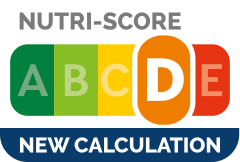 Lower nutritional quality
Nutri-Score data warning
Nutrient levels
Fat in moderate quantity (16%)
Saturated fat in high quantity (16%)
Sugars in moderate quantity (12%)
Salt in low quantity (0.25%)
Nutrition label

Nutrition facts
| Nutrition facts | As sold for 100 ml | Compared to: Pressurized whipped cream substitutes |
|---|---|---|
| Energy | ~ 802.4 kJ (195 kcal) | 914.652 kJ (224 kcal) (-12%) |
| Fat | 16 g | 17.121 g (-7%) |
| Saturated fat | 16 g | 15.182 g (+5%) |
| Carbohydrates | 12 g | 14.709 g (-18%) |
| Sugars | 12 g | 11.152 g (+8%) |
| Dietary fiber | 0.8 g | ? |
| Proteins | 0 g | 0.397 g (-100%) |
| Salt | 0.25 g | 0.103 g (+143%) |
| Sodium | 0.1 g | 0.041 g (+144%) |
| Fruits, vegetables and legumes | ~ 0 % | ? |
Nutrition facts (Detailed data)
| Nutrition facts | As sold for 100 ml | As sold Per 100 ml (packaging) | As sold Per 100 g (estimate) |
|---|---|---|---|
| Energy | ~ 802.4 kJ (195 kcal) | ? (195 kcal) | ? |
| Fat | 16 g | 16 g | ? |
| Saturated fat | 16 g | 16 g | ? |
| Carbohydrates | 12 g | 12 g | ? |
| Sugars | 12 g | 12 g | ? |
| Dietary fiber | 0.8 g | 0.8 g | ? |
| Proteins | 0 g | 0 g | ? |
| Salt | 0.25 g | 0.25 g | ? |
| Sodium | 0.1 g | 0.1 g | ? |
| Fruits, vegetables and legumes | ~ 0 % | ? | ~ 0 % |
Ingredients
Ingredients image

Ingredients list
Ingredient information
Added sugars
Traces
Ingredients analysis
Contains ingredients containing palm oil.
No non-vegan ingredients.
Unrecognized: en:fully-hydrogenated, en:rspo, en:mono-and-diacetyl-tartanic-acid-esters-of-mono-and-diglycerides-of-fatty-acids
No non-vegetarian ingredients.
Unrecognized: en:fully-hydrogenated, en:rspo, en:mono-and-diacetyl-tartanic-acid-esters-of-mono-and-diglycerides-of-fatty-acids
Food Processing
NOVA group
 Ultra-processed food and drink products
Elements that indicate the product is in NOVA group 4
How NOVA works
Additives
E420 - SorbitolHumectantSequestrantStabiliserSweetenerThickener
Sorbitol (), less commonly known as glucitol (), is a sugar alcohol with a sweet taste which the human body metabolizes slowly. It can be obtained by reduction of glucose, which changes the aldehyde group to a hydroxyl group. Most sorbitol is made from corn syrup, but it is also found in nature, for example in apples, pears, peaches, and prunes. It is converted to fructose by sorbitol-6-phosphate 2-dehydrogenase. Sorbitol is an isomer of mannitol, another sugar alcohol; the two differ only in the orientation of the hydroxyl group on carbon 2. While similar, the two sugar alcohols have very different sources in nature, melting points, and uses.
E435 - Polyoxyethylene sorbitan monostearate EFSA overexposure risk: moderateEmulsifierStabiliser
No additive description is available yet.
E464 - Hydroxypropyl methyl celluloseEmulsifierStabiliserThickener
Hypromellose (INN), short for hydroxypropyl methylcellulose (HPMC), is a semisynthetic, inert, viscoelastic polymer used as eye drops, as well as an excipient and controlled-delivery component in oral medicaments, found in a variety of commercial products.As a food additive, hypromellose is an emulsifier, thickening and suspending agent, and an alternative to animal gelatin. Its Codex Alimentarius code (E number) is E464.
E472 - acid esters of mono- and diglycerides of fatty acids
No additive description is available yet.
E942 - Nitrous oxideAntioxidantPropellent Gas
Nitrous oxide, commonly known as laughing gas or nitrous, is a chemical compound, an oxide of nitrogen with the formula N2O. At room temperature, it is a colorless non-flammable gas, with a slight metallic scent and taste. At elevated temperatures, nitrous oxide is a powerful oxidizer similar to molecular oxygen. It is insoluble in water at all temperatures. Nitrous oxide has significant medical uses, especially in surgery and dentistry, for its anaesthetic and pain reducing effects. Its name "laughing gas", coined by Humphry Davy, is due to the euphoric effects upon inhaling it, a property that has led to its recreational use as a dissociative anaesthetic. It is on the World Health Organization's List of Essential Medicines, the most effective and safe medicines needed in a health system. It also is used as an oxidizer in rocket propellants, and in motor racing to increase the power output of engines. Nitrous oxide occurs in small amounts in the atmosphere, but recently has been found to be a major scavenger of stratospheric ozone, with an impact comparable to that of CFCs. It is estimated that 30% of the N2O in the atmosphere is the result of human activity, chiefly agriculture.
Environment
Green-Score, origins bonus, and transportation impact are shown for Worldwide .
Green Score
Overall grade
 Low environmental impact
About Green-Score
Current scope
Life cycle analysis
Average impact of the category
 Liquid cream, light, 15-20% fat, UHT • Score: 82/100
Life-cycle reference
Overall environmental impact by stage (PEF)
The overall environmental impact figure (PEF) comes from ADEME's Agribalyse database, for the category: Liquid cream, light, 15-20% fat, UHT. Source: ADEME Agribalyse Database.
| Stage | Impact |
|---|---|
| Agriculture | 74.0 % |
| Processing | 11.2 % |
| Packaging | 8.3 % |
| Transportation | 4.8 % |
| Distribution | 1.8 % |
| Consumption | 0.0 % |
Bonuses and maluses
Origins of ingredients
Packaging impact
Green-Score for this product
Green-Score for this product
Final score: 71/100Final score breakdown
Carbon footprint
Carbon footprint
Climate impact by stage (CO2e)
The carbon emission figure comes from ADEME's Agribalyse database, for the category: Liquid cream, light, 15-20% fat, UHT. Source: ADEME Agribalyse Database.
| Stage | Impact |
|---|---|
| Agriculture | 76.9 % |
| Processing | 6.6 % |
| Packaging | 9.6 % |
| Transportation | 6.3 % |
| Distribution | 0.6 % |
| Consumption | 0.0 % |
Packaging
Packaging impact
Packaging components
| Shape | Material | Recycling | Impact |
|---|---|---|---|
| 1 Aerosol CAN | Metal | Unknown | High |
| 1 LID OR CAP | Plastic | Unknown | High |
Declared packaging
Data precision
Transportation
Origins of ingredients
Origins breakdown
| Origin | Percent of ingredients | Impact |
|---|---|---|
| Germany | 100 % | Medium |
Forest footprint
Forest footprint
Deforestation risk details
Data Source
Product data comes from Open Food Facts. Food Benchmark also adds translations, category comparisons and explanatory calculations.
The database is licensed under ODbL 1.0, individual contents under DbCL 1.0, and product photos under CC BY-SA 3.0.
Product added on June 11, 2015 at 11:04:09 AM UTC by pierrekilly .
Last edit on March 15, 2026 at 12:06:50 AM UTC by new-nutrition-bot .
Product page also edited by acuario, autorotate-bot, elcoco, emiljunker, fix-missing-lang-bot, grumpf, halal-app-chakib, hedaja, inf, juho-of-consumerium-org, kiliweb, lime1510, macrofactor, mattsches, moon-rabbit, musarana, new-nutrition-bot, openfoodfacts-contributors, packbot, pierrekilly, prepperapp, risajanda, roboto-app, scanbot, teolemon, tuukka, yuka.VzZzNVFmZ1ovL2dIeThFNC9qTFpxdGhabkkycVowYUpLdTBmSVE9PQ, yuka.ZWZrZFNiZ25ndnN3cDgwdTlEMzA1K3d1N3FQeFYyanJBdmN1SVE9PQ, yuka.sY2b0xO6T85zoF3NwEKvlh0cfuPumm2YGATQp2-w6Om1c4zRWI9x3q7_Lqs, yuka.sY2b0xO6T85zoF3NwEKvlhN-SOHdpQ3_bA36hGC75-ivEb3sPoxZvaWgC6s, yuka.sY2b0xO6T85zoF3NwEKvlkl8V_flmjLFahbmtkO14vKxHKHvb9Qv4pnAa6s, yuka.sY2b0xO6T85zoF3NwEKvllAXcYXApgzBOS7UoWiUwoyMMJLESs148qX5PKs, yuka.sY2b0xO6T85zoF3NwEKvllRpcIbSrBDGCDb5pnal9-jVDrvXOY9Dw4joCKs.