ProductsBucuriaBucuria Bomboane Folclor
Bucuria Bomboane Folclor
Barcode 4840095009238
Bucuria

Bucuria Bomboane Folclor

250 g,
BARCODE:4840095009238
COMMON NAME:Bucuria Bomboane Folclor, 250g,
CATEGORIES:Snacks, Sweet Snacks, Cocoa And Its Products, Confectioneries, Chocolate Candies, Bonbons, Bomboane Ciocolata
PACKAGING:Cutie Carton
MANUFACTURING:Chișinău,Republica Moldova
COUNTRIES:Moldova, Romania, Ukraine

Health

Nutrition

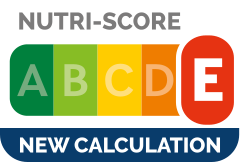
Nutri-Score

ELower nutritional quality

Nutri-Score data warning

Warning: the amount of fruits, vegetables and nuts is not specified on the label, it was estimated from the list of ingredients: 0

Nutrient levels

Fat in moderate quantity (15.9%)
What you need to know • A high consumption of fat, especially saturated fats, can raise cholesterol, which increases the risk of heart diseases. Recommendation: Limit the consumption of fat and saturated fat • Choose products with lower fat and saturated fat content. Source: National Health Service UK (NHS) - Fat: the facts
Saturated fat in high quantity (8.1%)
What you need to know • A high consumption of fat, especially saturated fats, can raise cholesterol, which increases the risk of heart diseases. Recommendation: Limit the consumption of fat and saturated fat • Choose products with lower fat and saturated fat content. Source: National Health Service UK (NHS) - Fat: the facts
Sugars in high quantity (51.1%)
What you need to know • A high consumption of sugar can cause weight gain and tooth decay. It also augments the risk of type 2 diabetes and cardio-vascular diseases. Recommendation: Limit the consumption of sugar and sugary drinks • Sugary drinks (such as sodas, fruit beverages, and fruit juices and nectars) should be limited as much as possible (no more than 1 glass a day). • Choose products with lower sugar content and reduce the consumption of products with added sugars. Source: National Health Service UK (NHS) - Sugar: the facts
Salt in low quantity (0.1%)
What you need to know • A high consumption of salt (or sodium) can cause raised blood pressure, which can increase the risk of heart disease and stroke. • Many people who have high blood pressure do not know it, as there are often no symptoms. • Most people consume too much salt (on average 9 to 12 grams per day), around twice the recommended maximum level of intake. Recommendation: Limit the consumption of salt and salted food • Reduce the quantity of salt used when cooking, and don't salt again at the table. • Limit the consumption of salty snacks and choose products with lower salt content. Source: World Health Organization (WHO) - Fact sheet - Salt reduction Source: National Health Service UK (NHS) - Salt: the facts

Nutrition facts

Nutrition factsAs sold for 100 g / 100 mlCompared to: Bonbons
Energy1792 kJ (428 kcal)2,197.916 kJ (529 kcal) (-18%)
Fat15.9 g32.107 g (-50%)
Saturated fat8.1 g17.257 g (-53%)
Carbohydrates68.3 g52.095 g (+31%)
Sugars51.1 g46.667 g (+9%)
Dietary fiber0 g?
Proteins2.8 g6.022 g (-54%)
Salt0.1 g0.153 g (-35%)
Sodium0.04 g0.061 g (-34%)
Fruits, vegetables and legumes??

Nutrition facts (Detailed data)

Nutrition factsAs sold for 100 g / 100 mlAs sold Per serving (legacy)
Energy1792 kJ (428 kcal)?
Fat15.9 g?
Saturated fat8.1 g?
Carbohydrates68.3 g?
Sugars51.1 g?
Dietary fiber0 g?
Proteins2.8 g?
Salt0.1 g?
Sodium0.04 g?
Fruits, vegetables and legumes??

Ingredients

Ingredients list

sugar, chocolate glaze (sugar, cocoa mass, cocoa butter equivalent (palm oil, shea oil), cocoa powder, emulsifiers: soy lecithin, e476, vanillin), concentrated whole milk with sugar, glucose syrup, vegetable fat (hydrogenated palm oil), apple puree, natural coffee, egg white powder, alcohol, gelatinizing agent agar, acidifying citric acid, vanillin, identical natural coffee flavor, stabilizer invertase, cocoa 11% minimum,

Ingredient information

Sugar
53.33% (estimate)
Glazura De Ciocolata
23.33% (estimate)
Sugar
11.67% (estimate)
Cocoa Paste
5.83% (estimate)
Echivalent Al Untului De Cacao
2.92% (estimate)
Palm Oil
1.46% (estimate)
Ulei Shea
1.46% (estimate)
Cocoa Powder
1.46% (estimate)
Emulsifianti
0.73% (estimate)
Soya Lecithin
0.73% (estimate)
E476
0.36% (estimate)
Vanilina
0.36% (estimate)
Lapte Integral Concentrat Cu Zahar
11.67% (estimate)
Glucose Syrup
5.83% (estimate)
Grasime Vegetala
2.92% (estimate)
Ulei De Palmier Hidrogenat
2.92% (estimate)
Piure De Mere
1.46% (estimate)
Cafea Naturala
0.73% (estimate)
Albus De Oua Praf
0.36% (estimate)
Alcool
0.18% (estimate)
Gelling Agent
0.09% (estimate)
E406
0.09% (estimate)
Acid
0.05% (estimate)
E330
0.05% (estimate)
Vanilina
0.02% (estimate)
Aroma Identic Naturala Cafea
0.01% (estimate)
Stabilizator Invertaza
0.01% (estimate)
Cacao 11 Minim
0.01% (estimate)

Added sugars

Contains added sugars (56%) Added sugars: sugar, glucose syrup Quantity of added sugars: 56%

Allergens

EggsMilkSoybeans

Ingredients analysis

Palm oil free
No

Contains ingredients containing palm oil.

Vegan
Unknown

Vegan status unknown

Unrecognized: ro:glazura-de-ciocolata, ro:echivalent-al-untului-de-cacao, ro:ulei-shea, ro:emulsifianti, ro:vanilina, ro:lapte-integral-concentrat-cu-zahar, ro:grasime-vegetala, ro:ulei-de-palmier-hidrogenat, ro:piure-de-mere, ro:cafea-naturala, ro:albus-de-oua-praf, ro:alcool, ro:vanilina, ro:aroma-identic-naturala-cafea, ro:stabilizator-invertaza, ro:cacao-11-minim

Vegetarian
Unknown

Vegetarian status unknown

Unrecognized: ro:glazura-de-ciocolata, ro:echivalent-al-untului-de-cacao, ro:ulei-shea, ro:emulsifianti, ro:vanilina, ro:lapte-integral-concentrat-cu-zahar, ro:grasime-vegetala, ro:ulei-de-palmier-hidrogenat, ro:piure-de-mere, ro:cafea-naturala, ro:albus-de-oua-praf, ro:alcool, ro:vanilina, ro:aroma-identic-naturala-cafea, ro:stabilizator-invertaza, ro:cacao-11-minim


Food Processing

NOVA group

4Ultra-processed food and drink products

Elements that indicate the product is in NOVA group 4

Additives
E406 - Agar
Additives
E476 - Polyglycerol polyricinoleate
Ingredients
Gelling Agent
Ingredients
Glucose
Ingredients
Glucose Syrup

How NOVA works

The NOVA classification assigns food products into 4 groups based on their degree of processing: 1. Unprocessed or minimally processed foods 2. Processed culinary ingredients 3. Processed foods 4. Ultra-processed food and drink products

Additives

E330 - Citric acidAntioxidantSequestrant

Citric acid is a natural organic acid found in citrus fruits such as lemons, oranges, and limes.

It is widely used in the food industry as a flavor enhancer, acidulant, and preservative due to its tart and refreshing taste.

Citric acid is safe for consumption when used in moderation and is considered a generally recognized as safe (GRAS) food additive by regulatory agencies worldwide.

E406 - AgarCarrierEmulsifierHumectantStabiliserThickener

Agar (pronounced , sometimes ) or agar-agar is a jelly-like substance, obtained from red algae.Agar is a mixture of two components: the linear polysaccharide agarose, and a heterogeneous mixture of smaller molecules called agaropectin. It forms the supporting structure in the cell walls of certain species of algae, and is released on boiling. These algae are known as agarophytes, and belong to the Rhodophyta (red algae) phylum.Agar has been used as an ingredient in desserts throughout Asia, and also as a solid substrate to contain culture media for microbiological work. Agar can be used as a laxative, an appetite suppressant, a vegetarian substitute for gelatin, a thickener for soups, in fruit preserves, ice cream, and other desserts, as a clarifying agent in brewing, and for sizing paper and fabrics.The gelling agent in agar is an unbranched polysaccharide obtained from the cell walls of some species of red algae, primarily from tengusa (Gelidiaceae) and ogonori (Gracilaria). For commercial purposes, it is derived primarily from ogonori. In chemical terms, agar is a polymer made up of subunits of the sugar galactose.

E476 - Polyglycerol polyricinoleateEmulsifier

Polyglycerol polyricinoleate (PGPR), E476, is an emulsifier made from glycerol and fatty acids (usually from castor bean, but also from soybean oil). In chocolate, compound chocolate and similar coatings, PGPR is mainly used with another substance like lecithin to reduce viscosity. It is used at low levels (below 0.5%), and works by decreasing the friction between the solid particles (e.g. cacao, sugar, milk) in molten chocolate, reducing the yield stress so that it flows more easily, approaching the behaviour of a Newtonian fluid. It can also be used as an emulsifier in spreads and in salad dressings, or to improve the texture of baked goods. It is made up of a short chain of glycerol molecules connected by ether bonds, with ricinoleic acid side chains connected by ester bonds. PGPR is a yellowish, viscous liquid, and is strongly lipophilic: it is soluble in fats and oils and insoluble in water and ethanol.

Environment

Green-Score, origins bonus, and transportation impact are shown for Worldwide .

Green Score

Overall grade

UnknownUnknown environmental impact

About Green-Score

The Green-Score is an experimental score that summarizes the environmental impacts of food products.

Current scope

The Green-Score was initially developed for France and it is being extended to other European countries. The Green-Score formula is subject to change as it is regularly improved to make it more precise and better suited to each country. Select a country to include the full impact of transportation in the final score.

Green-Score availability

We could not compute the Green-Score of this product because some data is missing. A more precise category, ingredients list, origins or packaging data can unlock the computation.

Bonuses and maluses

Declared origins

Origins of ingredients are missing for this product. Ingredients need to be completed before the transportation bonus can be computed precisely.

Threatened species risk

Contains ingredients that may threaten species or ecosystems, such as palm oil.

Packaging impact

Packaging with a low impact Malus: -1 Packaging score: +92

Packaging

Packaging impact

Packaging with a low impact Malus: -1 Packaging score: +92

Packaging components

ShapeMaterialRecyclingImpact
UnknownCardboardUnknownUnknown

Declared packaging

Cutie Carton

Data precision

The packaging information is not sufficiently precise to compute the most accurate packaging impact. Exact shapes and materials of all packaging components help improve the Green-Score.

Transportation

Manufacturing locations

Chișinău,Republica Moldova

Declared origins

Origins of ingredients are missing for this product. Ingredients need to be completed before the transportation bonus can be computed precisely.

Forest footprint

Forest footprint

Medium risk of deforestation Presence of one or more ingredients at risk of deforestation, with moderate risk given their quantity, origin and/or labels. Forest Footprint The Forest Footprint is a methodology developed by the association Envol Vert to estimate the risk of deforestation related to our consumption. → More information on the methodology Forest Footprint grade: C Presence of one or more ingredients at risk of deforestation, with moderate risk given their quantity, origin and/or labels. Total Forest Footprint: 0.020 m² per kg of food

Deforestation risk details

Cocoa Primary ingredient grade: B Primary ingredient: 0.015 m² per kg of food Cocoa production, concentrated mainly in West Africa, contributes significantly to deforestation. For example, Côte d'Ivoire, the leading cocoa-producing country, has lost 90% of its forests since the 1960s. Palm oil Primary ingredient grade: C Primary ingredient: 0.003 m² per kg of food Palm oil production, concentrated mainly in Indonesia and Malaysia, contributes significantly to deforestation. Borneo has lost more than half of its forests since the 1970s. Ingredients requiring soy The Forest Footprint is calculated by taking into account the ingredients whose production requires soybeans, the cultivation of which is linked to deforestation Primary ingredient grade: B Total Forest Footprint: 0.002 m² per kg of food Chicken and egg production, even when raised in France, contributes significantly to deforestation through their feed: soy. France imports two-thirds of its soy from Brazil, where its cultivation contributes to the destruction of the Amazon. Labels The presence of certain labels can greatly help reduce the risk of deforestation, through the presence of environmental criteria and/or through better remuneration of producers.

Data Source

Product data comes from Open Food Facts. Food Benchmark also adds translations, category comparisons and explanatory calculations.

The database is licensed under ODbL 1.0, individual contents under DbCL 1.0, and product photos under CC BY-SA 3.0.

Product added on December 25, 2018 at 5:38:05 PM UTC by brandprivat .

Last edit on May 9, 2024 at 6:28:42 PM UTC by noahioanandrei .

Product page also edited by brandprivat, inf, noahioanandrei, packbot, tacite-mass-editor.